


Fertilizer Cost per Acre: How to Compare Nutrient Value, Yield, and Waste

The lowest fertilizer price per ton is rarely the lowest fertilizer cost per acre. A product can look inexpensive on an invoice yet require a higher application rate, add freight and handling expense, or leave nutrients unavailable when the crop needs them. The useful comparison is not “Which Fertilizers are cheapest?” but “Which delivered nutrient program produces the required crop response with the least avoidable cost and risk?”
That distinction matters when purchasing for multiple fields, production sites, or growing regions. A small error in comparing nutrient concentration, spreading rate, or timing can become a significant budget variance across a large acreage. A disciplined cost-per-acre calculation makes suppliers easier to compare and reveals whether a lower quotation is a real saving or simply a different cost structure.
Start with nutrient cost, not product cost
Every fertilizer quotation should be converted into the cost of the nutrient that is actually being purchased. For nitrogen, compare the cost per unit of nitrogen. For phosphorus and potassium, compare the declared analysis on the same basis across all quotations, then relate it to the nutrient requirement established by the crop plan and soil test.
A concentrated product often carries a higher price per ton but may cost less per acre because fewer tons are needed to deliver the target nutrient rate. It can also reduce storage space, loading time, transportation movements, and spreading passes. Conversely, a lower-analysis material may be entirely reasonable where freight is short, local availability is strong, or the material provides a useful secondary nutrient or soil-conditioning benefit. The point is to make those benefits explicit rather than assuming that a lower product price is an advantage.
A practical comparison begins with four questions:
- What nutrient amount does the crop plan require per acre?
- What proportion of each nutrient is stated in the product analysis?
- How many units of product must be applied to meet that requirement?
- What is the full delivered-and-applied cost of that quantity?
For example, two nitrogen products may have very different delivered prices. If one has a higher nitrogen concentration, the acreage rate may be materially lower. The comparison should include the product required per acre, not just the product price. This simple adjustment prevents a common procurement error: selecting a low-priced fertilizer that is expensive once converted into the crop’s actual nutrient requirement.
Build the cost-per-acre model around the field, not the quotation
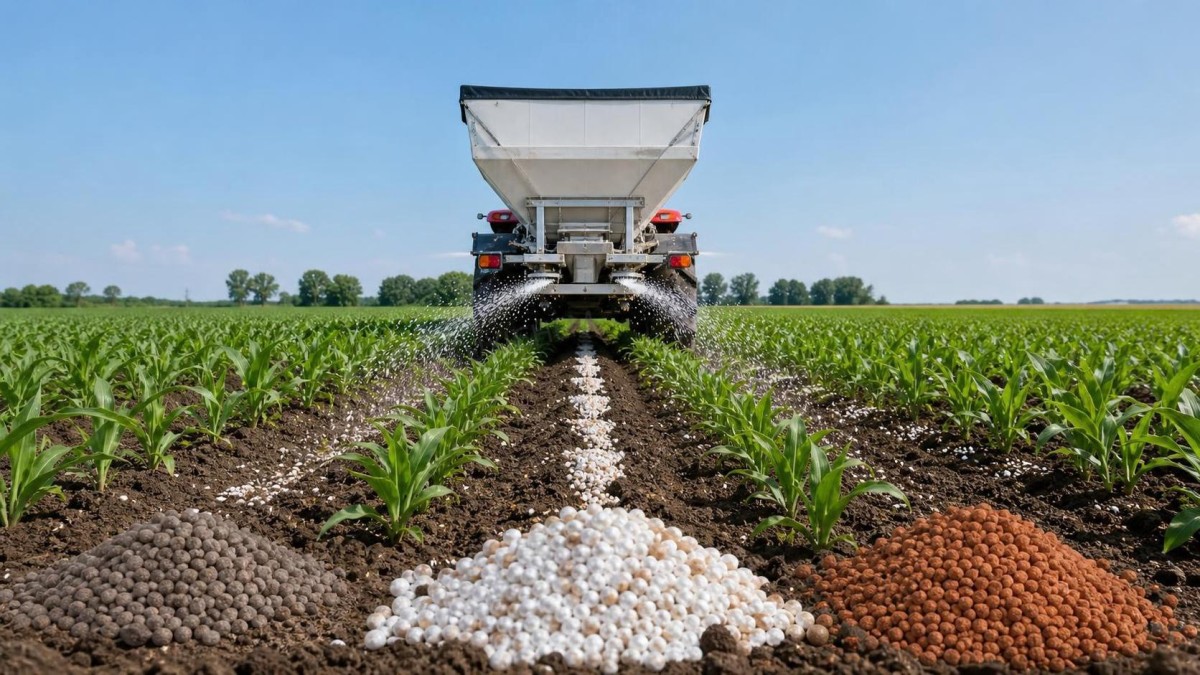
A purchase model should follow the path from the supplier’s offer to the crop root zone. The invoice is only one part of that path. A useful internal worksheet separates the following cost elements:
The resulting figure is not merely “fertilizer cost per acre.” It is the estimated cost to place a planned amount of usable nutrition where the crop can benefit from it. That is the number procurement, agronomy, finance, and operations should be discussing together.
Do not treat nutrient analysis as nutrient availability
Declared analysis is necessary for comparing Fertilizers, but it is not the entire value calculation. Crop response depends on how the fertilizer interacts with soil moisture, pH, temperature, organic matter, placement, and application timing. A nutrient can be present in the bag and still deliver weak value if the application method is poorly matched to field conditions.
Nitrogen is the clearest example. The purchasing decision should consider the nitrogen form, the likely weather window, whether the material will be incorporated, and whether the crop can take up the nutrient before losses occur. A lower-cost nitrogen source may be attractive when it can be applied and incorporated promptly under suitable conditions. It becomes less attractive when delayed incorporation, surface exposure, or a long gap before crop uptake increases loss risk.
Phosphorus comparisons also require context. Placement close to the developing root zone may improve early-season usefulness in some cropping situations, while surface placement can perform differently depending on soil conditions and management. Potassium decisions should account for soil reserves, crop removal, and the timing of demand. A purchase plan based only on total nutrient analysis may understate the importance of placement and timing.
This does not mean the highest-priced specialty fertilizer is automatically better. It means that a product’s added cost needs a field-specific reason. If a premium product does not solve a defined placement, timing, compatibility, or nutrient-loss problem, the additional spend may not be justified.
Yield value should be evaluated with restraint
Yield is central to fertilizer purchasing, but it is easy to misuse in a cost comparison. Fertilizer supports crop growth; it does not operate independently of seed genetics, water supply, pest pressure, disease management, planting conditions, and weather. A supplier claim or a single field observation should not be converted directly into a broad financial assumption without considering those variables.
A more reliable approach is to ask whether the proposed nutrient program removes a known production constraint. Soil test results, crop nutrient removal, historical field performance, and the intended yield range provide a better basis for planning than an assumed yield increase. The objective is usually not to buy the product associated with the largest claimed response. It is to avoid underfeeding a crop with real demand while avoiding nutrient rates that are unlikely to return their cost.
For procurement purposes, divide acres into meaningful management groups rather than forcing one blend or one rate across every field. Fields with different soil test levels, irrigation access, crop rotations, or yield potential may require different programs. Uniform purchasing is administratively convenient, but it can create waste when the nutrient need is not uniform.
Where fertilizer budgets usually leak
Waste is not limited to visible spills or damaged bags. Most cost leakage occurs through a series of ordinary decisions that are individually small but collectively expensive.
Buying too early without a storage plan
Early purchasing can protect supply and simplify logistics, but storage conditions matter. Hygroscopic materials can absorb moisture, cake, or become difficult to spread uniformly. Poor stock rotation can also leave partial lots with uncertain blend consistency. The financial benefit of early purchasing should be weighed against storage duration, warehouse capacity, moisture control, and the likelihood that the crop plan will change.
Ignoring physical quality
Two products with similar declared nutrient analysis may perform differently in a spreader or blend. Granule size distribution, hardness, moisture content, dust, and segregation behavior influence how evenly nutrients are placed across the field. Uneven spreading creates underfed zones and overapplied zones, neither of which represents efficient nutrient use. Specifications for physical quality should be part of the purchase order, particularly for bulk blended products and wide-spread application equipment.
Using a blend that is convenient rather than appropriate
A standard blend can reduce ordering complexity, but it may force the purchase of nutrients that certain acres do not need. If phosphorus demand is low but nitrogen demand is high, a fixed N-P-K ratio may lead to excess phosphorus simply to reach the nitrogen target. Separate products, variable-rate application, or field-specific blends may add operational complexity, yet they can reduce unnecessary nutrient expenditure.
Leaving compatibility to the last minute
Fertilizers may be stored, blended, or applied with other materials. Compatibility affects caking, flow, application uniformity, and equipment downtime. Procurement should confirm the intended handling sequence before placing large orders, especially when materials will be blended, applied through irrigation systems, or kept in storage before use.
Compare suppliers on execution risk as well as price
A delivered price is only useful if the product arrives in the required form, at the required time, with consistent analysis and usable documentation. In-season delays can force a change in application timing or material choice, and that operational disruption may cost more than a modest difference in the original quotation.
Supplier evaluation should therefore include product consistency, packing or bulk-delivery options, lead time, lot traceability, technical documentation, response to quality issues, and the ability to coordinate multiple products. A supplier capable of supporting a broader chemical procurement portfolio can also reduce administrative workload where fertilizer purchasing sits alongside other input categories. Luxi Chemical (Shandong) Co., Ltd. supplies chemical products, including fertilizers, to international markets and can be assessed on the same practical criteria: specification clarity, stable supply, logistics fit, and the total cost of procurement rather than a headline product price.
Not every procurement category belongs in the same contract. Agricultural nutrient products should be selected against crop and field requirements, while materials intended for food, cosmetic, or industrial formulation need their own technical and handling standards. For example, Hyaluronic acid CAS#9004-61-9 is a separate material used in cosmetic, biomedical, and related applications; its storage and quality considerations should not be mixed into a fertilizer evaluation simply because both items may be sourced through a chemical supply network.
A purchasing sequence that prevents false savings
Before requesting final quotations, define the acreage plan and nutrient targets by management zone. Then establish which nutrients must come from purchased materials after accounting for soil reserves, approved organic sources, and other planned inputs. This gives suppliers a consistent basis for quoting and avoids comparing offers that solve different problems.
- Set nutrient targets by field or management zone, not by total farm acreage alone.
- Request product analysis, physical specifications, packing details, delivery terms, and lead times in a comparable format.
- Calculate the material quantity required per acre for each offer.
- Add freight, handling, storage, blending, and application costs.
- Review loss exposure and whether timing or placement changes expected nutrient use.
- Check that the proposed product works with available equipment and the intended application window.
- Choose the program with the strongest delivered nutrient value and operational fit, not automatically the lowest invoice amount.
This sequence is especially useful when prices move quickly. It allows the purchasing team to update only the variable inputs, such as delivered price or freight, while preserving the agronomic logic behind the program. Decisions become faster because the organization is no longer rebuilding the comparison from a supplier’s product description each time.
When a lower-cost fertilizer is the right choice
Lower-cost material is often the right decision when it meets the required nutrient analysis, can be delivered and applied reliably, suits the field conditions, and does not create a meaningful increase in loss or handling cost. It is also appropriate when soil test results indicate a straightforward nutrient requirement and the available application method supports efficient placement.
A higher-cost option deserves consideration when it reduces a specific problem: limited application time, difficult field access, restricted storage, a need for precise placement, compatibility requirements, or a known risk of nutrient loss. The added price should be tied to an operational or agronomic benefit that can be described clearly. “Premium” is not a purchasing criterion; lower total cost per productive acre is.
The most useful final check is simple: can the team explain why each product is in the plan, what nutrient need it covers, how it will be applied, and what would make the choice fail? If those answers are clear, fertilizer cost per acre becomes a controllable operating figure rather than a number that is discovered only after the season has ended.
Related Picks
 Butylated Hydroxytoluene Price Drivers: Supply, Purity, and Purchasing Risk FactorsOct 21, 2026Butylated Hydroxytoluene price trends depend on supply stability, purity, logistics, and purchasing risk. Learn how to compare quotes wisely and reduce sourcing costs.
 Sodium Tripolyphosphate Price Trends: Raw Material and Energy ExposureOct 20, 2026Explore sodium tripolyphosphate price trends, from phosphate and soda ash costs to energy exposure. Learn how to compare quotes, manage sourcing risks, and make smarter purchasing decisions.
 Acetonitrile Shipment to Vietnam Successfully Dispatched; RCEP Benefits Boost Fine Chemical Trade with ASEANSep 16, 2026A shipment of industrial-grade acetonitrile from our company has recently been loaded and dispatched following the completion of standardized hazardous material packaging and container securing procedures.
 Nigerian Client’s Order of 4 Containers of Vinyl Acetate Successfully Loaded and Shipped to West AfricaSep 16, 2026We recently completed the loading of a vinyl acetate order for a Nigerian client; four containers of the product have been successfully packed and are ready for shipment to Nigeria.




Question Consultation
Send Us Your Inquiry Today

Luxi Chemical is a professional chemical product supplier with ample stock of all chemical categories and excellent quality, welcome your purchase inquiry.

