


Glycerol Purity Testing: Which Methods Matter for Industrial Applications?
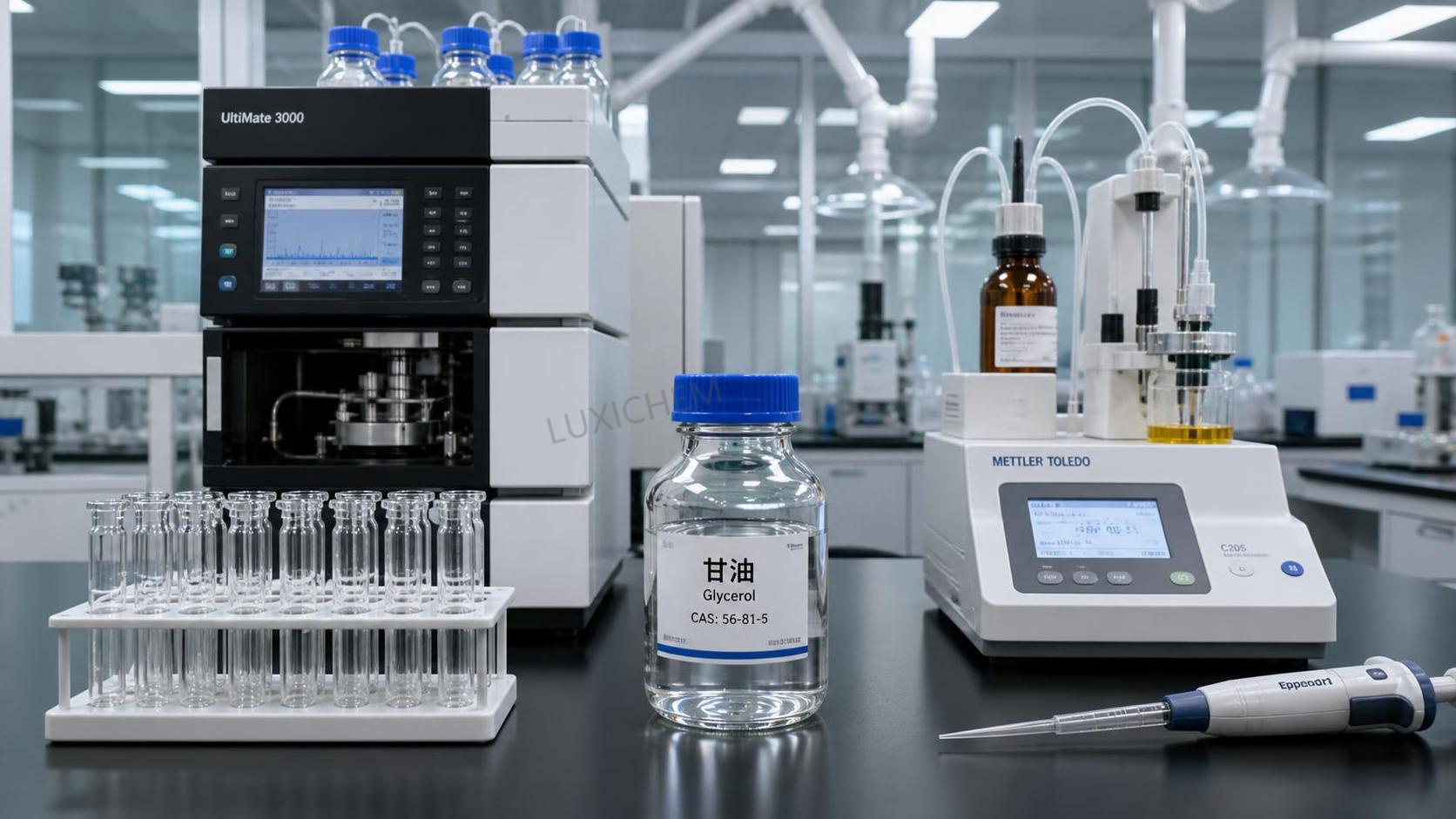
Reliable glycerol purity testing is essential when the material will be used in food processing, personal care, chemical formulation, or any operation where a small impurity load can affect safety, product appearance, stability, or downstream processing. For teams purchasing glycerol bulk, the central question is not simply whether a certificate lists a high assay value. It is whether the test package can confirm the impurities that matter for the intended use, on a representative sample, before the material enters production.
No single method answers every quality question. Assay testing may show that glycerol is present at a high concentration, while water, salts, residual organic compounds, color-forming contaminants, or trace metals still create an application problem. A useful quality-control program therefore combines a primary glycerol assay with targeted impurity testing and a sampling plan that reflects the actual delivery condition.
Start with the application, not the assay figure
Glycerol is hygroscopic, highly miscible with water, and often handled in bulk storage and transfer systems. These properties make a single purity number incomplete. A batch with a high glycerol assay may still be unsuitable if its water content is outside the process specification, if inorganic residue causes deposits, or if trace contaminants conflict with a food, cosmetic, pharmaceutical, or technical-use requirement.
The tests that matter should be selected from the risk profile of the application:
- Food and sensitive consumer applications generally require close control of identity, assay, water, color, odor, acidity or alkalinity, inorganic residues, and contaminant limits defined by the applicable specification.
- Daily chemical formulations often place additional weight on color, odor, clarity, storage stability, and compatibility with surfactants, fragrances, and active ingredients.
- Industrial processing uses may focus more heavily on water content, ash, salts, acidity, color, and contaminants that alter viscosity, corrosion behavior, heat transfer, or formulation performance.
- Applications with regulated end products require the purchaser to connect the glycerol test plan to the governing product standard and the destination market, rather than treating a generic certificate as sufficient evidence.
For glycerol bulk procurement, this distinction affects both incoming inspection and supplier qualification. A method appropriate for routine release testing may not be sensitive enough to investigate an off-odor complaint, unexpected color change, failed blending operation, or an impurity suspected after a change in feedstock or production route.
The core methods and what each one can establish
Chromatographic assay: the main tool for confirming glycerol content
Gas chromatography (GC), high-performance liquid chromatography (HPLC), and ion chromatography methods can be used to quantify glycerol and, depending on the method, related organic components. The preferred approach depends on the product matrix, required detection limits, laboratory capability, and the impurities of concern.
GC is frequently useful when glycerol and volatile or derivatized components must be separated with good resolution. It can provide a robust assay when sample preparation, derivatization where needed, calibration, and system suitability are controlled. HPLC can be practical for aqueous, nonvolatile systems and may be selected where the laboratory needs to examine glycerol alongside certain polar organic compounds. The important point is not the instrument label on the certificate; it is whether the validated method separates glycerol from relevant co-components and has an appropriate reporting limit.
An assay result should also be interpreted with the result basis stated clearly. A result expressed on an “as received” basis includes the effect of water. A dry-basis calculation can be useful for investigation, but it must not obscure whether the delivered material meets the agreed concentration specification. QC teams should ensure that the certificate, purchase specification, and laboratory reporting convention use the same basis.
Karl Fischer titration: the most decision-relevant water test
Water is commonly one of the most operationally significant variables in glycerol. It affects concentration, viscosity, handling behavior, microbial-control strategies in certain systems, and the mass balance of formulated products. Density or refractive index may provide a rapid indication of concentration, but they are indirect measurements and can be influenced by dissolved impurities.
Karl Fischer titration is generally the preferred method when an accurate water result is required. Volumetric Karl Fischer is often appropriate for higher water levels, while coulometric techniques are more suitable when lower moisture levels must be measured. The laboratory should use a sample introduction and solvent system appropriate for viscous glycerol, because poor dissolution, delayed mixing, or inadequate blank control can reduce repeatability.
A water result should never be accepted in isolation from the bulk-handling record. Glycerol can gain moisture during storage, transfer, repeated tank opening, or sampling. When the receiving sample differs materially from the supplier certificate, the first investigation should distinguish a manufacturing variation from moisture pickup during logistics or sampling.
Density and refractive index: efficient screening, not complete purity proof
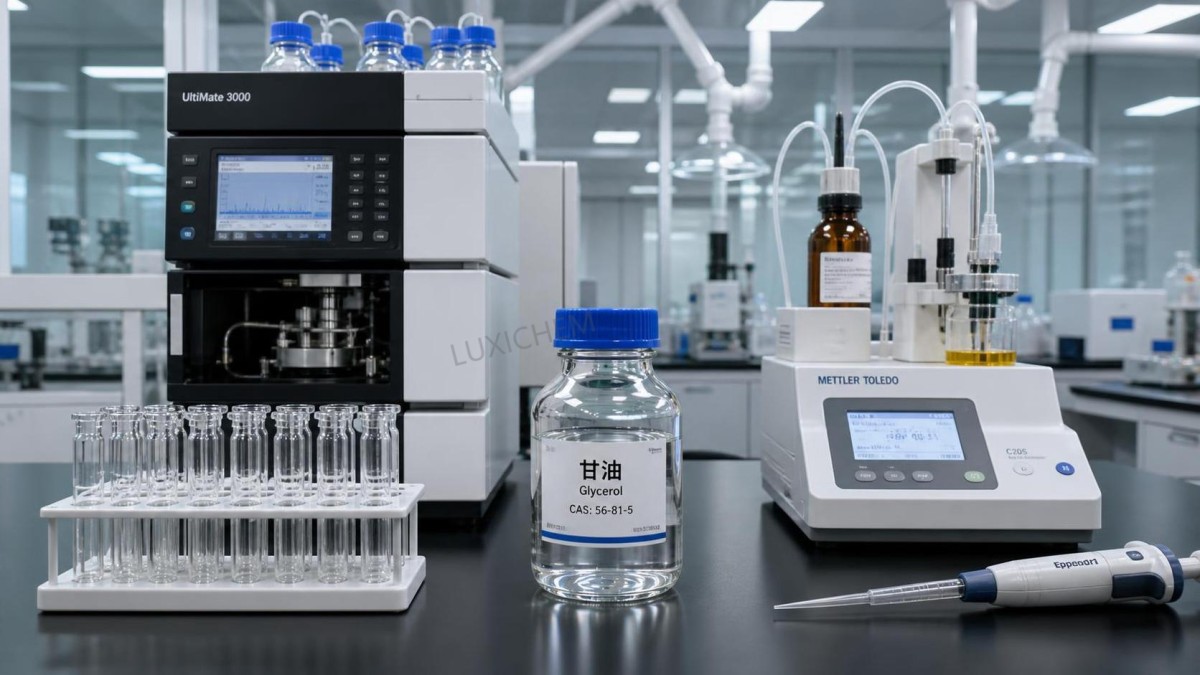
Density and refractive index are fast, low-cost tests that work well for routine incoming checks when temperature control is adequate. Both properties vary predictably with glycerol-water composition, making them useful for identifying diluted material, unusual concentration, or a significant mismatch with the agreed grade.
They are screening methods rather than comprehensive impurity methods. A sample can show an expected density while containing contaminants that have little effect on the measured property at low concentration. Temperature is also critical: comparing a measurement taken at one temperature with a specification based on another can produce an apparent deviation that is purely procedural. Test instructions should define the measurement temperature, instrument calibration practice, sample equilibration time, and acceptance range.
In bulk receiving operations, density is especially helpful because it can be measured quickly before unloading or early in the unloading sequence. It should then be supported by a retained sample and confirmatory laboratory testing when the material is destined for a sensitive or regulated process.
Ash, conductivity, and ionic analysis: identifying inorganic carryover
Inorganic residues may enter glycerol through feedstock quality, process chemicals, neutralization steps, washing efficiency, or storage contamination. Their effect depends on concentration and application. In some formulations, elevated salts can change appearance or stability. In process systems, they may contribute to deposits, corrosion risk, conductivity changes, or incompatibility with downstream catalysts and additives.
Ash testing gives a broad indication of nonvolatile residue after controlled ignition or evaporation under the applicable procedure. It is useful as a release or comparative test but does not identify the individual salts present. Conductivity can provide a rapid indication of ionic contamination in a suitably prepared aqueous dilution, although it is non-specific and should be interpreted against an established product baseline.
When the type of inorganic contamination matters, ion chromatography or suitable elemental analysis provides more defensible information. This distinction is important during root-cause work. A rising ash result establishes that residue has changed; identifying chloride, sulfate, sodium, potassium, or another ion may point toward the relevant process step, cleaning source, or handling route.
Color, appearance, odor, and acidity: simple tests with real release value
Visual appearance, color measurement, odor assessment, and acidity or alkalinity testing are sometimes treated as minor certificate items. For glycerol, they can be early indicators of thermal degradation, oxidation, process contamination, incomplete purification, or unsuitable storage conditions. They are particularly relevant where glycerol will be incorporated into transparent, lightly colored, or odor-sensitive formulations.
Color should be measured by a defined method and reported on the same scale used in the product specification. “Clear” or “colorless” is useful as an observation, but it does not replace an agreed instrumental limit when lot-to-lot consistency matters. Odor assessment should be conducted under a controlled internal procedure because it is inherently subjective; it is best used alongside analytical evidence rather than as the sole basis for rejection.
Acidity or alkalinity testing can reveal residual processing chemicals or degradation-related changes. The acceptable limit must be tied to the use case. A narrow limit may be necessary where glycerol will be blended with pH-sensitive ingredients, while another industrial application may tolerate a broader range without performance impact.
Impurity testing should reflect production-route risk
Different glycerol sources and refining pathways can create different impurity profiles. A generic “purity” statement does not identify the origin of the material, the separation steps used, or the limits applied to contaminants relevant to the end use. The purchaser does not need to demand every conceivable test from every supplier, but the supplier specification should identify the parameters that are critical for the intended grade.
Organic impurity analysis may be required where residual alcohols, glycols, aldehydes, fatty matter, soaps, process by-products, or other organic residues could affect the application. GC or HPLC methods are often selected because they can separate and quantify individual compounds, provided the method is suitable for the expected impurity range. Broad methods such as total organic carbon may be useful for trend monitoring in some systems, but they do not replace compound-specific analysis where compliance or product performance depends on a defined contaminant limit.
Trace-metal testing becomes relevant when the end product, process equipment, or regulatory framework requires it. Inductively coupled plasma techniques are commonly used for multi-element analysis, but the decision to test should follow a documented risk assessment. Routine metal panels without a defined acceptance rationale add cost without necessarily improving control; omitting them where a sensitive application requires them creates a more serious exposure.
Sampling can invalidate a good analytical method
The most capable laboratory method cannot correct a non-representative sample. Glycerol bulk may be delivered by tanker, stored in tanks, transferred through hoses, or sampled from drums and intermediate containers. Water absorption, residual line contents, stratification in poorly managed storage, and contamination from sampling equipment can all distort the result.
A practical receiving plan should specify where and when samples are taken, whether a composite sample is required, which containers are clean and dry, how the sample is sealed, and how long it may remain open before testing. Where unloading occurs before full laboratory release, the operation should define the quarantine, conditional-use, or release controls that prevent an unapproved lot from entering a sensitive product stream.
Retained samples are particularly valuable for glycerol bulk because later complaints often involve changes that may have occurred after delivery. A retained sample, stored in a compatible and well-sealed container, helps distinguish initial lot quality from storage, transfer, or formulation issues. Chain-of-custody records should link the retained sample to the delivery, tank or vessel, supplier lot, test report, and release decision.
How to build a proportionate release specification
A workable glycerol release specification usually has three layers. The first is rapid receiving control: identity checks, appearance, density or refractive index, and a review of transport and certificate documents. The second is routine laboratory release: glycerol assay, Karl Fischer water, color, acidity or alkalinity, and selected residue indicators. The third is periodic or trigger-based testing for route-specific organic impurities, ionic composition, metals, or other higher-risk contaminants.
Trigger-based testing is useful when there is a supplier change, a new manufacturing location, altered packaging, unexplained process behavior, an out-of-trend result, or a change in the intended application. This avoids treating expanded impurity analysis as an arbitrary annual exercise while preserving the ability to investigate meaningful changes.
Acceptance criteria should be written as measurable limits with defined methods, units, reporting basis, and sampling conditions. Statements such as “high purity,” “food grade,” or “suitable for industrial use” are commercial descriptions unless they are tied to a controlled specification and documented evidence. For regulated applications, the product specification should also state which standard, monograph, or customer requirement governs the decision and which revision applies.
The most useful testing package is therefore the one that connects material identity, glycerol concentration, water, relevant residues, and application-specific contaminants to a clear release decision. For quality and safety teams, that approach is more defensible than relying on a high assay figure alone, and it provides a practical basis for qualifying suppliers, investigating deviations, and keeping bulk glycerol consistent from delivery through final use.
Related Picks
 Butylated Hydroxytoluene Price Drivers: Supply, Purity, and Purchasing Risk FactorsOct 21, 2026Butylated Hydroxytoluene price trends depend on supply stability, purity, logistics, and purchasing risk. Learn how to compare quotes wisely and reduce sourcing costs.
 Sodium Tripolyphosphate Price Trends: Raw Material and Energy ExposureOct 20, 2026Explore sodium tripolyphosphate price trends, from phosphate and soda ash costs to energy exposure. Learn how to compare quotes, manage sourcing risks, and make smarter purchasing decisions.
 Acetonitrile Shipment to Vietnam Successfully Dispatched; RCEP Benefits Boost Fine Chemical Trade with ASEANSep 16, 2026A shipment of industrial-grade acetonitrile from our company has recently been loaded and dispatched following the completion of standardized hazardous material packaging and container securing procedures.
 Nigerian Client’s Order of 4 Containers of Vinyl Acetate Successfully Loaded and Shipped to West AfricaSep 16, 2026We recently completed the loading of a vinyl acetate order for a Nigerian client; four containers of the product have been successfully packed and are ready for shipment to Nigeria.




Question Consultation
Send Us Your Inquiry Today

Luxi Chemical is a professional chemical product supplier with ample stock of all chemical categories and excellent quality, welcome your purchase inquiry.

