


Curcumin Supply Trends: What Manufacturers Should Monitor Before Scaling Up
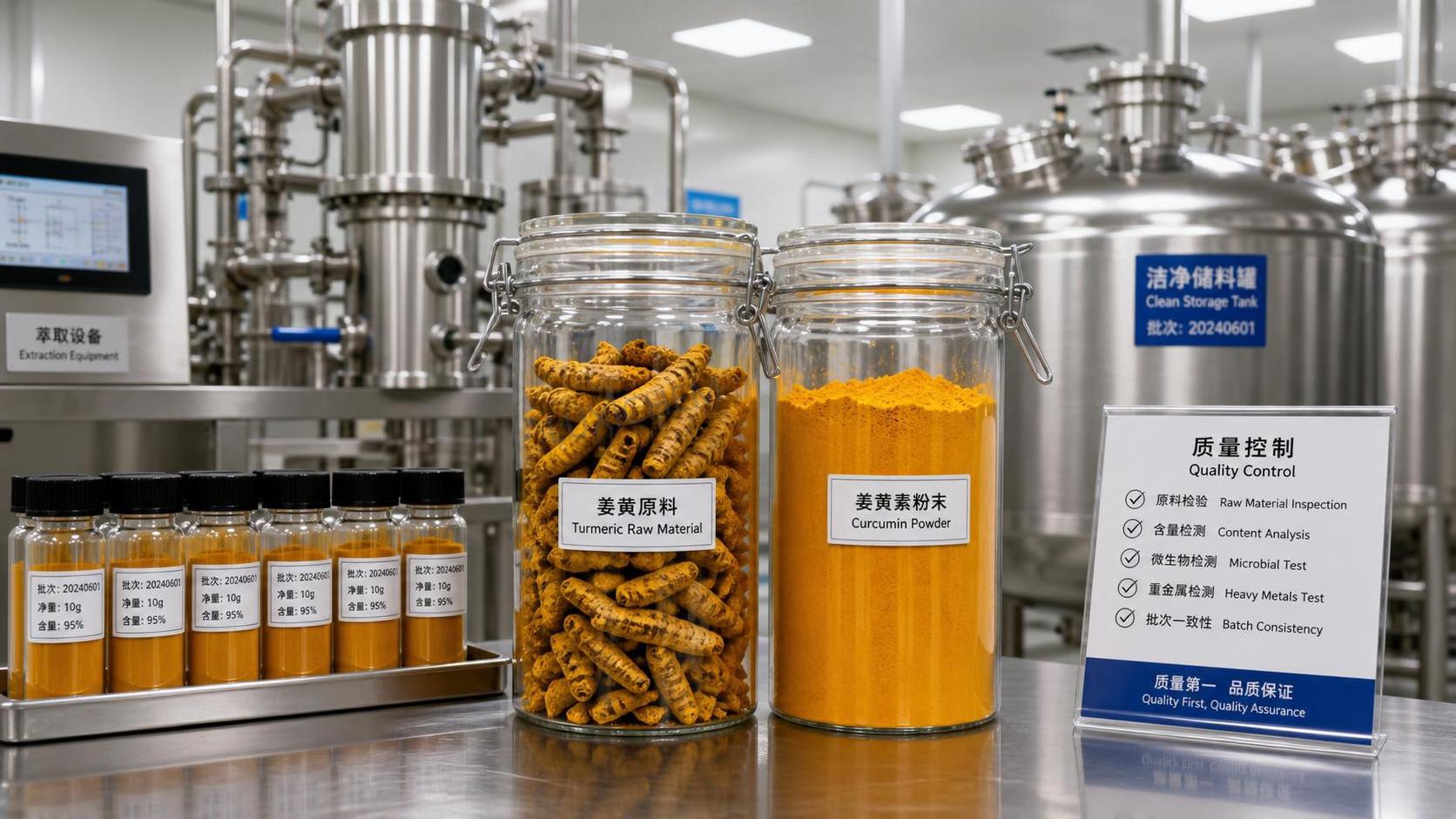
As demand for natural colorants, functional ingredients, and clean-label formulations grows, Curcumin supply is becoming a strategic concern for manufacturers. Before scaling production, decision-makers need to look beyond the headline appeal of turmeric-derived ingredients. Raw material availability, extraction performance, color consistency, regulatory status, pricing exposure, and supplier discipline can all influence whether a promising formulation becomes a reliable commercial product.
The main mistake is treating Curcumin as a simple purchasing item. It is not. For a food, nutrition, personal-care, or specialty chemical manufacturer, it sits at the intersection of agricultural sourcing, solvent and extraction control, formulation science, documentation, and international logistics. A quotation may look competitive while concealing meaningful differences in assay basis, residual solvent limits, heavy-metal controls, particle size, carrier systems, or batch-to-batch color performance.
Scaling up therefore requires a supply-chain decision, not merely a volume decision.
Demand Is Broadening, but Applications Do Not Need the Same Material
Curcumin is increasingly evaluated for two overlapping uses: as a natural yellow-to-orange color source and as a functional botanical ingredient. Those markets may share a common raw material, but they do not necessarily require the same grade. A beverage system, for example, may prioritize dispersibility, light stability, and color shade. A supplement manufacturer may focus more closely on active-content targets, excipient compatibility, analytical documentation, and whether the ingredient performs as expected in capsules, tablets, powders, or emulsions.
This distinction matters when demand forecasts are being turned into procurement plans. A business that plans one generic Curcumin inventory for several product lines can create trouble for its own quality team. A high-assay extract is not automatically the right answer for every formulation. In some cases, the best commercial choice is a standardized preparation designed for a particular delivery system rather than the material with the highest assay on paper.
There is also a growing gap between consumer-facing language and manufacturing reality. “Natural,” “plant-based,” and “clean label” are useful market signals, but they are not specifications. Before approving scale-up, procurement, R&D, and regulatory teams should agree on what the product actually needs to deliver: color intensity, Curcuminoid profile, solubility behavior, shelf-life performance, process tolerance, or a combination of these factors.
Turmeric Availability Is Only the First Layer of Supply Risk
Curcumin supply begins with turmeric, an agricultural raw material exposed to seasonal conditions, cultivation practices, harvesting quality, storage, and regional trading patterns. A large harvest does not automatically translate into a stable supply of extract meeting a particular specification. Rhizome quality, moisture condition, curcuminoid content, contamination controls, and post-harvest handling all affect what can ultimately be extracted and standardized.
For decision-makers, the practical question is not only “Is turmeric available?” It is “Can our supplier repeatedly secure appropriate turmeric and convert it into our required grade?” That is a more demanding question, especially when a manufacturer depends on defined color performance or narrow impurity limits.
Experienced buyers generally examine the chain in both directions. Upstream, they ask how the supplier manages raw-material sourcing, seasonal inventory, and qualification of processing inputs. Downstream, they ask whether the supplier has sufficient extraction, purification, testing, packaging, and export capability to maintain deliveries during periods of higher demand. Neither question should be answered only with a sales forecast.
A sensible approach is to map the lead time from crop purchase through extraction and final release. This often reveals that apparent stock availability is less reassuring than it first appears. Material may be physically available but awaiting laboratory release, documentation review, repacking, or shipment booking. These are ordinary operational realities, yet they become expensive when a production line is waiting.
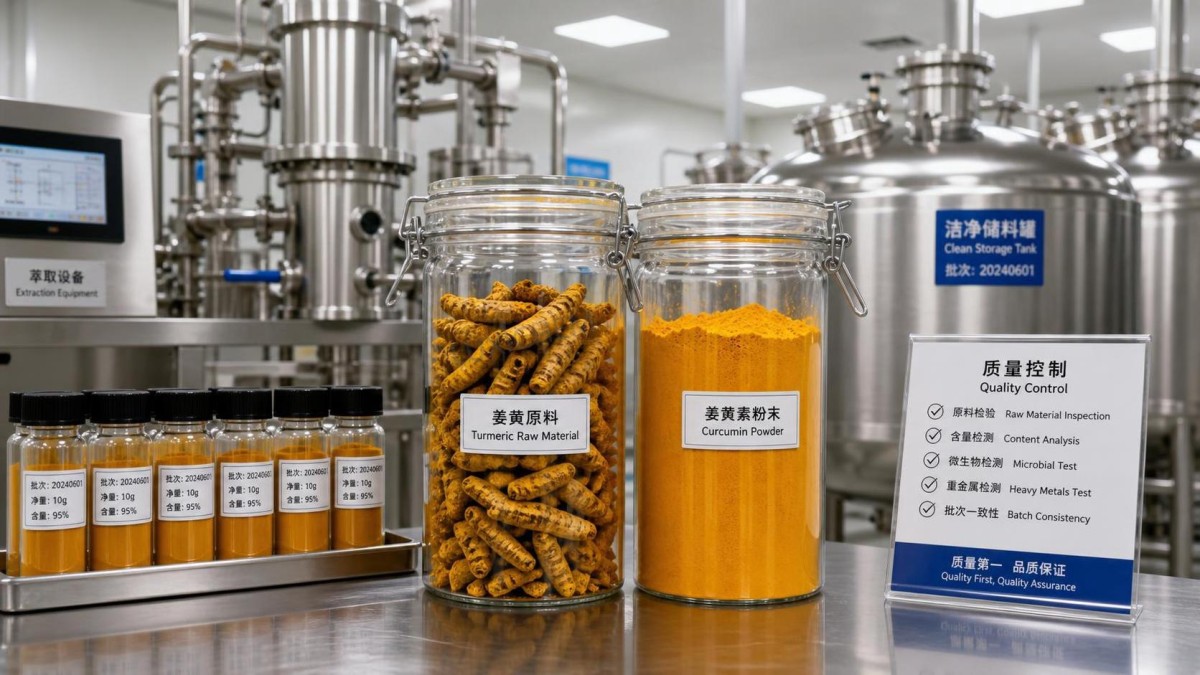
Quality Consistency Should Be Defined in Commercial Terms
A certificate of analysis is necessary, but it is not the entire quality strategy. In Curcumin purchasing, manufacturers should convert their formulation requirements into acceptance criteria that are meaningful on the plant floor. Assay is important, but so are appearance, odor, particle characteristics, dispersibility, microbial expectations where relevant, residual solvent controls, and stability under the actual conditions of use.
Color applications deserve particular caution. The final shade can be affected by concentration, pH, heat exposure, light, oxygen, the presence of metal ions, and the composition of the finished product. A sample that looks acceptable in a supplier’s standard medium may behave differently in an acidic beverage, a fat-containing sauce, a tablet coating, or a surfactant-based personal-care formula. Scale-up teams should run pilot trials in the intended formulation, not just compare dry powder samples on a bench.
It is also worth asking whether the stated assay refers to Curcumin alone or total curcuminoids, and whether the analytical method is aligned with the buyer’s internal release method. Small differences in terminology can lead to large disagreements later. When specifications are tight, method alignment should be settled before commercial orders begin, not after the first disputed batch.
A practical release checklist
- Confirm the identity and assay basis required for the finished application.
- Set limits for relevant impurities, contaminants, and residual processing materials.
- Agree on test methods, sampling procedures, and treatment of retest results.
- Evaluate color and process behavior in the final product matrix, not only in water or solvent.
- Define retained-sample, complaint-handling, and traceability expectations in advance.
This is not bureaucracy for its own sake. When annual volume rises, a weak specification can turn into recurring production adjustments, rejected packaging runs, or inconsistent finished goods. The cost rarely stays inside the quality department.
Price Volatility Is More Than a Commodity Issue
Curcumin pricing can move for reasons that are not visible in a spot quote. Agricultural availability matters, but extraction yield, energy costs, labor, solvents, currency movements, packaging, freight, and compliance work may all influence the landed cost. A supplier offering an unusually low price may be using a different quality basis, a different concentration, less extensive testing, or a shorter-term inventory position. It is worth investigating before treating that number as a benchmark.
Rather than demanding a fixed price under every market condition, buyers often get better results by defining a price-review mechanism and inventory plan that both sides can operate. This may include agreed review periods, a buffer-stock expectation, split deliveries, or dual sourcing for qualified equivalent material. The best arrangement depends on demand certainty and the cost of production interruption.
One point is easily overlooked: low inventory can appear financially efficient until a delayed shipment coincides with a production campaign. For high-volume products, the value of a modest safety stock may be greater than the apparent saving from buying only when needed. The right buffer should be based on qualified supplier lead time, shipping route reliability, internal consumption, and the time required to approve an alternative source.
Regulatory Review Must Follow the Destination Market
Curcumin may be handled differently depending on whether it is sold as a food color, a food ingredient, a supplement component, a cosmetic ingredient, or an input for another industrial formulation. Requirements can also differ by country or region, and the same commercial description is not always sufficient across markets. A manufacturer should confirm the intended use, permitted status, labeling obligations, purity requirements, and supporting documentation for each destination before expanding output.
It is risky to assume that documentation accepted by one customer or market will automatically satisfy another. Import declarations, allergen statements, origin information, contaminant reports, technical data sheets, safety documentation, and traceability records may need to be adapted. Claims require the same care. An ingredient’s history of use does not by itself authorize a specific finished-product claim.
For companies trading internationally, this administrative layer is part of supply security. Luxi Chemical (Shandong) Co., Ltd., which serves customers across more than 60 countries and regions through chemical raw materials, food additives, organic intermediates, fertilizers, and related trade services, sees a recurring practical need: buyers benefit when procurement discussions include destination-market documentation early, while specifications can still be clarified without delaying shipment.
Supplier Reliability Is Best Tested Before the Large Order
A supplier qualification process should assess more than the sample. Samples are usually selected carefully; commercial reliability is demonstrated through repeat batches, timely documentation, responsive technical communication, packaging consistency, and the ability to investigate deviations properly. A useful first order is often one that is large enough to test normal commercial handling but small enough to manage if corrective action is needed.
Buyers should also understand the supplier’s role. Is the company the extractor, a processor, a stockholder, or a trading partner coordinating several sources? There is no universally correct model. A specialized producer may offer deep process control, while a broad chemical trading partner may help consolidate compatible materials, documentation, and logistics. The key is transparency about who controls each stage and who is accountable when specifications or schedules change.
That broader procurement view can be useful when a manufacturer buys multiple chemical inputs across different operations. For instance, a portfolio may also include materials such as Ammonium chloride CAS#12125-02-9, a white crystalline material specified at not less than 99.3% dry purity and used across fertilizers, batteries, pharmaceuticals, electroplating, tanning, and adhesives. It is not a Curcumin substitute or part of every Curcumin formulation. The relevance is operational: companies managing diverse ingredient and chemical requirements often value coordinated sourcing, clear specifications, and packaging or shipping discipline across categories rather than treating every purchase as an isolated transaction.
Formulation Constraints Can Change the Supply Decision
Curcumin’s behavior in a finished formulation may be the limiting factor in a scale-up plan. Poor water solubility, sensitivity to light, and changes under certain pH or processing conditions can require a specific dispersion approach, encapsulation system, emulsifier strategy, or protective packaging. Those choices affect not only R&D but also what material must be sourced consistently.
A procurement team should not approve a raw-material specification without input from the formulator. If the finished product depends on a particular particle size range, carrier, standardized extract profile, or handling behavior, that need belongs in the purchase specification. Trying to correct an unsuitable ingredient through extra processing later can increase cost and create new validation work.
The same applies to packaging. Light-protective packaging, moisture control, and storage instructions are not minor details for botanical extracts. They influence shelf-life confidence and transport resilience. When shipping through hot or humid routes, manufacturers should discuss realistic storage and transit conditions rather than assuming a laboratory stability statement covers the entire journey.
What a Scalable Curcumin Procurement Plan Looks Like
The strongest plans are usually straightforward. They define the required grade by application, qualify at least one dependable source and a credible alternative where risk justifies it, align test methods, establish an inventory policy, and keep regulatory documents connected to each intended market. The plan should also state who makes the call when a batch is within the supplier specification but performs differently in the customer’s process.
Before committing to major volume, run a commercial-scale trial, review several lots if timing permits, and examine the complete landed-cost picture. That includes quality testing, formulation adjustments, storage, freight, import formalities, and the cost of a delayed or rejected batch. The cheapest purchase price can be a misleading figure when it creates uncertainty elsewhere in the operation.
Curcumin demand is likely to remain closely tied to clean-label development and interest in botanical ingredients, but demand alone does not guarantee an easy scale-up. Manufacturers that treat sourcing as a technical and commercial system—rather than a monthly price negotiation—will be better positioned to protect continuity when the market becomes less predictable.
Related Picks
 Butylated Hydroxytoluene Price Drivers: Supply, Purity, and Purchasing Risk FactorsOct 21, 2026Butylated Hydroxytoluene price trends depend on supply stability, purity, logistics, and purchasing risk. Learn how to compare quotes wisely and reduce sourcing costs.
 Sodium Tripolyphosphate Price Trends: Raw Material and Energy ExposureOct 20, 2026Explore sodium tripolyphosphate price trends, from phosphate and soda ash costs to energy exposure. Learn how to compare quotes, manage sourcing risks, and make smarter purchasing decisions.
 Acetonitrile Shipment to Vietnam Successfully Dispatched; RCEP Benefits Boost Fine Chemical Trade with ASEANSep 16, 2026A shipment of industrial-grade acetonitrile from our company has recently been loaded and dispatched following the completion of standardized hazardous material packaging and container securing procedures.
 Nigerian Client’s Order of 4 Containers of Vinyl Acetate Successfully Loaded and Shipped to West AfricaSep 16, 2026We recently completed the loading of a vinyl acetate order for a Nigerian client; four containers of the product have been successfully packed and are ready for shipment to Nigeria.




Question Consultation
Send Us Your Inquiry Today

Luxi Chemical is a professional chemical product supplier with ample stock of all chemical categories and excellent quality, welcome your purchase inquiry.

