


Plant Glycerin in Animal Feed: Quality Factors for Consistent Formulation
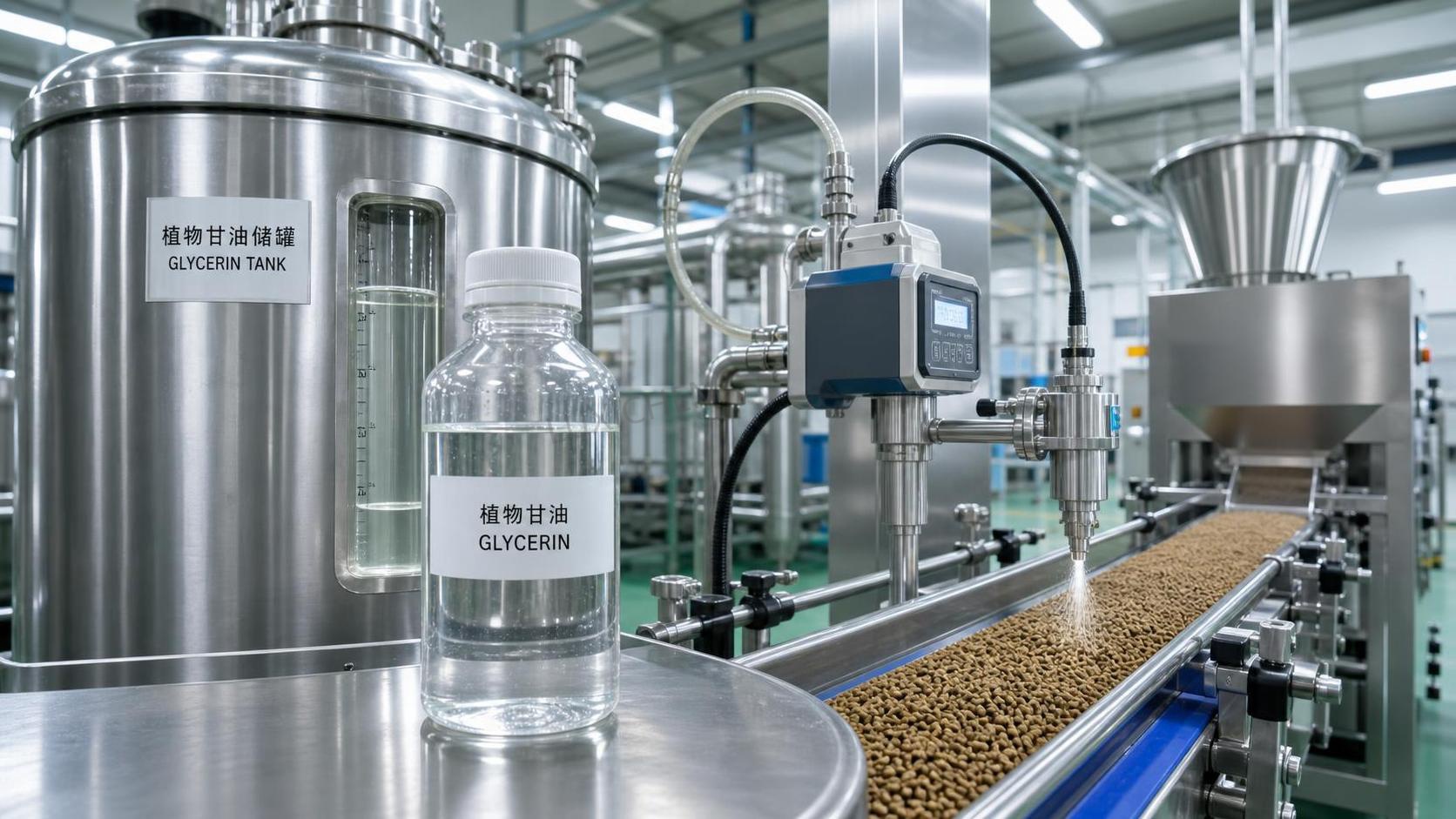
Plant glycerin can be a useful liquid energy and moisture-management ingredient in animal feed, but a high stated glycerol percentage does not by itself ensure reliable formulation. For technical evaluators, the practical question is whether each delivery will behave the same way in a premix, liquid supplement, pelleted feed, or finished ration. That depends on the whole quality profile: water, residual process materials, ash and salt load, appearance, odor, viscosity, and the supplier's ability to control those properties from batch to batch.
When those variables are managed, plant glycerin can contribute readily available energy, improve handling of dusty formulations, and help retain moisture in selected feed products. When they are not, the same material may create unexpected changes in nutrient density, mixing behavior, pellet quality, storage stability, or feed acceptance. Evaluation should therefore begin with the intended use and processing route, then define a specification that reflects that route.
Start with the formulation role, not the product name
Plant glycerin is generally considered when a feed manufacturer needs a liquid energy source, a humectant effect, improved palatability, or a means to control dust during mixing. These roles overlap, but they do not impose the same quality requirements.
For an energy-focused application, glycerol concentration and water content have the largest effect on formulation consistency. A product containing more water than expected delivers less usable energy per kilogram, so the nutrition matrix can drift even when the inclusion rate remains unchanged. In liquid feeding systems, water also changes viscosity and pump performance. For a moisture-management application, water content remains important, but salt level, odor, color, and microbiological management may become equally significant because they affect shelf life and sensory characteristics.
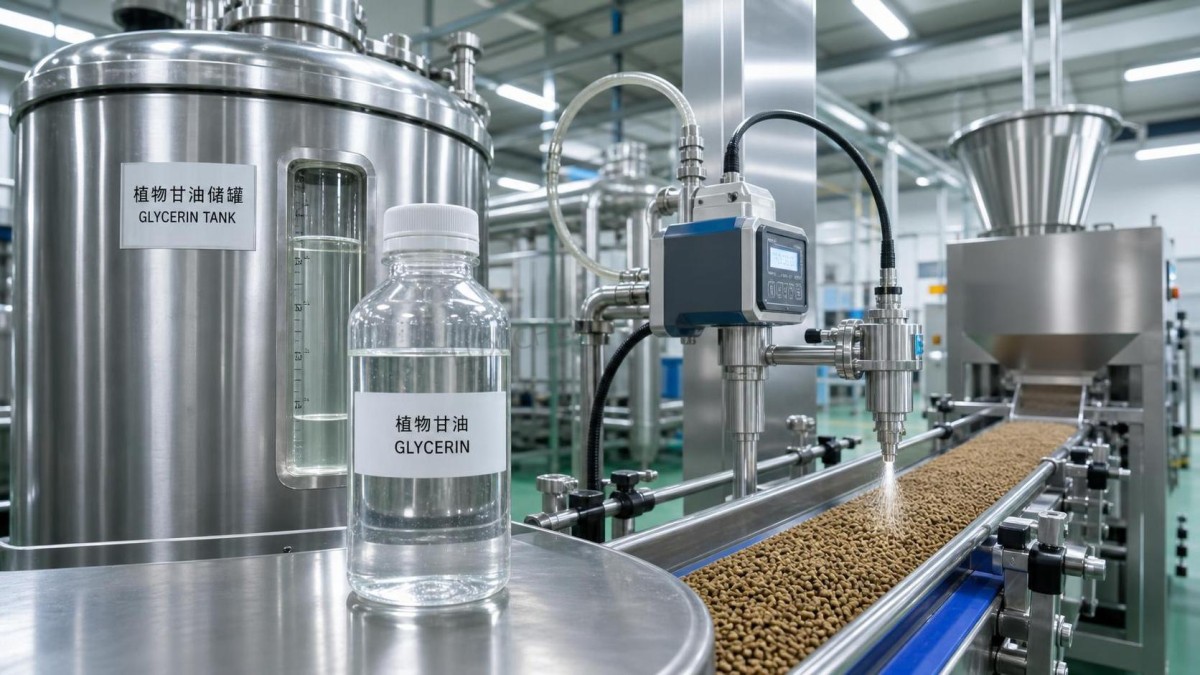
Processing conditions matter as well. A liquid that performs acceptably in a slow-moving mixer may be difficult to meter into a high-throughput feed line. In pelleting, its effect on conditioning moisture, die friction, and final product texture should be assessed in the context of the full formula. In dry blends, the addition point, spray coverage, and post-mixing time can be more important than the nominal inclusion level.
A usable technical specification should therefore state more than “plant-derived glycerin.” It should identify the targeted glycerol range, acceptable moisture level, maximum residual methanol, ash or salt limit, sensory criteria, density or viscosity range where relevant, and the documentation required for feed use in the destination market.
Glycerol content is the first control point, but not the only one
Glycerol concentration determines how much active material is actually entering the formula. A feed manufacturer that formulates on an assumed glycerol basis but purchases material on an as-received basis can see a quiet shift in energy contribution whenever water content changes. This is particularly relevant where the ingredient is used at meaningful inclusion rates or where the formula has little margin for variation.
Water is not inherently a defect. It is a normal part of many commercial glycerin grades and can support flowability. The issue is uncontrolled water. A stable, declared water range can be incorporated into the formulation model and process settings. Variable water content creates recurring adjustments in liquid dosing, finished-feed moisture, storage behavior, and nutrient concentration.
Technical teams should compare the certificate of analysis with their own receiving data over several batches. A single compliant batch says little about long-term formulation reliability. Batch history can reveal whether values stay tightly clustered around the agreed target or repeatedly move toward the specification limits. The latter may still be contractually acceptable, but it can create unnecessary work for nutrition, production, and quality teams.
Density is a useful supporting check. Because many liquid dosing systems operate by volume, density variation can change the delivered mass unless the equipment is calibrated or corrected accordingly. A procurement specification that lists glycerol content but omits density can leave a gap between laboratory approval and plant performance.
Residual methanol and process contaminants require a defined risk threshold
Plant glycerin is often associated with processing routes connected to vegetable oils and biodiesel production. The feed evaluator should not rely on the feedstock description alone to judge suitability. Purification quality and process control determine whether the final product contains residual methanol, soaps, salts, free fatty material, catalysts, or other carryover substances at levels compatible with the intended feed application.
Residual methanol deserves specific attention because it is a process-related contaminant with clear safety implications. It should be included as an explicit release parameter rather than treated as an occasional exception test. The required limit should reflect the applicable feed rules, the target animal category, the inclusion rate, and the manufacturer's internal safety standard. A statement that methanol is “low” is not sufficient for technical approval; the specification needs a measurable limit and an appropriate test method.
Salt and ash content can be equally disruptive from a formulation perspective. Sodium and potassium salts may alter the electrolyte balance of a ration, particularly where mineral levels are already closely managed. Excess salts can also contribute to corrosion concerns in storage and transfer equipment, affect product viscosity, or complicate the interpretation of nutrient calculations. For this reason, ash should not be viewed merely as an aesthetic purity measure. It is an indicator of the non-glycerol fraction that may have nutritional and operational consequences.
Free fatty acids, soaps, and insoluble matter should be assessed according to the material's expected use. Small amounts may have little effect in some applications, while in others they can interfere with pumpability, create sediment, affect spray systems, or contribute to separation during storage. If the glycerin will be held in tanks, sampled from bulk deliveries, or transferred through narrow lines, the evaluation should include a practical observation of settling behavior and line cleanliness.
Color and odor are early warnings, not cosmetic details
Dark color, burnt notes, rancid odor, solvent-like odor, or a sharp chemical smell do not automatically identify a single defect. They do, however, warrant investigation. In feed applications, sensory characteristics can influence palatability and often point to variation in refining, storage, oxidation, or contamination control.
A pale and nearly odorless material is generally easier to incorporate into a controlled feed process because it introduces fewer unknowns. That does not mean color alone should be used as an acceptance criterion. Some variation can occur without affecting performance, and visual appearance cannot replace chemical analysis. Still, a defined color range and odor assessment are useful receiving controls because they can detect departures before the material is used in a large batch.
Storage conditions can amplify these issues. Long residence time, exposure to air, poor tank hygiene, or incompatibility with residues from previous materials may change the appearance or odor of a liquid that originally met specification. The receiving program should distinguish supplier-batch quality from deterioration introduced after delivery. Retained samples, clean transfer records, and tank inspection routines make that distinction easier.
Consistency has to extend through the production process
Laboratory compliance does not guarantee that plant glycerin will meter and distribute uniformly in production. The physical behavior of the liquid must match the feed mill's equipment and operating temperatures. Viscosity increases at lower temperatures, which can slow pumping, affect spray patterns, and create uneven application. A material that is easy to handle in a warm laboratory may need heat tracing, insulated lines, or controlled storage conditions in a colder plant environment.
Before full-scale adoption, technical evaluators should review four practical questions:
- Can the storage tank, pump, seals, hoses, and flow meters handle the material's viscosity, density, and chemical profile?
- Is the dosing system mass-based, volume-based, or corrected using measured density?
- Will the planned addition point provide enough mixing energy and residence time for uniform distribution?
- Does the additional liquid change the finished product's target moisture, flow, pellet durability, or storage expectation?
These questions are especially important when a formula contains other liquid ingredients, oils, molasses-type materials, organic acids, or heat-sensitive additives. The interaction is often operational rather than chemical: liquids compete for the same spray capacity, change how powders coat, or influence the temperature and moisture profile of subsequent processing.
For example, feed formulas containing antioxidant or vitamin components may need separate stability review when the liquid system is changed. In food and oral-formulation supply chains, Calcium ascorbate dihydrate CAS#5743-28-2 is a water-soluble, buffered ascorbate material. Its relevance here is not as a direct substitute for glycerin, but as a reminder that a feed formulation should evaluate each functional ingredient within the actual moisture, oxygen, and processing environment created by the full system. Adding a liquid energy ingredient can change that environment even when the nutrient label appears unchanged.
Build incoming control around variability, not just pass or fail
A basic certificate of analysis is necessary, but it is not a complete control program. The most useful approval process combines document review, incoming checks, and periodic verification testing. The aim is to establish whether the supplier can repeatedly deliver a material that fits the formula and process window.
Supplier qualification should also cover traceability, change notification, packaging or bulk-tanker cleanliness, sampling method, and the ability to provide consistent documentation. A formulation team needs early notice if the source material, refining route, target specification, or testing method changes. Those changes may not make the product unsuitable, but they should trigger a technical review before the next delivery reaches production.
Use a controlled trial to set the final specification
The final acceptance limits should come from the feed application's tolerance, not from a generic commercial grade description. A controlled plant trial can establish how the glycerin performs at the intended inclusion range, in the actual mixing and conditioning sequence, with the expected storage duration. The trial should observe dosing accuracy, mixer uniformity, line pressure, pellet or crumble behavior where applicable, finished-feed moisture, odor, and product flow after storage.
It is also useful to test the upper and lower ends of the proposed supplier specification rather than only a typical batch. Formulations are usually robust when all ingredient values sit near their nominal targets. The more revealing question is whether the process remains stable when glycerol, water, density, or salt content approaches an allowed boundary. If it does not, the purchasing specification should be narrowed, the formula should be adjusted, or operating controls should be strengthened.
Plant glycerin earns its place in animal feed when its composition is treated as a controlled formulation input rather than a generic liquid commodity. A clear specification, reliable batch data, and a process trial that reflects real plant conditions give technical evaluators a workable basis for deciding where it adds value and where tighter controls are needed.
Related Picks
 Butylated Hydroxytoluene Price Drivers: Supply, Purity, and Purchasing Risk FactorsOct 21, 2026Butylated Hydroxytoluene price trends depend on supply stability, purity, logistics, and purchasing risk. Learn how to compare quotes wisely and reduce sourcing costs.
 Sodium Tripolyphosphate Price Trends: Raw Material and Energy ExposureOct 20, 2026Explore sodium tripolyphosphate price trends, from phosphate and soda ash costs to energy exposure. Learn how to compare quotes, manage sourcing risks, and make smarter purchasing decisions.
 Acetonitrile Shipment to Vietnam Successfully Dispatched; RCEP Benefits Boost Fine Chemical Trade with ASEANSep 16, 2026A shipment of industrial-grade acetonitrile from our company has recently been loaded and dispatched following the completion of standardized hazardous material packaging and container securing procedures.
 Nigerian Client’s Order of 4 Containers of Vinyl Acetate Successfully Loaded and Shipped to West AfricaSep 16, 2026We recently completed the loading of a vinyl acetate order for a Nigerian client; four containers of the product have been successfully packed and are ready for shipment to Nigeria.




Question Consultation
Send Us Your Inquiry Today

Luxi Chemical is a professional chemical product supplier with ample stock of all chemical categories and excellent quality, welcome your purchase inquiry.

