


Grape Seed Extract in Beverages: Managing Haze, Color, and Astringency
Grape Seed Extract in Beverages: Managing Haze, Color, and Astringency
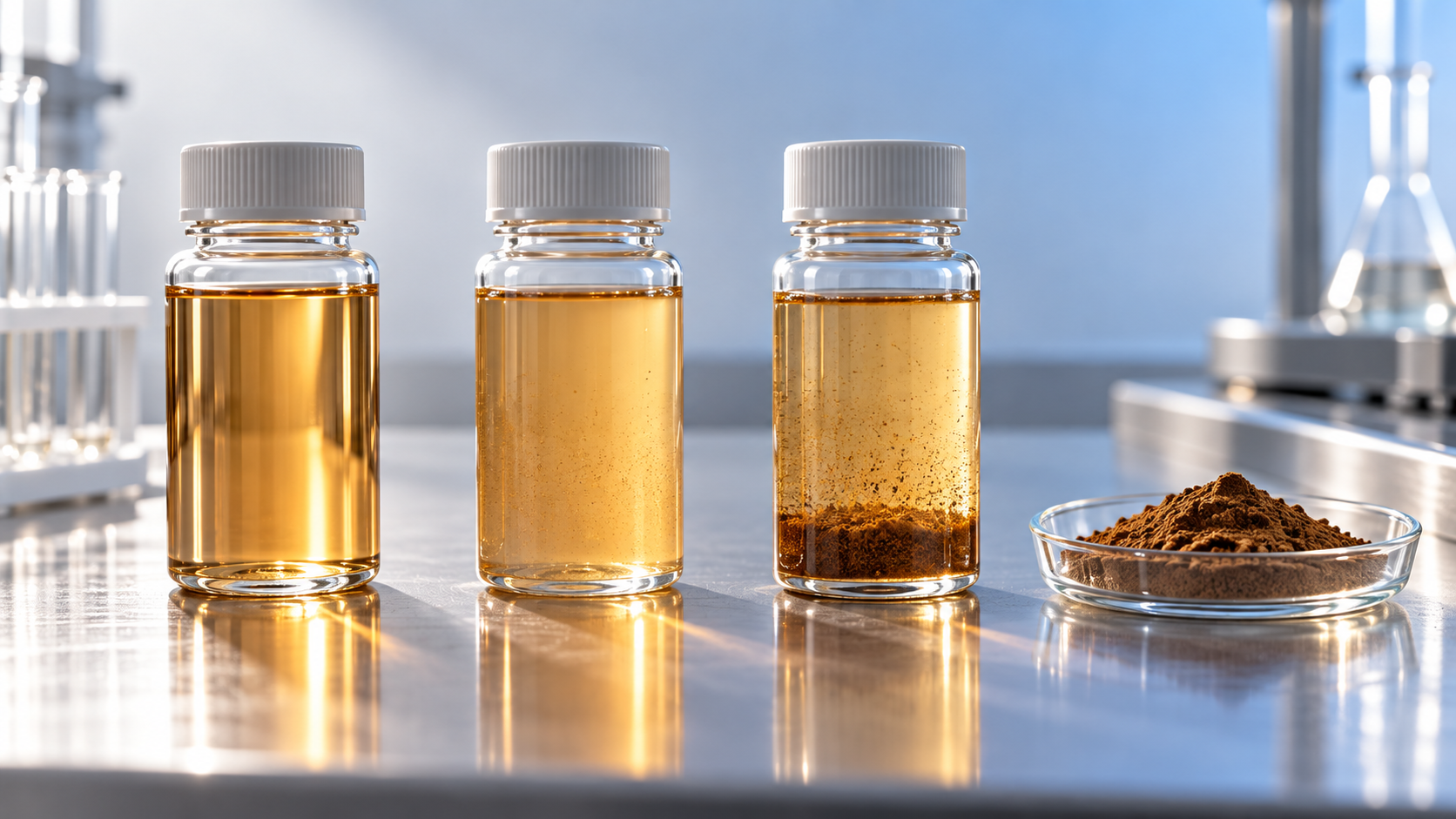
Grape Seed Extract can add polyphenols to beverage formulations, but its interaction with proteins, minerals, and other ingredients can create challenges in haze control, color stability, and astringency. A powder that disperses readily in water may still develop sediment after pasteurization or leave an unpleasant drying finish in the finished drink.
Selecting a suitable grade therefore requires more than comparing total polyphenol content. Extract composition, processing conditions, packaging, and shelf-life performance all matter. The practical question is not simply whether an extract is water-soluble, but whether it remains compatible with the complete beverage throughout manufacturing and storage.
Start with the beverage, not the assay number
Grape seed extracts contain mixtures of phenolic compounds, including catechins and procyanidins with different molecular sizes. Two materials carrying the same declared polyphenol content can behave differently because their composition, extraction process, carrier system, and insoluble fraction differ. Even the reported assay values may not be directly comparable when suppliers use different analytical methods.
Define the beverage requirements before requesting samples. A clear acidified water has little tolerance for haze or brown coloration. A fruit drink may accommodate some background color, while a protein beverage introduces additional binding and aggregation risks. Carbonation, serving temperature, and package transparency also change what consumers notice.
A useful sample request should state the intended addition rate, finished pH, protein source, mineral fortification, thermal process, and expected shelf life. Ask suppliers to distinguish between a general-purpose botanical extract and a grade evaluated for beverage use. “Water-soluble” without a test concentration, temperature, mixing procedure, and observation period is an incomplete specification.
Diagnosing haze before choosing a remedy
Haze can arise from several mechanisms, and they do not respond to the same correction. Undissolved particles point toward dispersion or insoluble-material problems. Delayed clouding may indicate complex formation, oxidation, or gradual aggregation. Sediment after heating suggests that processing has changed the ingredient interactions rather than merely exposed poor initial mixing.
Protein–polyphenol association deserves particular attention. Polyphenols can bind proteins through several noncovalent interactions; under suitable conditions, these associations grow into light-scattering aggregates. The outcome depends on protein type, relative concentrations, pH, ionic conditions, and heat history. A clear extract solution tested alone cannot predict performance in whey, dairy, or plant-protein beverages.
Minerals introduce another variable. Calcium and other ions can affect colloidal stability, while trace iron and copper can participate in polyphenol complexation and oxidation chemistry. Consequently, trials made with laboratory purified water may underestimate problems encountered with production water or a fortified formula.
Use a small diagnostic comparison before changing the whole recipe:
- Test the extract in production water at the intended use concentration.
- Compare the beverage base with and without the extract.
- Add protein, minerals, and other suspected contributors separately before testing their combination.
- Compare unheated samples with samples exposed to the intended thermal process.
- Observe samples after cooling and storage, not only immediately after mixing.
Measure turbidity under consistent conditions and record visible sediment separately. In colored drinks, select an instrument and method suitable for the matrix. Centrifugation can help reveal instability during screening, but it does not establish a direct shelf-life prediction.
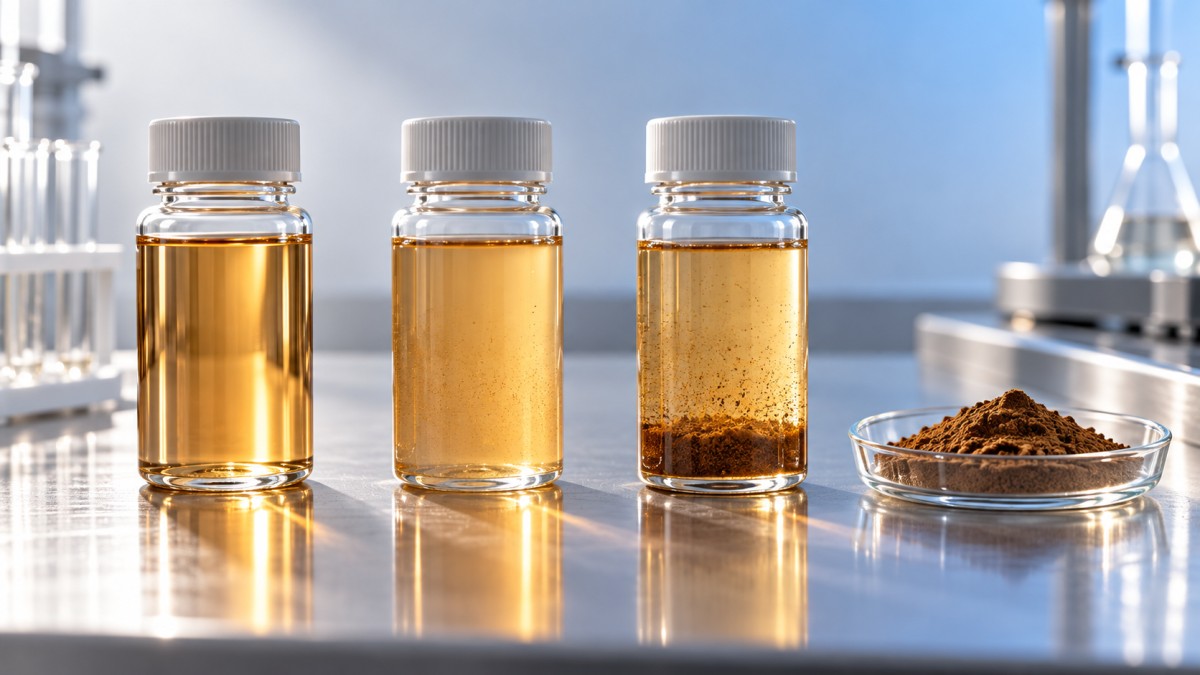
Filtration may remove existing particles, but it does not necessarily prevent new complexes from forming later. It can also remove part of the intended polyphenol fraction. If filtration is proposed, check both clarity and constituent retention after the actual filter step.
Treat color as both an ingredient property and a storage response
The initial tint of Grape Seed Extract is only part of the color question. Polyphenol oxidation can produce darker compounds, and the rate and appearance of change depend on oxygen exposure, temperature, light, pH, and other ingredients. Trace metals may also alter appearance through complexation or accelerate oxidative reactions.
Separate incoming color from color development during storage. Compare fresh samples against an extract-free beverage control, then follow instrumental color and visual appearance in the intended package. A light-colored formulation may show an unacceptable change even when the extract remains fully dispersed.
Oxygen management should cover mixing, transfer, filling, headspace, and package barrier performance. Aggressive agitation that draws air into the liquid can undermine an otherwise suitable formula. Light-protective packaging may help where light exposure contributes to deterioration, but package changes need testing rather than assumption.
Do not assume that an antioxidant system will automatically protect the extract. Ascorbic acid, for example, participates in a wider reaction network whose behavior depends on oxygen and metals. Evaluate the complete formula. Likewise, changing pH to improve appearance may affect flavor, protein stability, preservative performance, and process requirements.
Astringency needs a separate sensory strategy
Astringency is the drying, rough, or puckering sensation associated partly with interactions between polyphenols and salivary proteins. It is not the same as bitterness, although both may occur in one extract. Increasing sweetness can improve overall balance without removing the underlying drying sensation.
Extract composition matters here as much as total dosage. Molecular size and structure influence protein interactions, but a single total-polyphenol result cannot predict sensory intensity. Compare candidate grades in the finished beverage at the intended serving temperature and evaluate aftertaste, not just the first sip.
When screening alternatives, run both an equal-powder-dose comparison and, where analytical methods permit, an equal-polyphenol-dose comparison. The former shows formulation impact at a practical addition rate; the latter helps distinguish composition effects from differences in declared concentration.
Potential adjustments include reducing the extract dose, selecting a different composition, modifying sweetness and acidity, or changing mouthfeel. Adding protein to soften astringency is not a neutral fix: it may create the same complexes responsible for haze. Flavor masking should be judged against the complete sensory profile, including lingering dryness and any loss of flavor definition.
Where a stabilizer may help—and where it will not
For beverages that tolerate added body, a hydrocolloid can be screened for suspension and consistency. A food-grade option such as Hydroxypropyl Methyl Cellulose CAS#9004-65-3 may be considered where its permitted use and functionality match the formulation. Grade-specific viscosity, hydration behavior, and thermal response require confirmation.
This is not a universal clarification treatment. Greater viscosity may slow sedimentation without preventing particle formation, and an apparently stable cloudy drink would still fail a clear-beverage specification. HPMC can also show temperature-dependent behavior, so its performance must be checked through the actual heat cycle. Industrial or pharmaceutical suitability alone does not establish food-grade acceptability.
Build processing conditions into the screening plan
Order of addition can change local conditions during mixing. Introducing concentrated extract directly into a concentrated protein or mineral phase may encourage interactions that are less pronounced after dilution. Compare a separately prepared extract premix with direct addition, using supplier guidance for dispersion and avoiding unnecessary air entrainment.
Record water temperature, mixing intensity, hydration time, acid addition sequence, and the interval before heating. These details turn a successful bench sample into a reproducible process. Do not use a convenient laboratory heat treatment as a substitute for the intended pasteurization, hot-fill, or other validated production process.
A manageable screening matrix varies extract grade and dose first, then examines the most promising candidates under realistic pH, mineral, and processing conditions. Include more than one ingredient lot before approval. Testing many formulation changes simultaneously can produce a good-looking sample without explaining why it worked.
Convert trial results into a purchasing specification
An effective specification connects chemical identity with beverage performance. Alongside botanical identity and the polyphenol assay method, review carriers, moisture, insoluble material, microbiological limits, residual solvents, and relevant contaminant requirements. Confirm suitability for the destination market and intended use; supplement documentation should not be assumed sufficient for a conventional beverage.
Application acceptance criteria should describe the actual test: concentration, beverage base, pH, mixing procedure, heat exposure, storage conditions, and measurement timing. Set limits for turbidity, sediment, color drift, and sensory change from product requirements rather than adopting arbitrary universal thresholds. Accelerated storage can reveal failure modes, but real-time testing remains necessary.
Luxi Chemical (Shandong) Co., Ltd. supplies chemical raw materials and food additives through an international trading business serving customers in more than 60 countries and regions. For a beverage project, that broad procurement scope is most useful when ingredient documentation, grade availability, and change-notification expectations are reviewed together—not when materials are compared by price and assay alone.
Before approving Grape Seed Extract, confirm that the selected grade survives the intended process and remains acceptable in the final package. If clarity, color, and sensory targets cannot be met together, revisit the extract composition or dose before adding more corrective ingredients. The strongest approval package is a reproducible formulation, a defined process, and evidence that multiple lots meet the same finished-beverage requirements.
Related Picks
 Butylated Hydroxytoluene Price Drivers: Supply, Purity, and Purchasing Risk FactorsOct 21, 2026Butylated Hydroxytoluene price trends depend on supply stability, purity, logistics, and purchasing risk. Learn how to compare quotes wisely and reduce sourcing costs.
 Sodium Tripolyphosphate Price Trends: Raw Material and Energy ExposureOct 20, 2026Explore sodium tripolyphosphate price trends, from phosphate and soda ash costs to energy exposure. Learn how to compare quotes, manage sourcing risks, and make smarter purchasing decisions.
 Acetonitrile Shipment to Vietnam Successfully Dispatched; RCEP Benefits Boost Fine Chemical Trade with ASEANSep 16, 2026A shipment of industrial-grade acetonitrile from our company has recently been loaded and dispatched following the completion of standardized hazardous material packaging and container securing procedures.
 Nigerian Client’s Order of 4 Containers of Vinyl Acetate Successfully Loaded and Shipped to West AfricaSep 16, 2026We recently completed the loading of a vinyl acetate order for a Nigerian client; four containers of the product have been successfully packed and are ready for shipment to Nigeria.




Question Consultation
Send Us Your Inquiry Today

Luxi Chemical is a professional chemical product supplier with ample stock of all chemical categories and excellent quality, welcome your purchase inquiry.

