


Herbicide, Fungicide, or Insecticide? Building a Crop Protection Budget
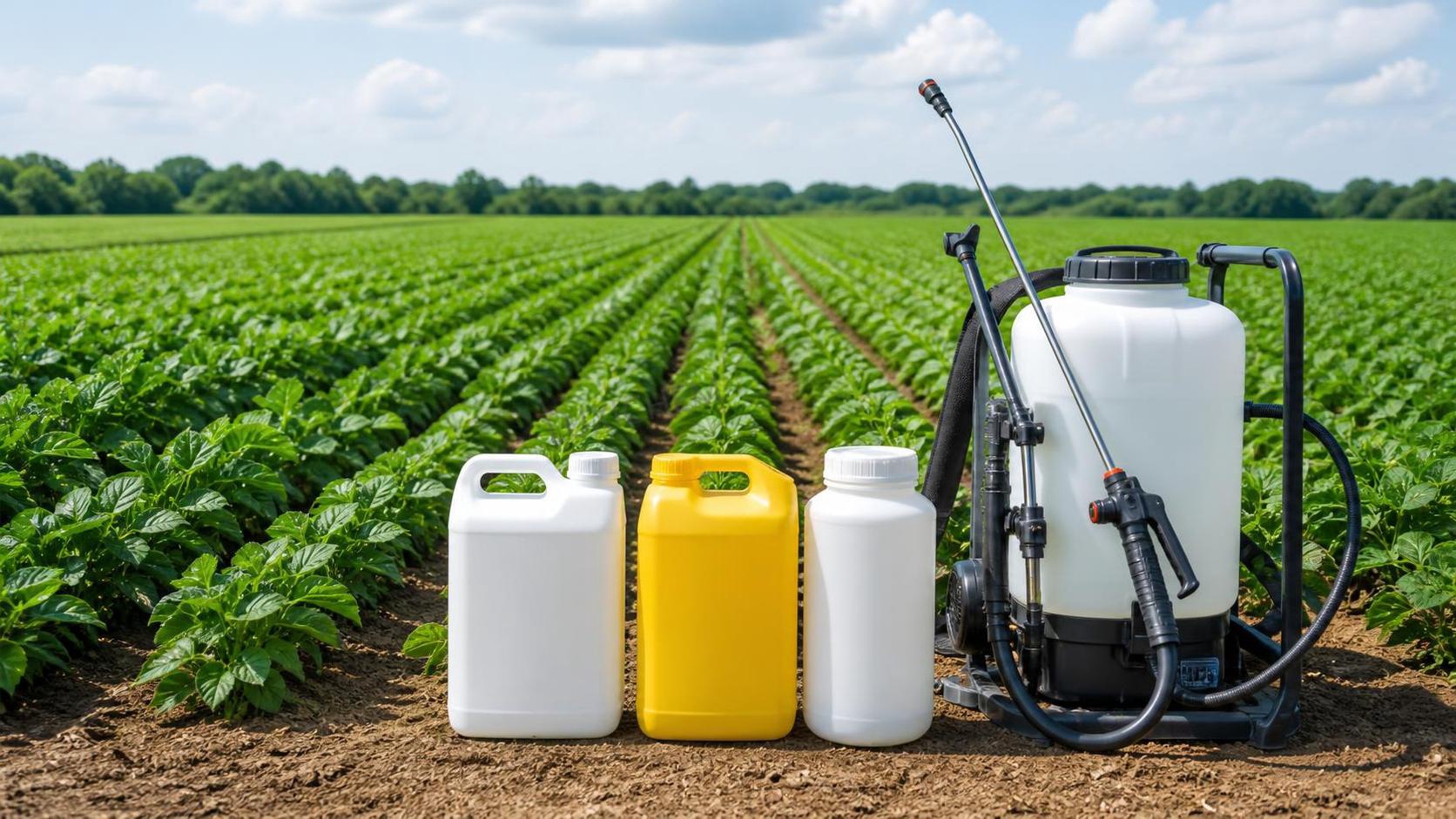
A crop protection budget should begin with the cost of an unmanaged problem, not with a comparison of container prices. A low-priced herbicide that misses the dominant weed flush can leave the crop competing for water, nutrients, light, and harvest access. A fungicide applied after disease has already reduced green leaf area may protect remaining tissue without recovering lost yield. An insecticide used without a verified threshold can add cost while disrupting beneficial insects and creating a need for later intervention.
The practical question is therefore not which category deserves the largest fixed share of spending. It is which crop threat has a credible probability of causing economic loss during the coming production cycle, whether treatment can still change that outcome, and what the full delivered and applied cost will be. Herbicides, fungicides, insecticides, and Fertilizers should be planned as connected inputs because crop vigor, canopy density, weather exposure, and field history affect the value of each expenditure.
Build the budget around preventable loss
Start with field-level records rather than a single farm-wide average. Separate fields by crop, planting window, soil condition, irrigation status, previous crop, recurring weed species, disease history, and known insect pressure. A field with persistent perennial weeds has a different herbicide profile from one where a single early-season annual flush is the main concern. A dense, irrigated canopy with a history of leaf disease requires a different fungicide reserve from a dry field where disease development is less likely to sustain itself.
For each anticipated treatment, define four items: the threat, the timing window, the expected consequence of missing that window, and the all-in treatment cost. The timing window matters because many crop protection products are most valuable before damage becomes obvious. Pre-emergence weed control, preventive disease protection, and early intervention against rapidly reproducing insects cannot be budgeted as interchangeable emergency purchases.
A useful internal cost view includes the product, freight, unloading, storage, handling losses, water or carrier requirements, adjuvants, application labor, equipment use, cleaning, and the cost of a second pass if weather interrupts the first. This avoids a frequent distortion: comparing only the per-unit price of active products while ignoring the operational cost created by incompatible timing, extra tank mixes, or a short delivery window.
Herbicide spending: protect the crop's opening weeks
Herbicide spending often has the clearest connection to early crop establishment because weeds can consume resources before the crop has developed enough canopy to compete. However, the correct budget depends on the actual weed spectrum and the product's fit with the cropping program. A broad-spectrum treatment is not automatically economical when the costly weeds are controlled poorly, emerge outside the residual period, or require a follow-up treatment regardless.
Separate the herbicide plan into residual control, post-emergence control, and corrective allowance. Residual products are purchased for a defined period of suppression, not merely for the application day. Their value is shaped by soil texture, organic matter, rainfall or irrigation after application, placement quality, and whether the crop can safely tolerate the selected chemistry. A product with a lower purchase price can become expensive when inadequate residual activity leads to a later rescue spray under less favorable weather.
Post-emergence budgeting should account for weed size and density. A label rate that performs on small, actively growing weeds may not provide the same result on larger or drought-stressed plants. Delayed control also increases the chance that an application needs a partner product, a higher allowed rate, or repeat treatment. Budgeting should reserve funds for the likely weed flushes identified in field records, while keeping a limited contingency for unusual escapes rather than treating contingency as the normal program.
Resistance risk deserves a cost line of its own. Repeating the same mode of action because it is familiar or temporarily cheaper can reduce future control options. The immediate purchase saving should be weighed against the cost of more complex programs in later seasons. Rotating modes of action, using appropriate mixtures where permitted, and controlling survivors before seed production are agronomic choices with direct budget consequences.
Fungicide spending: buy timing and coverage, not false certainty
Fungicide budgets are often misread because a disease spray can look either optional or universally protective. Its economic value changes with crop susceptibility, planting date, previous crop residue, weather patterns that support infection, field airflow, irrigation practices, and disease pressure in nearby production areas. A history of disease alone is insufficient; the relevant issue is whether the crop stage and current conditions support a damaging infection cycle.
Budgeting a fungicide should distinguish seed treatment, in-furrow or soil-directed protection where relevant, and foliar applications. These interventions protect different plant parts and operate on different timelines. A seed treatment cannot be expected to replace later foliar disease management. Likewise, a foliar product selected solely for a low per-hectare cost may be poorly matched to the disease present, the crop growth stage, or the coverage achievable with available equipment.
Coverage is a major source of hidden variability. Travel speed, nozzle selection, spray volume, canopy depth, water quality, wind, and the interval between mixing and application influence where the active material reaches. A dense canopy can leave lower leaves or inner plant surfaces insufficiently covered even when the correct product was purchased. When disease risk is concentrated at a specific growth stage, application capacity must be budgeted alongside product volume; otherwise, a large treated area on paper may not translate into timely field protection.
Resistance management also affects fungicide cost. Repeated reliance on a single chemistry group can weaken a program over time. A lower-cost product that has limited activity against the target disease or is used repeatedly without rotation may generate poor control and a late-season corrective expense. Treatment decisions should be tied to field scouting, crop stage, and disease-conducive conditions, with the permitted use pattern and pre-harvest requirements confirmed before materials are committed.
Insecticide spending: separate presence from economic damage
Insects are visible, but visibility does not always justify treatment. A crop may tolerate limited feeding at one growth stage and sustain meaningful loss at another. Budgets should use the relevant action threshold, where one is available, and scouting observations that identify the pest species, life stage, population location, crop condition, and natural enemies present. Damage that looks similar from a distance may come from insects, disease, nutrient imbalance, heat stress, or herbicide injury; treating the wrong cause adds expense without correcting the field problem.
Product selection should reflect how the pest feeds and where it is located. Contact activity, ingestion activity, translaminar movement, systemic behavior, residual duration, and spray coverage requirements are not equivalent. A material suited to exposed chewing insects may be ineffective or inefficient when the target remains protected inside rolled leaves, stems, soil, or dense foliage. Application timing relative to egg hatch or early larval development can have more financial value than a small difference in unit price.
Repeated broad-spectrum insecticide use can remove beneficial predators and parasitoids that suppress secondary pests. That outcome can turn one application into a series of treatments. The budget should therefore record prior use patterns and leave room for targeted products or non-chemical measures when they fit the identified pest and crop system. Compatibility with pollinator protections, field-entry intervals, harvest intervals, and local label requirements must be reviewed before scheduling an application.
Do not isolate crop protection from fertility planning
Fertilizers support crop growth, but a nutrition program should not be treated as a substitute for pest control or as a separate financial silo. Excessive nitrogen can encourage lush growth and a denser canopy in some crops, altering disease pressure and reducing spray penetration. Nutrient deficiency can weaken crop recovery after pest injury and make symptoms harder to diagnose. Soil and tissue information, where relevant, should be interpreted with the crop protection plan so that nutrient corrections are not mistaken for a response to weeds, insects, or pathogens.
Adjuvants and formulation components also require disciplined procurement. Surfactants, oils, drift-control agents, buffering materials, and compatibility aids are sometimes omitted from the initial budget because they are not the primary active ingredient. Yet they can determine spray retention, spreading, droplet behavior, water conditioning, or the physical stability of a tank mix. Their cost should be attributed to the treatment that requires them, not hidden as a general operating expense.
For example, soybean-derived materials such as Fatty Acids, Soya CAS#68308-53-2 are used in chemical manufacturing as feedstocks for surfactants and related derivatives. That relationship does not establish suitability for direct agricultural spray use. A formulated adjuvant must be assessed by its approved intended use, formulation compatibility, mixing order, crop tolerance, and label directions rather than by the identity of a raw material alone.
Compare suppliers on the cost of execution
A sound comparison starts with an equivalent basis: active ingredient concentration, formulation type, pack size, approved crop and pest uses, rate range, required adjuvants, and expected number of applications. Comparing liters, kilograms, or containers without normalizing these factors can make a lower quote appear attractive when it is not equivalent in field use. Formulation matters because suspension concentrates, emulsifiable concentrates, water-dispersible granules, soluble liquids, and other forms differ in handling, storage sensitivity, mixing behavior, and application logistics.
Delivery reliability matters most when the treatment window is narrow. A quote should be evaluated against confirmed availability, lead time, packaging condition, batch traceability, storage needs, shelf-life remaining on delivery, and documentation needed for lawful use and transport. Buying far ahead may reduce freight pressure, but it creates inventory exposure where products have temperature constraints, segregated storage requirements, or limited stability after opening. Buying too late can force substitution, expedited shipping, or an untimely application.
Tank-mix planning should be reviewed before purchase orders are finalized. Products that are individually appropriate may form an unsuitable mixture because of physical incompatibility, crop-stage restrictions, water-quality sensitivity, or conflicting application timing. A small jar test can reveal precipitation, separation, excessive foam, or heat generation, but it does not replace product-label compatibility instructions or crop safety guidance. The economic gain from combining passes disappears when a mixture causes crop injury, blocks filters, requires equipment cleaning, or forces a repeat application.
Use a staged authorization rather than a single seasonal release
Some spending can be committed before planting because it supports a known base program: routine weed control for documented species, seed protection where appropriate, and products with stable demand and suitable storage conditions. Other spending should remain conditional. Foliar fungicide and insecticide reserves are better linked to scouting, crop stage, weather exposure, and confirmed thresholds because their value depends more heavily on conditions that have not yet occurred.
Set a clear trigger for releasing each conditional reserve. The trigger can combine a field observation with a timing deadline, such as disease symptoms verified before a susceptible growth stage, pest counts exceeding the applicable treatment level, or a residual herbicide failure confirmed while weeds remain small. This approach prevents two opposite errors: withholding funds until treatment is too late, and releasing funds simply because a product was budgeted.
After each application, record the field, product and formulation, rate, water volume, adjuvants, weather conditions, crop stage, observed target, application date, and any follow-up result. These records support traceability and improve the next budget because they show whether costs arose from recurring pressure, poor timing, product mismatch, application limitations, or avoidable purchasing friction. Over several seasons, the strongest budget is built from this field-specific evidence rather than from last year's invoice total.
Related Picks
 Butylated Hydroxytoluene Price Drivers: Supply, Purity, and Purchasing Risk FactorsOct 21, 2026Butylated Hydroxytoluene price trends depend on supply stability, purity, logistics, and purchasing risk. Learn how to compare quotes wisely and reduce sourcing costs.
 Sodium Tripolyphosphate Price Trends: Raw Material and Energy ExposureOct 20, 2026Explore sodium tripolyphosphate price trends, from phosphate and soda ash costs to energy exposure. Learn how to compare quotes, manage sourcing risks, and make smarter purchasing decisions.
 Acetonitrile Shipment to Vietnam Successfully Dispatched; RCEP Benefits Boost Fine Chemical Trade with ASEANSep 16, 2026A shipment of industrial-grade acetonitrile from our company has recently been loaded and dispatched following the completion of standardized hazardous material packaging and container securing procedures.
 Nigerian Client’s Order of 4 Containers of Vinyl Acetate Successfully Loaded and Shipped to West AfricaSep 16, 2026We recently completed the loading of a vinyl acetate order for a Nigerian client; four containers of the product have been successfully packed and are ready for shipment to Nigeria.




Question Consultation
Send Us Your Inquiry Today

Luxi Chemical is a professional chemical product supplier with ample stock of all chemical categories and excellent quality, welcome your purchase inquiry.

