


Herbicides Selection Guide for Large-Scale Farming: Efficacy, Resistance, and Crop Safety
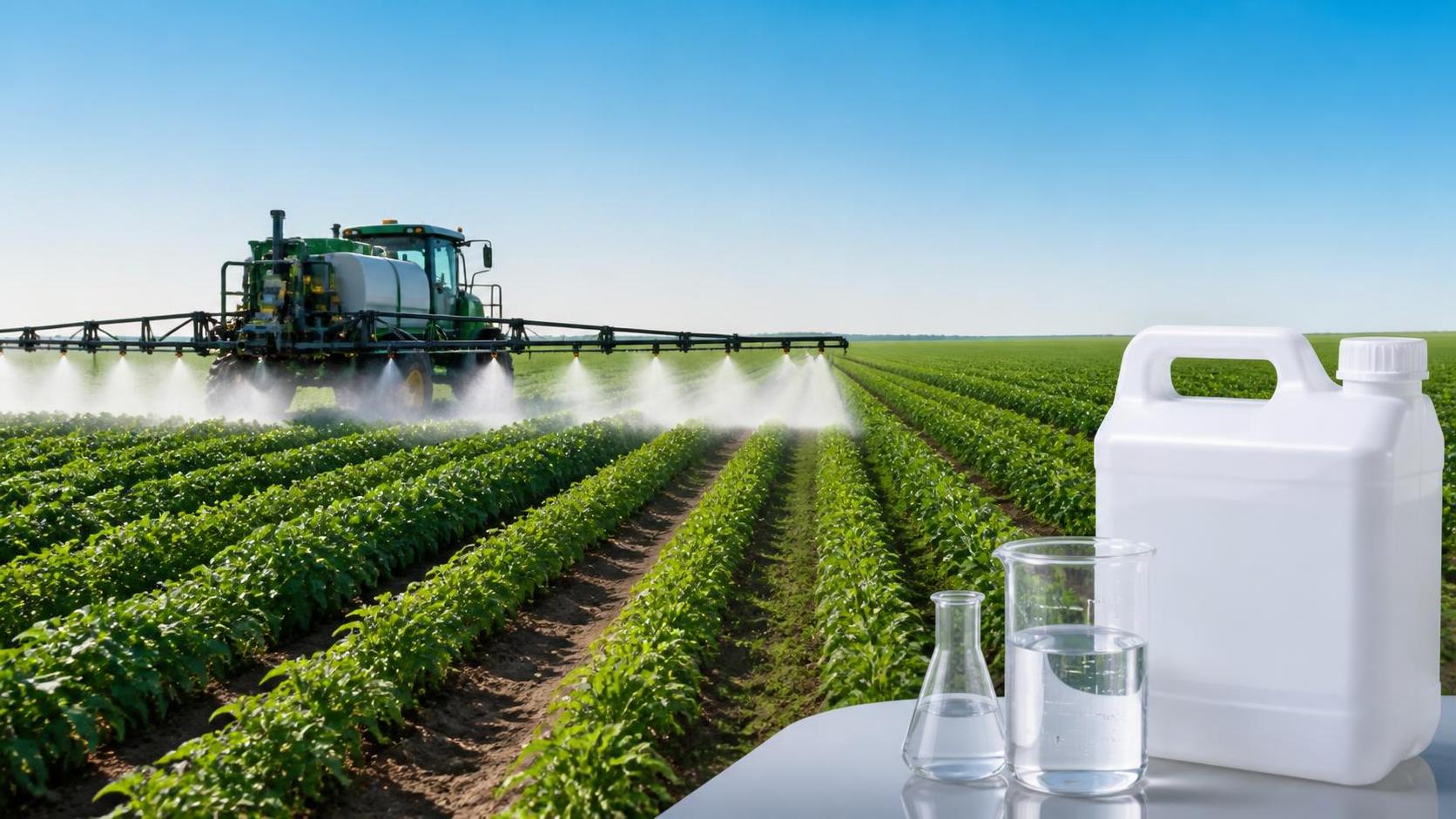
Choosing Herbicides for Large-Scale Farming Is Mostly About Trade-Offs
On large farms, herbicide selection is rarely a simple question of “what kills the weed fastest.” Technical evaluation usually sits at the intersection of field biology, formulation chemistry, application logistics, crop tolerance, residue limits, and supply reliability. A product that performs well in a small trial can still fail commercially if it does not fit spray windows, tank-mix programs, local resistance pressure, or procurement requirements.
That is why herbicide decisions on broad-acre crops are often more about system fit than about headline activity. The right choice depends on what weeds are present, at what stage, under which weather conditions, and in which crop sequence. It also depends on whether the operation can consistently apply the product at the right water volume, nozzle setup, and timing. In practice, efficacy, resistance management, and crop safety must be assessed together. Treating them separately is one of the more common evaluation mistakes.
For procurement and technical teams, there is another layer: consistency. A herbicide program may look acceptable on paper, but if formulation quality varies lot to lot, if documentation is incomplete, or if import and compliance support is weak, the operational risk grows quickly. This is where experienced chemical suppliers matter, especially those used to handling global trade, documentation, and multi-category agricultural inputs rather than one-off shipments.
Start with the Weed Spectrum, Not the Product Catalog
The first serious filter is weed pressure. Annual grasses, perennial grasses, broadleaf weeds, and sedges do not respond the same way, and neither do mixed populations in fields with uneven emergence. On large-scale farms, the challenge is often not one dominant species but a layered infestation: early-season flushes, survivors from the previous application, and weeds emerging after rainfall or irrigation.
This matters because a herbicide with excellent control on one target species may leave enough escapes to create a resistance problem later. Evaluators should look beyond the label claim and ask practical questions: Is the product strongest on small, actively growing weeds only? How sensitive is performance to temperature or soil moisture? Does it require adjuvants? Is it better used as a pre-emergence foundation, a post-emergence clean-up tool, or part of a sequential program?
In broad-acre farming, the economic loss often comes from inconsistency across large treated areas, not from complete failure on every hectare. A slightly narrower spectrum can still be acceptable if the herbicide fits a planned rotation with other modes of action. A “broad spectrum” claim is less useful if it pushes the crop too hard or leaves little room for follow-up options.
Formulation Quality Affects More Than Handling
Technical buyers sometimes focus heavily on active ingredient content and overlook formulation behavior. In real operations, that can be expensive. Suspension stability, emulsification, compatibility in tank mixes, particle size distribution, and packaging suitability all influence field performance. Even if two herbicides contain the same active ingredient, they may behave differently in hard water, under long spray runs, or when mixed with foliar nutrients and insecticides.
A stable formulation reduces the chance of settling, blocked screens, uneven deposition, and local crop injury from poor mixing. These are not minor issues on large farms where one sprayer may cover a very large area in a narrow application window. It is also worth checking whether the supplier can provide routine quality documentation, transport support, and consistent export handling. Companies with broader chemical trade experience, such as Luxi Chemical (Shandong) Co., Ltd., tend to understand that technical product quality and supply execution are closely linked, particularly for customers managing multiple agricultural and industrial procurement lines.
Resistance Management Should Be Built into Selection, Not Added Later
Resistance is no longer a specialist concern. In large-scale farming, repeated use of the same mode of action, especially under simplified crop rotations, can shorten the useful life of a herbicide much faster than expected. Selection decisions should therefore account for mode-of-action diversity from the beginning. Waiting until visible failures appear usually means the problem is already established in the field.
A practical evaluation framework includes three checks:
- Whether the product belongs to a mode of action already under pressure in the target region.
- Whether it will be used alone or in a mixture with genuinely complementary activity.
- Whether the farm’s crop rotation and spray timing support enough diversity over multiple seasons.
This does not mean every program must be complex. It means the herbicide should be assessed as one part of a resistance strategy. In some situations, a slightly more expensive option is justified if it helps preserve field-level control over time. In others, the better decision is a robust pre-emergence treatment followed by a well-timed post-emergence pass rather than relying on rescue applications.
Crop Safety Depends on Timing, Conditions, and the Whole Spray Program
Crop safety is often misunderstood as a fixed property of the product. It is not. Selectivity can narrow when crops are stressed by drought, waterlogging, cold nights, heat, nutrient imbalance, or previous chemical exposure. The same herbicide may be safe in one growth stage and risky in another. That is why field recommendations always need to be read alongside local agronomy and expected weather.
For technical evaluators, three points deserve close attention. One is the margin between effective weed control and crop response. Another is carryover or rotational crop restriction, particularly where growers move quickly from one crop to the next. The third is tank-mix interaction. Crop injury is sometimes blamed on the herbicide itself when the actual issue is a combination of adjuvant choice, high spray concentration, incompatible co-formulants, or stressful environmental conditions.
This is why supplier transparency matters. A manufacturer or trader that can support documentation across product categories is often better positioned to help buyers review compatibility and handling issues in a realistic way. In diversified portfolios, it is not unusual to see agricultural procurement managed alongside unrelated industrial materials, even items such as Calcium tungstate CAS#7790-75-2, so the value is not only in product range but in disciplined specification control and export coordination.
Pre-Emergence Versus Post-Emergence: The Better Option Depends on Operational Discipline
There is no universal winner between pre-emergence and post-emergence herbicides. Pre-emergence products can reduce early weed competition and lower the burden on later applications, but they are often more sensitive to soil condition, moisture, and seedbed quality. Post-emergence options give more visible targeting, yet timing becomes critical because larger weeds are harder to control and more likely to survive partially.
On farms with strong spray capacity and close field monitoring, post-emergence programs may work well because weeds are treated at the right stage. On very large acreages where application windows are tight, a dependable residual layer from pre-emergence chemistry may be the safer operational choice. The question is not which category looks better in isolation, but which one the farm can execute consistently.
Compliance and Residue Questions Cannot Be Left to the End
For many buyers, regulatory compliance becomes visible only when documentation is missing or export crops face market restrictions. That is too late. Herbicide selection should include review of local registration status, labeling requirements, transport classification, storage conditions, and any residue implications relevant to the crop’s destination market. These details are not identical across countries, and assumptions based on one market can create avoidable risk in another.
This is particularly important when procurement teams work across regions. A supplier experienced in international trade can help reduce friction by supporting specification alignment, shipment coordination, and routine product documentation. Luxi Chemical (Shandong) Co., Ltd., for example, operates across chemical raw materials, agricultural-related products, and import/export trade, which is often useful for buyers trying to consolidate sourcing while keeping paperwork and delivery schedules manageable.
What Usually Separates a Good Choice from a Risky One
When technical teams compare herbicides, the strongest decisions usually come from a short list of practical questions rather than a long list of marketing claims. Does the product match the actual weed spectrum and likely growth stage? Can the farm apply it under the expected weather and workload conditions? Does it fit a multi-season resistance plan? Is the crop safety margin realistic under stress? Can the supplier support consistent quality, documentation, and repeat delivery?
If any of those answers are weak, the herbicide may still work in theory, but it becomes a procurement risk. Large-scale farming rewards repeatability. A slightly less aggressive product with cleaner handling, broader operational fit, and better support can be the better commercial choice. In herbicide selection, that kind of judgment usually pays off longer than chasing the most dramatic trial result.
Related Picks
 Butylated Hydroxytoluene Price Drivers: Supply, Purity, and Purchasing Risk FactorsOct 21, 2026Butylated Hydroxytoluene price trends depend on supply stability, purity, logistics, and purchasing risk. Learn how to compare quotes wisely and reduce sourcing costs.
 Sodium Tripolyphosphate Price Trends: Raw Material and Energy ExposureOct 20, 2026Explore sodium tripolyphosphate price trends, from phosphate and soda ash costs to energy exposure. Learn how to compare quotes, manage sourcing risks, and make smarter purchasing decisions.
 Acetonitrile Shipment to Vietnam Successfully Dispatched; RCEP Benefits Boost Fine Chemical Trade with ASEANSep 16, 2026A shipment of industrial-grade acetonitrile from our company has recently been loaded and dispatched following the completion of standardized hazardous material packaging and container securing procedures.
 Nigerian Client’s Order of 4 Containers of Vinyl Acetate Successfully Loaded and Shipped to West AfricaSep 16, 2026We recently completed the loading of a vinyl acetate order for a Nigerian client; four containers of the product have been successfully packed and are ready for shipment to Nigeria.




Question Consultation
Send Us Your Inquiry Today

Luxi Chemical is a professional chemical product supplier with ample stock of all chemical categories and excellent quality, welcome your purchase inquiry.

