How do chemical catalysts speed up industrial reactions?
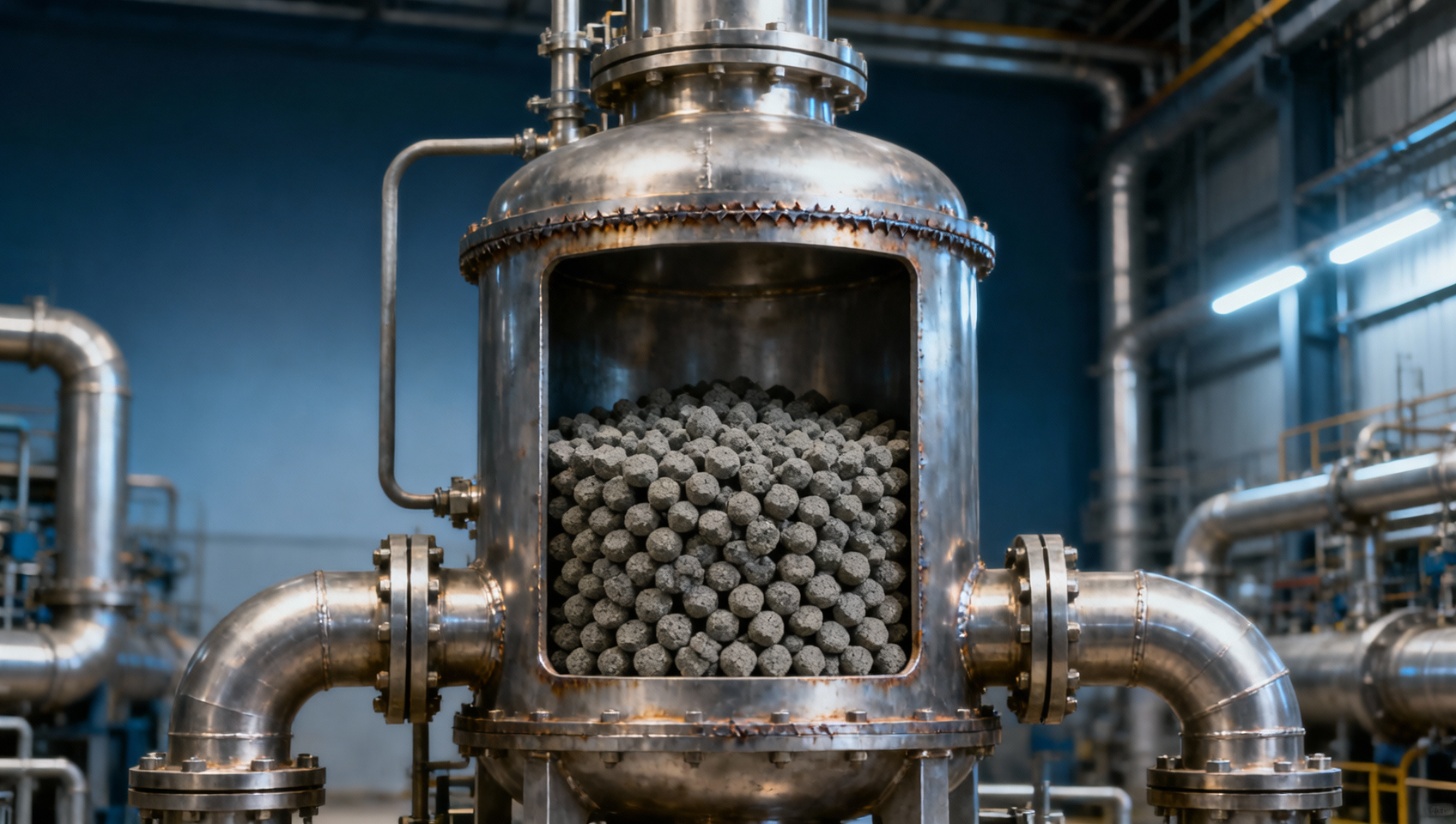
Chemical catalysts speed up industrial reactions by providing alternative pathways that require less activation energy. This allows manufacturers to reach useful production rates under conditions that may be less energy-intensive, while often improving selectivity and reducing unwanted byproducts. Yet a catalyst is not a universal shortcut: its performance depends on the reaction, the raw materials, and the environment inside the reactor. Understanding those relationships helps researchers and procurement professionals see why catalysis is so important to chemical production.
Why do reactions need help?
For a chemical reaction to occur, molecules generally need to reach a high-energy arrangement known as the transition state. The energy needed to reach it is the activation energy. Even when a reaction is thermodynamically favorable, it may proceed too slowly to be practical because relatively few molecules can overcome that barrier under the available conditions.
Heating the reaction mixture usually increases the fraction of molecules with enough energy to react. Industrial operators, however, cannot simply keep turning up the temperature. Excessive heat can encourage side reactions, damage sensitive materials, place stress on equipment, and increase energy costs. In some processes, higher pressure introduces additional equipment and safety requirements.
A catalyst offers another route. It participates in a sequence of steps that lowers the effective energy barrier, then is regenerated so it can participate again. The catalyst may bind reactants, transfer electrons or protons, or temporarily form an intermediate. What matters is that the overall pathway makes productive reactions more likely within a given period.
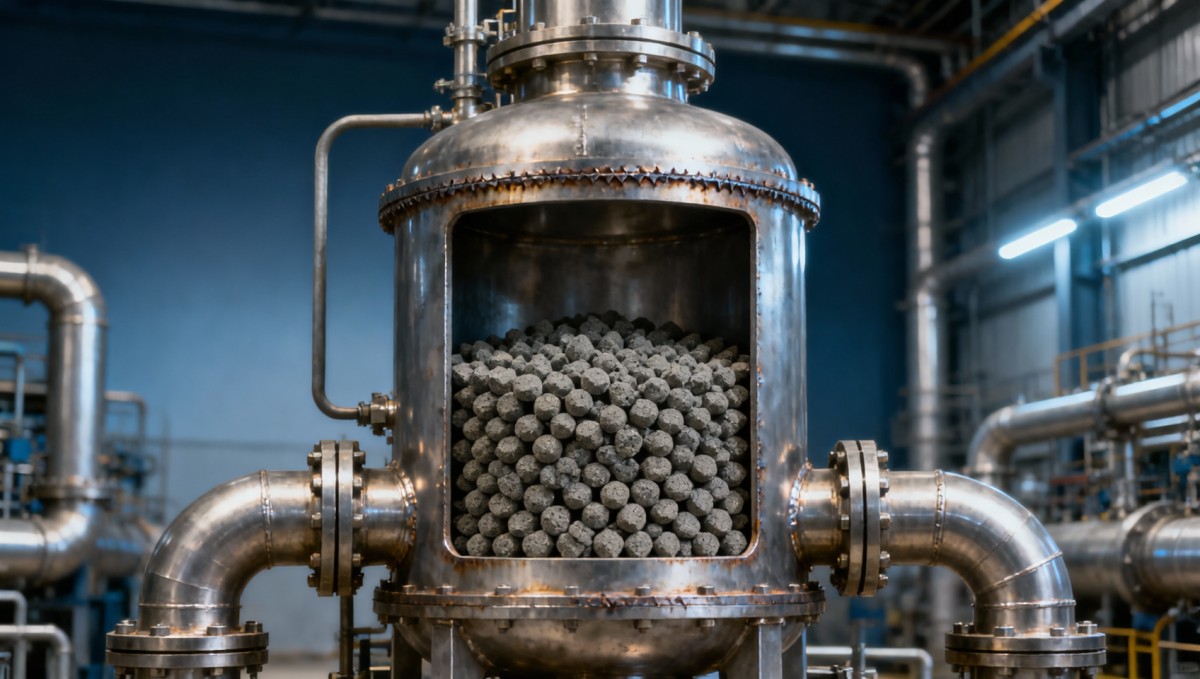
Imagine a hill separating reactants from products. Heating gives more molecules the energy to climb it; catalysis creates a different route over a lower pass. The starting and finishing points do not change, but more molecules can reach the other side in the same time.
What a catalyst changes—and what it does not
The most immediate effect of a catalyst is on reaction rate. Faster conversion can allow a plant to produce more material in a given reactor volume, shorten batch times, or reach a target conversion at a lower temperature. The actual benefit depends on the complete process, not just the chemistry observed in a laboratory flask.
Catalysts can also influence selectivity: the proportion of converted reactant that becomes the desired product rather than alternatives. This matters because a complex chemical mixture may require costly separation and purification. A catalyst that directs the reaction toward one product can reduce downstream work as well as waste.
There is an important limit. A catalyst does not change the overall thermodynamics of a reaction or the equilibrium composition at a given temperature and pressure. It accelerates both the forward and reverse reactions, allowing equilibrium to be reached faster. If equilibrium limits the desired yield, the process may also need temperature adjustments, product removal, or another engineering strategy.
Nor does “regenerated” mean “indestructible.” A catalyst is not intended to be consumed in the overall reaction, but real catalysts gradually lose performance and may need regeneration or replacement.
How chemical catalysts create faster pathways
Different catalysts lower activation barriers in different ways. The distinction is useful because it explains why a material that works well in one industrial reaction may be ineffective—or harmful—in another.
Surface reactions on solid catalysts
In heterogeneous catalysis, the catalyst and reactants are in different phases. A common arrangement is a solid catalyst exposed to gases or liquids. Reactant molecules attach to active sites on the surface, where bonds may be weakened and molecules positioned for reaction. Products then detach, freeing sites for another cycle.
Metal catalysts used for hydrogenation illustrate this principle. Hydrogen and an organic reactant interact with the catalyst surface, making hydrogen addition possible at practical rates. Nickel, palladium, and platinum are used in different hydrogenation applications, but the right choice depends on the substrate, operating conditions, selectivity requirements, and economics.
Solid catalysts are often attractive because they can remain in a fixed bed while the reaction mixture flows through it. Separation is therefore relatively straightforward. However, reactants must reach the active sites, and products must leave them. Pore structure, particle size, and flow conditions can all affect the rate observed in a working reactor.
Reactions in a shared phase
In homogeneous catalysis, the catalyst and reactants are generally in the same phase, often a liquid solution. Acid-catalyzed esterification is a familiar example: an acid helps activate a reactant, making subsequent bond changes easier. Some industrial processes also use soluble metal complexes whose molecular structures are designed to favor particular reactions or products.
Because the catalyst is dispersed throughout the reaction mixture, reactants can have good access to active sites. The trade-off is that recovering the catalyst from the product stream may be difficult. Catalyst cost, product purity, and the possibility of recycling all become important considerations when assessing a homogeneous process.
Biocatalysis and enzyme specificity
Enzymes are biological catalysts that can recognize particular molecules and promote reactions with high specificity. They are used in selected industrial processes, including the manufacture of some food ingredients and fine chemicals. Enzymes can be effective under relatively mild conditions, although their useful temperature, pH, solvent exposure, and operating lifetime depend on the enzyme and process.
These categories are not a ranking. A solid metal catalyst, a dissolved acid, and an enzyme solve different chemical problems. The best option is the one that achieves the required transformation while fitting the entire production system.
Where catalysis appears in industrial chemistry
Many products encountered in agriculture, manufacturing, and everyday life depend on catalytic steps somewhere in their supply chain. A few examples show the range of roles catalysts play:
- Ammonia production: An iron-based catalyst accelerates the reaction of nitrogen and hydrogen in the Haber–Bosch process. Ammonia is a major starting material for fertilizers. The process still requires elevated temperature and pressure; the catalyst makes production practical rather than eliminating those demands.
- Sulfuric acid production: Vanadium-based catalysts promote the oxidation of sulfur dioxide to sulfur trioxide in the contact process. Sulfuric acid is widely used in chemical manufacturing, including fertilizer production.
- Petroleum refining: Zeolite-containing catalysts help break larger hydrocarbon molecules into smaller ones during fluid catalytic cracking. Their structure also influences which products are formed.
- Polymer production: Catalyst systems such as Ziegler–Natta catalysts help control how certain monomers combine to form polymers. Catalyst choice influences properties relevant to the final material.
- Organic intermediates: Catalytic hydrogenation, oxidation, and other transformations are used to produce intermediates for a wide range of chemical products. Selectivity and residual catalyst control can be especially important when subsequent processing is sensitive to impurities.
In each case, the catalyst is only one part of the story. Feedstock preparation, heat management, reactor design, separation, and waste handling all contribute to the performance of the production line.
Why catalyst performance changes in a real plant
A catalyst that delivers promising results with a clean laboratory feed may behave differently when exposed to industrial raw materials. Evaluating it means looking beyond initial activity and asking how it performs over time.
Impurities can block active sites. Sulfur compounds, certain metals, and other contaminants can poison particular catalysts by binding strongly to their active sites or changing their chemistry. The specific risk depends on the catalyst; an impurity that is acceptable in one process may be problematic in another. Feed specifications and pretreatment should therefore be considered alongside catalyst selection.
Deposits can restrict access. Fouling or coke formation may cover active surfaces and obstruct pores. Some catalysts can be regenerated by controlled treatment, but regeneration conditions must be compatible with both the catalyst and the plant. Repeated cycles may still affect performance.
Heat can change the material. Excessive temperatures can cause small metal particles to grow or catalyst structures to degrade, reducing the available active surface. Hot spots are particularly important in strongly exothermic reactions, where the reaction itself releases substantial heat.
Transport can become the bottleneck. A catalyst may be chemically active, yet the overall reaction may be limited by how quickly reactants move through a liquid, across a particle surface, or into catalyst pores. Mixing, particle dimensions, and reactor configuration can therefore be as consequential as the catalyst formulation.
For an industrial comparison, useful measures include activity, selectivity, stability, pressure drop where relevant, regeneration needs, and the cost of separating catalyst from product. These measures should be assessed at representative operating conditions. A lower catalyst purchase price, for example, may not compensate for a shorter operating life or a more demanding purification step.
Does every chemical product need a catalyst?
No. Catalysts are essential to many transformations, but they are not required in every stage of chemical production. Some products are separated, extracted, blended, or purified rather than made through a catalytic reaction. Even when catalysis is used upstream, the final product is not necessarily a catalyst.
This distinction matters when reviewing a chemical portfolio. For example, Grape Seed Extract CAS#84929-27-1 is offered as a brown to reddish-brown powder for chemical and extract applications. It is an extract product, not a catalyst for the industrial reactions discussed here. Its listed specification includes a 95 percent powder; purchasers should confirm the basis of that percentage, composition, and intended-use requirements with the supplier.
Extracts are mixtures, so a single molecular formula or molecular weight should not automatically be treated as a complete description of every constituent. A product specification and appropriate analytical documentation are more useful than assuming that an extract behaves like a single pure compound.
Questions to ask when researching a catalytic process
If you are comparing production routes or reviewing a supplier’s technical information, start with the reaction rather than the catalyst name alone. The following questions help put performance claims in context:
- What is the desired reaction and product? Identify the reactants, target conversion, and major competing reactions.
- What operating conditions are required? Check temperature, pressure, solvent, feed composition, and whether the process is continuous or batch.
- Which impurities matter? Ask whether the feed needs purification and what evidence supports the specified impurity limits.
- How is performance measured? Distinguish activity from selectivity and yield, and look for the conditions and operating time behind reported results.
- What happens after use? Consider catalyst recovery, regeneration, disposal, and any limits on residual metals or other contaminants in the product.
For raw-material buyers, dependable specifications and communication are part of this picture. Luxi Chemical supplies chemical raw materials and products for a range of applications, including organic intermediates and fertilizers. When a material is intended for a particular production process, its suitability should be assessed against the relevant technical documentation and the customer’s own operating requirements.
Catalysis ultimately brings chemistry and engineering together. By lowering the activation barrier, a catalyst makes a reaction faster; by influencing the pathway, it may also make production more selective. Choosing and maintaining it, however, requires attention to everything around the active site—from feed quality and reactor temperature to separation and catalyst lifetime.
Related Picks
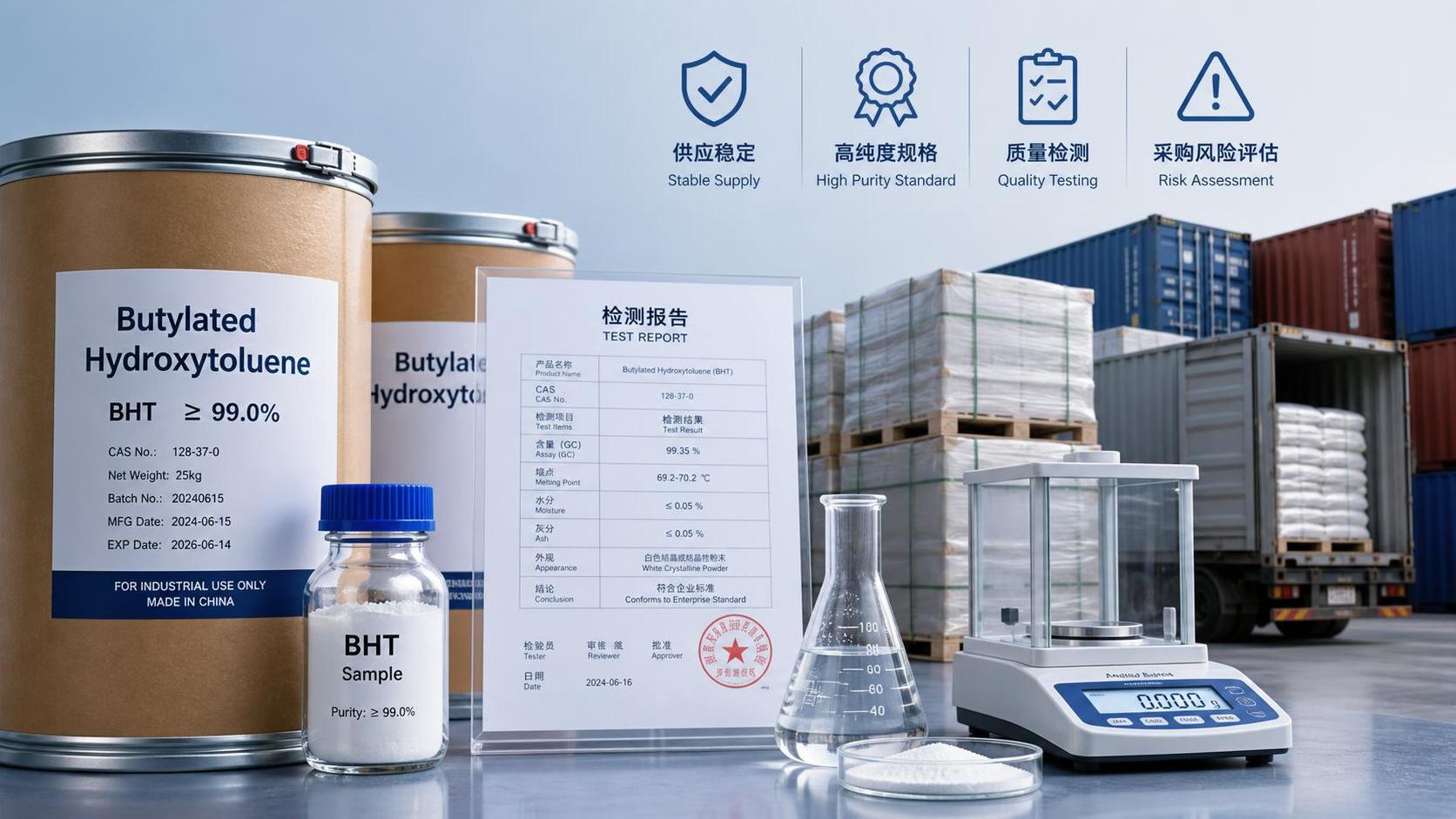
 Butylated Hydroxytoluene Price Drivers: Supply, Purity, and Purchasing Risk FactorsOct 21, 2026Butylated Hydroxytoluene price trends depend on supply stability, purity, logistics, and purchasing risk. Learn how to compare quotes wisely and reduce sourcing costs.
 Sodium Tripolyphosphate Price Trends: Raw Material and Energy ExposureOct 20, 2026Explore sodium tripolyphosphate price trends, from phosphate and soda ash costs to energy exposure. Learn how to compare quotes, manage sourcing risks, and make smarter purchasing decisions.
 Acetonitrile Shipment to Vietnam Successfully Dispatched; RCEP Benefits Boost Fine Chemical Trade with ASEANSep 16, 2026A shipment of industrial-grade acetonitrile from our company has recently been loaded and dispatched following the completion of standardized hazardous material packaging and container securing procedures.
 Nigerian Client’s Order of 4 Containers of Vinyl Acetate Successfully Loaded and Shipped to West AfricaSep 16, 2026We recently completed the loading of a vinyl acetate order for a Nigerian client; four containers of the product have been successfully packed and are ready for shipment to Nigeria.
Question Consultation
Send Us Your Inquiry Today

Luxi Chemical is a professional chemical product supplier with ample stock of all chemical categories and excellent quality, welcome your purchase inquiry.