


How polyester polyol for polyurethane foam affects cell uniformity
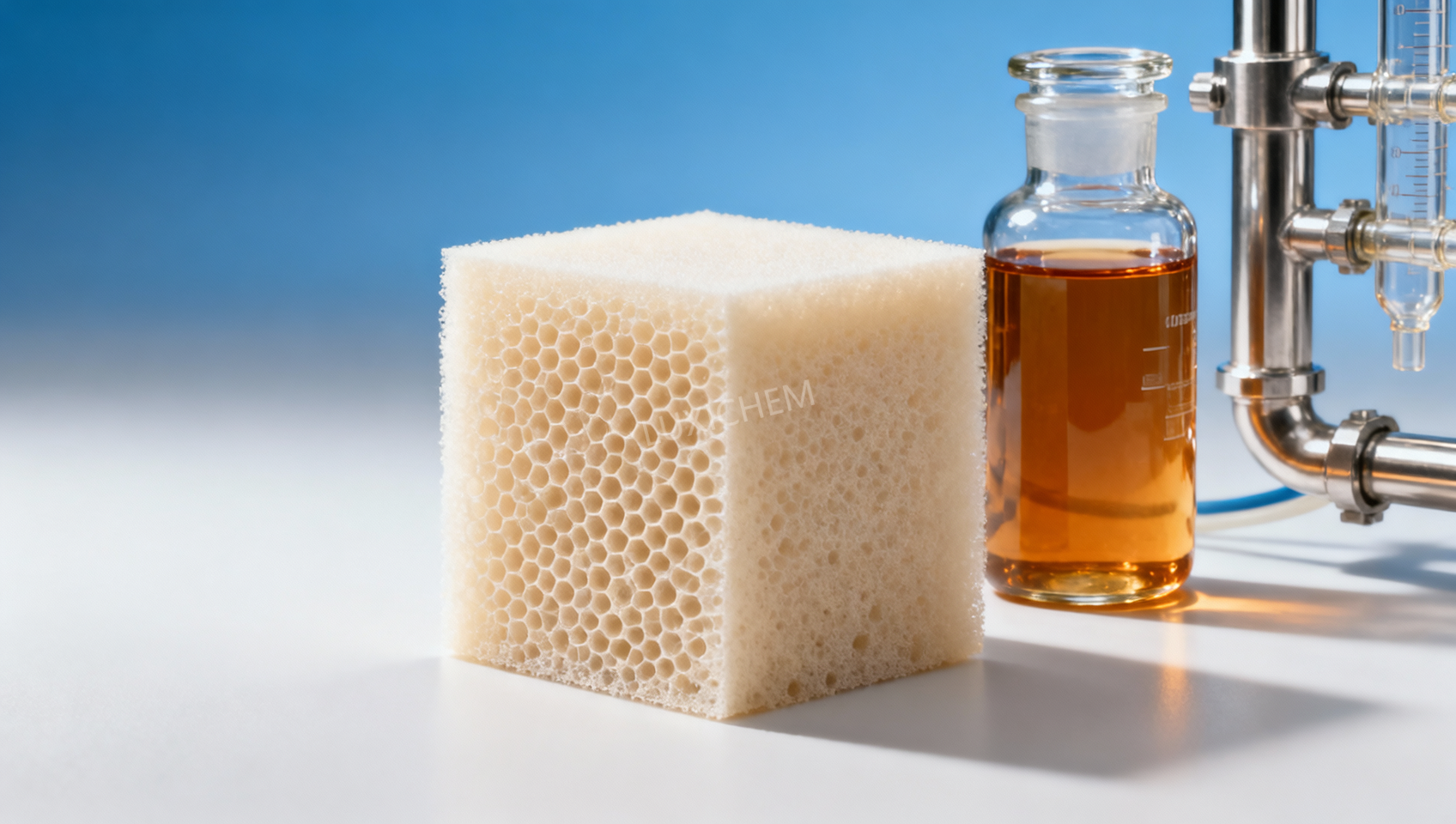
How Polyester Polyol for Polyurethane Foam Affects Cell Uniformity
For quality control and safety teams, cell uniformity is a critical indicator of polyurethane foam performance, processing stability, and end-use reliability. Selecting the right polyester polyol for polyurethane foam directly influences cell size distribution, foam density, airflow, and structural consistency. The relationship is not always visible in a drum specification alone: a polyol that appears compliant on basic hydroxyl value and viscosity may still produce inconsistent foam if its molecular architecture, water content, acidity, or batch-to-batch stability do not match the formulation and process window.
This matters because foam cells are formed during a short and highly reactive period. Gas generation, polymer network formation, surfactant action, catalyst balance, mixing energy, mold conditions, and raw-material temperature all interact. Polyester polyol is one of the materials that sets the chemical and physical starting point for that interaction. When its properties drift, the production line may show changes in rise profile, surface quality, density distribution, shrinkage tendency, or compression behavior before a formal nonconformance is even identified.
Why Cell Uniformity Is More Than an Appearance Requirement
A uniform foam structure generally means that cells have formed, expanded, stabilized, and cured at a reasonably consistent rate throughout the part or slab. Depending on the application, the desired structure may be predominantly open-cell, closed-cell, or somewhere between the two. Uniformity does not mean every cell is identical. It means the cell-size distribution and wall structure are controlled closely enough to support predictable physical properties.
In flexible foam, uneven cells can contribute to variable airflow, inconsistent softness, poor rebound, and localized weak zones. In rigid insulation foam, irregular cells may affect thermal resistance, compressive strength, dimensional stability, and the continuity of the insulating structure. For automotive, furniture, refrigeration, construction, and industrial cushioning uses, a visually acceptable foam can still contain internal variation that becomes evident only during cutting, aging, load testing, or final assembly.
From a safety perspective, abnormal cell formation can also signal a process that is moving outside its validated operating range. Sudden coarsening, voids, collapse, or excessive pressure development should not be treated only as cosmetic defects. They may point to moisture contamination, incorrect component ratios, temperature control failures, altered catalyst behavior, or unsuitable raw-material handling.
What the Polyester Polyol Contributes During Foaming
Polyester polyols are produced from reactions between polyacids or anhydrides and polyhydric alcohols. Their ester groups and molecular design often provide polyurethane systems with useful strength, abrasion resistance, solvent resistance, and adhesion characteristics. For foaming, however, the important question is not simply whether a polyester polyol is “high quality.” It is whether its defined properties are stable and suitable for the target foam chemistry.
The polyol reacts with isocyanate to build the urethane network. At the same time, the blowing reaction—often involving water and isocyanate, or a physical blowing agent—creates and expands gas bubbles. If polymer formation becomes too slow relative to bubble growth, cells can overexpand, merge, or collapse. If the network forms too quickly, the foam may have restricted rise, poor flow, internal stress, or uneven density. The selected polyester polyol influences this balance through functionality, hydroxyl value, equivalent weight, viscosity, and compatibility with the rest of the formulation.
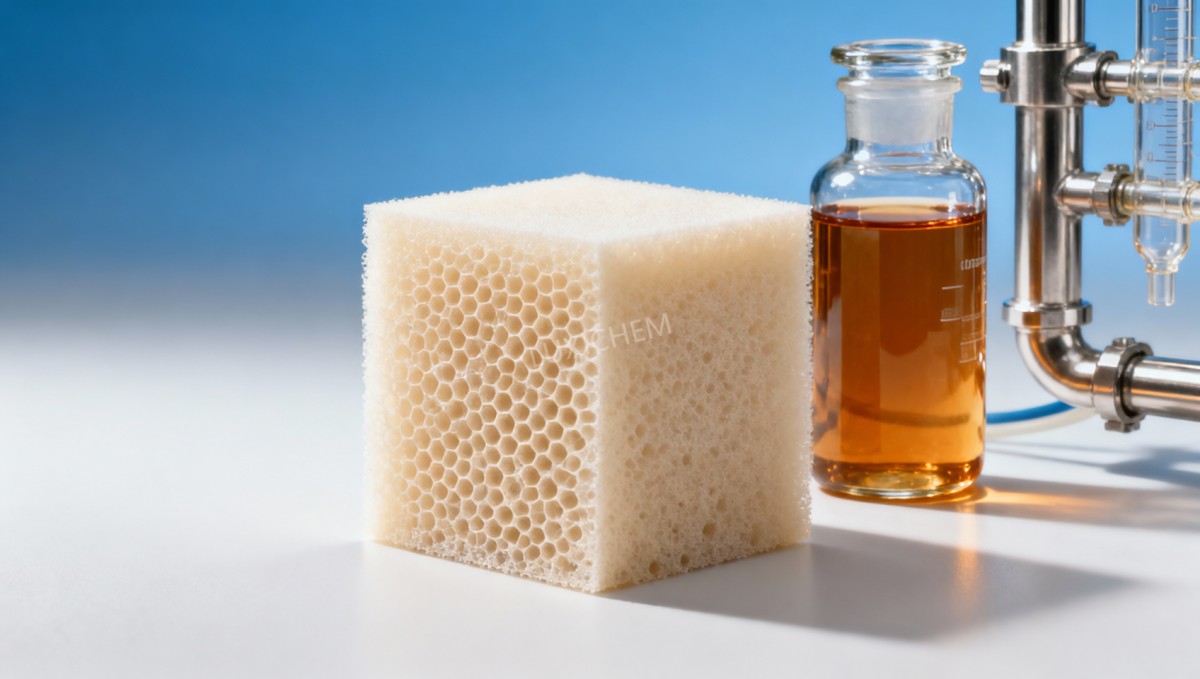
Hydroxyl Value and Functionality
Hydroxyl value is a key control parameter because it indicates the concentration of hydroxyl groups available to react. A change in hydroxyl value changes the polyol equivalent weight and can alter the effective isocyanate index if the formulation is not adjusted. In practice, this can affect cure speed, crosslink density, foam firmness, and the point at which the cell walls acquire enough strength to resist rupture or collapse.
Higher-functionality or lower-equivalent-weight polyester polyols often support a more highly crosslinked network, but that is not automatically beneficial. In a formulation designed for flow, softness, or long cream time, excessive reactivity or network build can make the system less forgiving. Quality teams should therefore review hydroxyl-value trends alongside actual foam observations rather than treating an in-spec result as proof that no processing adjustment is needed.
Viscosity, Mixing, and Bubble Distribution
Viscosity affects how easily raw materials are metered, blended, and dispersed. Inadequate mixing can leave localized zones with different catalyst, water, surfactant, or isocyanate concentrations. Those zones may nucleate cells differently and produce irregular structure. A higher-viscosity polyester polyol can also change mixing shear requirements and pump performance, particularly when material temperature varies between batches or shifts.
The operational point is straightforward: viscosity must be evaluated at the temperature relevant to actual production, not only at a reference laboratory temperature. A material that is stable in storage but arrives cold at the mix head may behave differently from a material conditioned consistently before use. Recording tank temperature, line temperature, and transfer time can be as useful as recording the certificate-of-analysis viscosity value.
Acid Value and Residual Chemistry
Acid value deserves attention in polyester systems because residual acidity may influence catalyst efficiency, reaction balance, storage stability, and compatibility with additives. The acceptable range depends on the specific formulation and supplier guidance. A small numerical shift may be manageable in one system but meaningful in another, especially where catalyst loading is low or processing conditions are already narrow.
Residual monomers, low-molecular-weight fractions, trace contaminants, or incomplete homogenization can also affect foam behavior. These issues may not always be detected through a single routine test. When cell uniformity changes without an obvious processing explanation, comparing retained samples by batch and reviewing a broader incoming-material profile is usually more productive than changing catalysts immediately.
Moisture Control Is Often the Fastest Route to Finding the Problem
Water is intentionally used in many polyurethane foam formulations, but uncontrolled water is a different matter. It reacts with isocyanate to generate carbon dioxide, so an unexpected increase can create excess gas, disturb density targets, enlarge cells, and increase the likelihood of rupture or collapse. Because polyester polyols can absorb moisture during storage and transfer, water content should be treated as a live process variable rather than a once-per-supplier-qualification item.
A practical investigation should include container integrity, tank venting, nitrogen blanketing where applicable, hose and pump condition, exposure during sampling, and the cleanliness of shared transfer equipment. Water may enter from sources other than the polyol itself, including poorly dried additives, contaminated drums, humid air, or wash residues. If the moisture result is elevated, simply reducing the deliberately added water may conceal the cause while changing the intended formulation balance.
This broader discipline applies across chemical operations. For example, moisture-sensitive materials used in water treatment or other auxiliary processes require storage conditions that match their safety data. Sodium Sulfite CAS#7757-83-7 is hygroscopic and should be protected from moisture and air; it is also incompatible with strong acids. Although it is not a polyurethane polyol component, its handling illustrates why material segregation, clear labeling, and moisture-control procedures should be coordinated across a site.
How to Assess a Polyester Polyol for Foam Consistency
For incoming quality control, a certificate of analysis remains useful, but it should be tied to a release plan that reflects the foam application. Common review points include hydroxyl value, viscosity, acid value, water content, appearance, and any agreed parameters relevant to the grade. The correct limits are formulation-specific; broad generic limits can create false confidence or unnecessary rejection.
A stronger approach links raw-material data to process and finished-foam evidence. Retain samples from each incoming batch. Track cream time, rise time, tack-free behavior, core density, airflow where relevant, visual cell structure, and physical test results required by the product specification. When a deviation occurs, these records allow teams to distinguish between a polyol-related trend and a mechanical or environmental cause.
Standards and Safety: Keep the Evidence Chain Intact
There is no single universal foam-cell test that replaces application-specific specifications. Depending on product type and destination market, manufacturers may need to evaluate density, compression behavior, tensile properties, tear resistance, airflow, dimensional stability, thermal performance, emissions, or fire-related characteristics under the standards requested by customers or regulators. The relevant methods and acceptance criteria should be confirmed for the actual application rather than inferred from a raw material description.
Safety management should also cover the whole material path: approved supplier status, SDS review, receiving inspection, traceability, controlled storage, exposure controls, spill response, and change management. A new polyester polyol source, a revised grade, or a different transport route can affect more than purchasing. It may require laboratory comparison, pilot processing, and documented approval before routine use. This is particularly important where foam products enter safety-sensitive assemblies or where post-production correction is difficult.
Luxi Chemical (Shandong) Co., Ltd. works across chemical raw materials, chemical products, and international trade, serving customers in more than 60 countries and regions. For buyers managing multiple material categories, one practical advantage of a broad chemical supply partner is the ability to align product documentation, shipment coordination, and procurement communication across different inputs. That does not remove the need for formulation-level validation; it makes disciplined information exchange easier to organize.
A Useful Decision Rule for Quality Teams
When cell uniformity changes, avoid assuming that the polyester polyol is either the sole cause or irrelevant because it passed a routine incoming test. Compare the material batch, its storage and conditioning history, the actual formulation ratio, processing temperatures, mixing performance, and foam test results as one connected record. The most reliable diagnosis usually comes from identifying which variable changed first.
A polyester polyol for polyurethane foam should be selected and controlled for stable chemistry, repeatable processing behavior, and fit with the required cell structure—not merely for a nominal specification. Before approving a source or responding to a quality deviation, confirm the application standard, define the critical incoming parameters, retain comparative samples, and validate performance under the plant conditions where the foam is actually made.
Related Picks
 Butylated Hydroxytoluene Price Drivers: Supply, Purity, and Purchasing Risk FactorsOct 21, 2026Butylated Hydroxytoluene price trends depend on supply stability, purity, logistics, and purchasing risk. Learn how to compare quotes wisely and reduce sourcing costs.
 Sodium Tripolyphosphate Price Trends: Raw Material and Energy ExposureOct 20, 2026Explore sodium tripolyphosphate price trends, from phosphate and soda ash costs to energy exposure. Learn how to compare quotes, manage sourcing risks, and make smarter purchasing decisions.
 Acetonitrile Shipment to Vietnam Successfully Dispatched; RCEP Benefits Boost Fine Chemical Trade with ASEANSep 16, 2026A shipment of industrial-grade acetonitrile from our company has recently been loaded and dispatched following the completion of standardized hazardous material packaging and container securing procedures.
 Nigerian Client’s Order of 4 Containers of Vinyl Acetate Successfully Loaded and Shipped to West AfricaSep 16, 2026We recently completed the loading of a vinyl acetate order for a Nigerian client; four containers of the product have been successfully packed and are ready for shipment to Nigeria.




Question Consultation
Send Us Your Inquiry Today

Luxi Chemical is a professional chemical product supplier with ample stock of all chemical categories and excellent quality, welcome your purchase inquiry.

