


How to Compare Polyvinyl Chloride Suppliers for Stable Lead Time and Quality
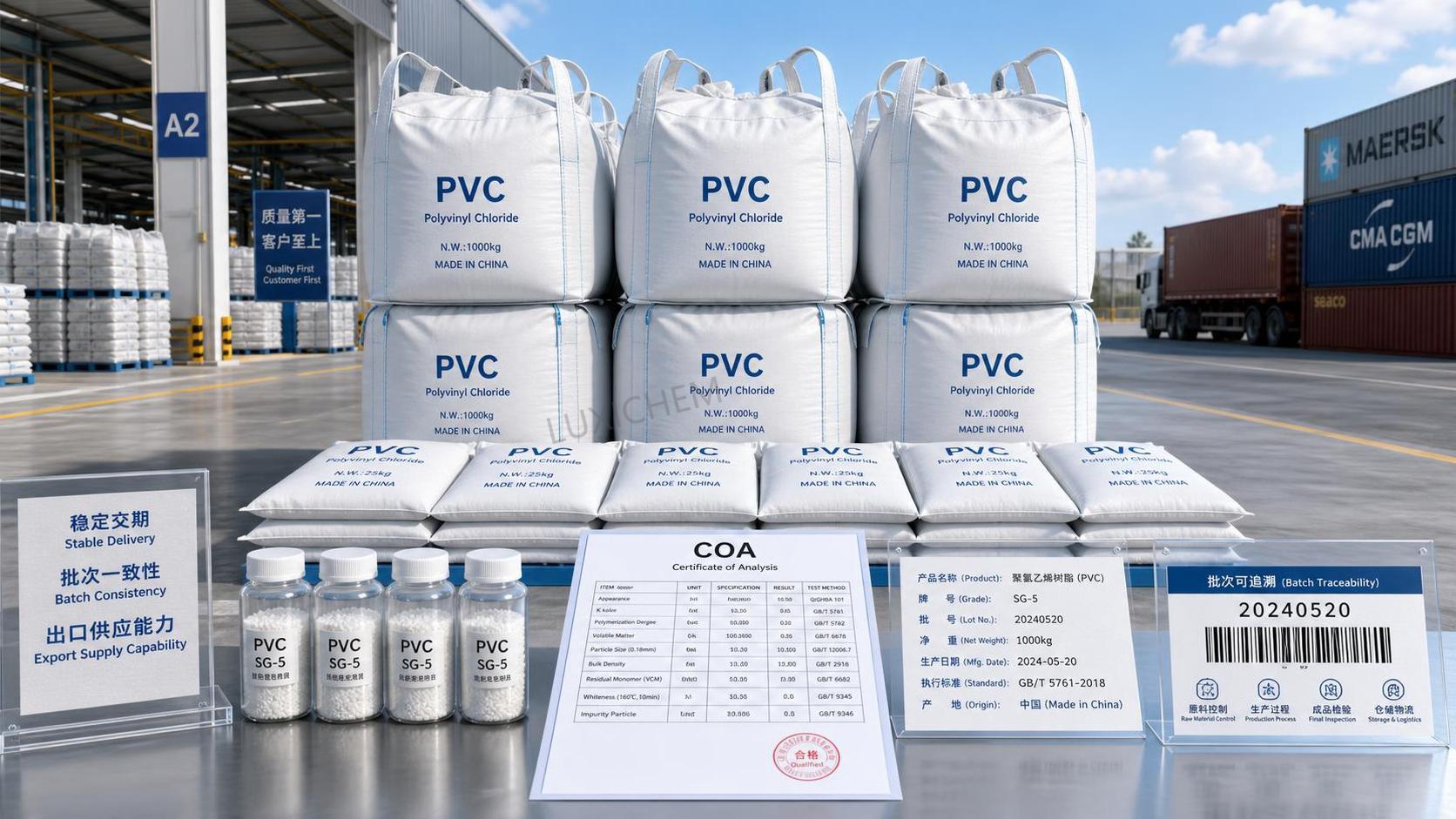
For business evaluators, comparing polyvinyl chloride suppliers is rarely a narrow price exercise. PVC purchasing sits at the intersection of production continuity, formulation stability, regulatory exposure, inventory cost, and freight reliability. A supplier that looks competitive on a quoted number can still become expensive if shipments slip, batch consistency varies, or documentation slows customs clearance. That is why the stronger buying teams assess PVC suppliers through an operating lens: not only what the seller can offer today, but how reliably that supplier can support a plant, converter, distributor, or trading program over time.
The core question behind most searches on this topic is practical: which supplier can keep lead times stable and quality predictable without creating hidden procurement risk? In chemical purchasing, that answer usually comes from comparing systems rather than samples alone. Capacity, raw material integration, export experience, quality discipline, and communication speed often matter more than a one-time discount.
Start with supply continuity, not the offer sheet
PVC is a high-volume industrial material, so interruptions are felt quickly. A delayed container, an unexpected plant turnaround, or weak allocation discipline can force buyers into spot replacement purchases at higher cost. When evaluating suppliers, the first screen should be whether they can support continuity under ordinary and stressed market conditions.
That means asking questions that go beyond nominal annual capacity. A serious comparison should look at how much export volume the supplier handles consistently, how orders are prioritized during tight supply periods, whether there are multiple production lines or backup arrangements, and how often delivery schedules are revised after order confirmation. Stable lead time is usually a result of operating discipline, not a promise made by sales.
Buyers should also distinguish between suppliers that are direct producers, integrated chemical groups, and trading companies. None of these models is automatically better in every case. A producer may offer stronger process control and traceability. A capable trader may offer sourcing flexibility, mixed-container support, and faster problem resolution across multiple product lines. For companies managing broader chemical procurement, that distinction matters. In some cases, a supplier with a wider portfolio can reduce coordination cost across categories, especially when PVC is only one line item in a larger purchasing program.
Lead time stability depends on what sits behind the shipment
Lead time is often discussed as if it were a single metric. In practice, buyers should break it into stages: production scheduling, packaging availability, inland transport, port handling, customs documentation, vessel booking, and destination clearance support. A supplier with acceptable factory readiness can still perform poorly if export operations are inconsistent.
When comparing vendors, ask for recent shipping performance rather than theoretical timelines. Useful questions include:
- What has been the actual average order-to-dispatch time over the last three to six months?
- How often were confirmed shipment dates missed?
- What were the most common reasons for delay?
- Can the supplier support partial shipments or split lots when required?
- How early are export documents issued after loading?
This is especially important for buyers serving downstream sectors with fixed production windows. In rigid PVC pipe, profiles, cable compounds, films, or sheets, a missed delivery may mean more than idle time. It can disrupt customer commitments, labor planning, and cash conversion cycles. A supplier that communicates issues early and proposes workable alternatives is often more valuable than one that simply quotes a shorter nominal lead time.
Quality consistency matters more than passing a single COA
Many procurement teams make an early mistake: they focus on whether the material meets specification once, rather than whether it stays within a workable range over repeated deliveries. In PVC, even modest variation in key properties can affect processing behavior, additive demand, throughput, surface finish, and end-product performance.
Depending on the grade and application, buyers may need to evaluate factors such as K-value or viscosity classification, bulk density, volatile content, impurity profile, particle size distribution, whiteness, fish eyes, and thermal stability behavior in downstream processing. Not every application weighs these equally, but the comparison logic is the same: a stable process usually values consistency more than a nominally broad specification.
Requesting a certificate of analysis is necessary but not sufficient. A better approach is to review multiple COAs across different batches and shipment periods. If possible, compare standard deviation trends rather than only minimum and maximum values. A supplier whose results sit comfortably and repeatedly near the operational target may be safer than one whose values move around inside the formal spec.
What experienced buyers usually verify
- Whether the supplier can provide batch-level traceability
- How samples compare with commercial lots after scale-up
- Whether test methods are clearly defined and shared
- How non-conforming material is investigated and resolved
- Whether packaging protects the material through long export transit
This is where plant trial discipline becomes important. Lab approval alone may not capture actual extrusion or compounding behavior. For larger-volume commitments, many buyers run comparative trials using at least two to three commercial-scale batches before final supplier approval.
Compliance and documentation are part of quality
For international chemical trade, quality is not limited to the resin itself. Documentation quality affects whether goods move smoothly across borders and whether buyers can use the material confidently in their own compliance systems. The relevant requirements vary by destination and end use, so teams should avoid assuming that one standard document set fits all markets.
Depending on the transaction and destination, buyers may need to check SDS quality, packing declaration accuracy, origin documentation, REACH-related status where applicable, food-contact relevance for downstream use cases【待核实】, and any customer-specific declarations on restricted substances. Even when PVC itself is the purchasing focus, the broader compliance context may be influenced by additives, stabilizers, plasticizers, or the final converted application.
In practice, weak paperwork can create the same disruption as weak material quality. Delayed customs release, inconsistent product naming across documents, or missing technical declarations can turn an otherwise acceptable order into a scheduling problem. Buyers comparing polyvinyl chloride suppliers should therefore evaluate the supplier’s documentation accuracy rate and responsiveness to pre-shipment review requests.
Cost comparison should include processing and risk cost
Quoted price remains important, but an experienced evaluator will widen the cost frame. The cheapest resin may become the more expensive option if it increases scrap, forces formulation adjustment, slows machine throughput, or leads to customer complaints downstream. Stable quality has a direct financial value, even when it is not visible in the invoice.
A practical supplier comparison often includes at least four cost layers:
This broader view is especially useful when management pushes for visible savings while operations teams are carrying the hidden cost of variability. A supplier with tighter process consistency may justify a slightly higher price if it lowers total conversion cost and reduces emergency buying.
Assess how the supplier behaves when conditions change
Supplier performance is easy to overestimate during normal market periods. The more revealing test is behavior under pressure: feedstock volatility, freight disruption, sudden demand spikes, exchange-rate swings, or regulatory friction. Buyers should ask for examples of how the supplier handled previous disruptions. Did they ration customers transparently? Did they maintain communication cadence? Were replacement options proposed? Were claims settled efficiently?
Long-term procurement value often comes from predictability in difficult periods. Suppliers that can explain allocation logic, maintain order visibility, and provide realistic updates tend to be easier to work with than those that protect the sale upfront but go quiet after confirmation.
For diversified chemical buyers, this is where broader supply relationships can matter. Some procurement organizations prefer vendors that can support several categories under one account structure, because that can simplify coordination and improve response speed. For example, where a company already sources intermediates, additives, or specialty materials from the same commercial network, that relationship may provide useful operational leverage. In broader sourcing discussions, adjacent materials such as Polyurethane CAS#9009-54-5 may appear in the same evaluation universe, not because they replace PVC, but because procurement teams increasingly compare suppliers on cross-category service capability as much as on single-product pricing.
Do not ignore packaging, storage, and complaint handling
These topics are often treated as secondary, but they become central once shipments scale. Packaging integrity affects contamination risk, moisture exposure, handling efficiency, and warehouse loss. The right packaging choice can differ by destination climate, storage duration, and internal unloading setup. Buyers should verify bag quality, labeling clarity, pallet standards if used, and how packaging complaints are managed.
Complaint handling deserves close attention because it reveals the supplier’s actual operating maturity. Ask what happens if batch performance deviates from expectation. Is there a written investigation process? Are retain samples kept? What evidence is required for a claim? How quickly is a technical response issued? A supplier that treats complaints as a commercial inconvenience rather than a technical event is likely to create repeat risk.
Use audits and references carefully
Site audits, third-party inspections, and customer references all help, but each has limits. A site visit may confirm that a facility exists and appears organized, yet it will not by itself prove export execution quality. A reference may be positive but based on a different grade, market, or volume profile. The useful approach is to combine these inputs rather than over-trusting any single one.
For medium- to large-volume approvals, buyers often work through a sequence: document review, technical discussion, sample testing, commercial trial, small shipment validation, then annual or semiannual performance review. That staged approach slows the initial decision slightly, but it usually reduces downstream correction cost.
A workable comparison framework for business evaluators
When several offers look similar, it helps to force a structured comparison. A simple weighted scorecard can make tradeoffs visible across commercial, technical, and operational dimensions.
That final category is often overlooked. Some suppliers are transactional and suitable for opportunistic buying. Others are better suited for long-term supply programs because they can support forecasting, documentation discipline, and multi-product coordination. Buyers should be clear about which model fits their business. A spot-driven trading strategy requires different supplier traits than a manufacturing operation trying to protect stable output.
The most common mistake in supplier comparison
The most common mistake is treating all approved suppliers as operationally equivalent once they pass basic specification review. In reality, the commercial consequences of supplier differences show up later: in batch repeatability, in the speed of corrective action, in how often procurement must intervene, and in how much safety stock the buyer must carry to stay protected.
For that reason, the strongest polyvinyl chloride suppliers are usually not the ones that simply offer a marketable price. They are the ones that help the buyer run a more stable system. That means reliable lead time, consistent quality, usable documentation, and credible communication when the market becomes less predictable. For business evaluators, that is the comparison standard that matters.
Related Picks
 Butylated Hydroxytoluene Price Drivers: Supply, Purity, and Purchasing Risk FactorsOct 21, 2026Butylated Hydroxytoluene price trends depend on supply stability, purity, logistics, and purchasing risk. Learn how to compare quotes wisely and reduce sourcing costs.
 Sodium Tripolyphosphate Price Trends: Raw Material and Energy ExposureOct 20, 2026Explore sodium tripolyphosphate price trends, from phosphate and soda ash costs to energy exposure. Learn how to compare quotes, manage sourcing risks, and make smarter purchasing decisions.
 Acetonitrile Shipment to Vietnam Successfully Dispatched; RCEP Benefits Boost Fine Chemical Trade with ASEANSep 16, 2026A shipment of industrial-grade acetonitrile from our company has recently been loaded and dispatched following the completion of standardized hazardous material packaging and container securing procedures.
 Nigerian Client’s Order of 4 Containers of Vinyl Acetate Successfully Loaded and Shipped to West AfricaSep 16, 2026We recently completed the loading of a vinyl acetate order for a Nigerian client; four containers of the product have been successfully packed and are ready for shipment to Nigeria.




Question Consultation
Send Us Your Inquiry Today

Luxi Chemical is a professional chemical product supplier with ample stock of all chemical categories and excellent quality, welcome your purchase inquiry.

