


How to Evaluate a Sodium Bicarbonate Manufacturer for Quality, Capacity, and Supply Risk
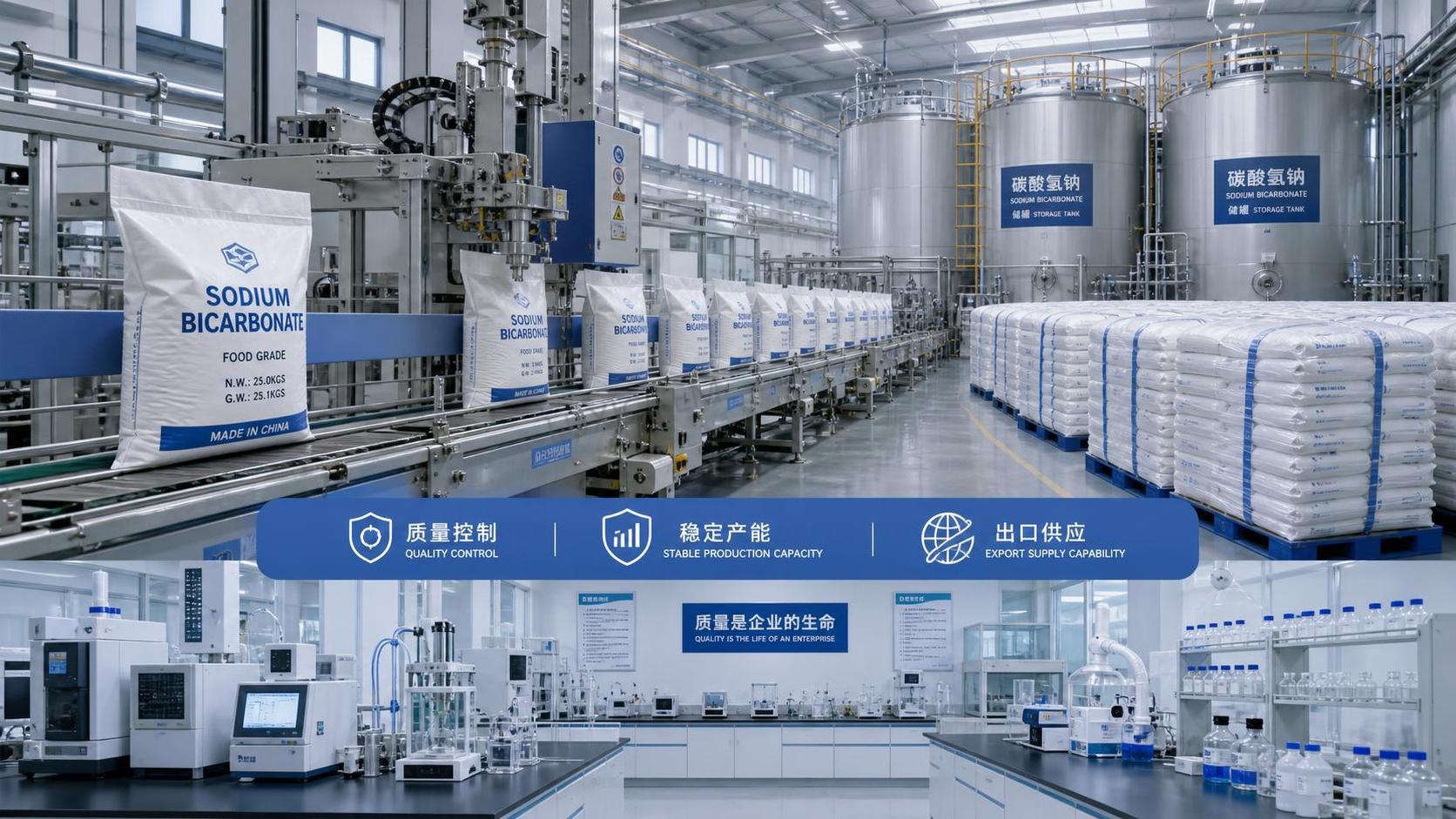
Choosing a sodium bicarbonate manufacturer is rarely just a price comparison exercise. For procurement teams, the real question is whether a supplier can deliver consistent quality, the right grade, predictable lead times, and stable supply under changing market conditions. A low quoted price can quickly lose its value if the material fails food-grade specifications, arrives with inconsistent particle size, or becomes unavailable during a logistics disruption.
In sodium bicarbonate sourcing, the purchasing risk often sits in the details: how the producer controls impurities, whether output is integrated with upstream soda ash and carbon dioxide supply, how inventory is managed, and whether export documentation is consistently handled. Buyers that evaluate only certificates and unit price tend to discover problems too late—usually after a customer complaint, a production interruption, or a rejected shipment.
This is why evaluating a sodium bicarbonate manufacturer should be treated as a supplier-risk assessment, not a basic vendor screening task.
Quality starts with grade clarity, not with marketing claims
Sodium bicarbonate is used across food processing, feed, pharmaceuticals, flue gas treatment, detergents, and industrial formulations. The same chemical name does not mean the same procurement standard. A supplier may describe its product as “high quality,” but buyers need to verify whether that quality matches the intended application.
The first checkpoint is grade definition. Procurement teams should confirm:
- whether the material is food grade, feed grade, pharma-related grade, or industrial grade;
- which standard or specification is being supplied;
- whether the specification is internally controlled, customer-specific, or tied to a recognized regulatory framework;
- which properties are critical for the application, such as assay, chloride, heavy metals, whiteness, moisture, particle size distribution, bulk density, or insoluble matter.
For food and regulated applications, a certificate of analysis alone is not enough. Buyers should ask whether testing is done per batch, per production lot, or at a fixed sampling frequency. A manufacturer with a stable process should be able to provide historical batch consistency data, not just a single compliant report.
One common purchasing mistake is assuming that compliant chemistry automatically means usable product performance. In many downstream uses, flowability, granulation uniformity, and packaging integrity matter almost as much as purity. This is especially true for automated filling lines, blending operations, and export shipments exposed to humidity during transit.
Manufacturing capability matters more than nominal plant scale
Procurement teams often ask for annual capacity, but annual capacity on paper does not tell you much about real supply reliability. A better question is how much stable monthly output the plant can sustain under normal operating conditions.
When evaluating a producer’s capacity, buyers should look at several layers:
- designed capacity versus actual operating rate;
- number of production lines and whether they are interchangeable;
- planned shutdown frequency and maintenance schedule;
- dependence on upstream raw materials and utilities;
- allocation of output between domestic and export markets.
For sodium bicarbonate, upstream integration is especially relevant. Manufacturers with stronger control over soda ash, carbon dioxide, energy, and plant utilities are generally better positioned to maintain output during cost spikes or regional supply pressure. A trader can offer competitive prices in a stable market, but when availability tightens, integrated or strategically secured producers usually perform better.
Buyers should also distinguish between “can produce” and “can reserve.” If your purchasing program requires regular containers every month, the relevant issue is whether the supplier can commit volume under contract, not whether the factory’s theoretical capacity seems large enough.
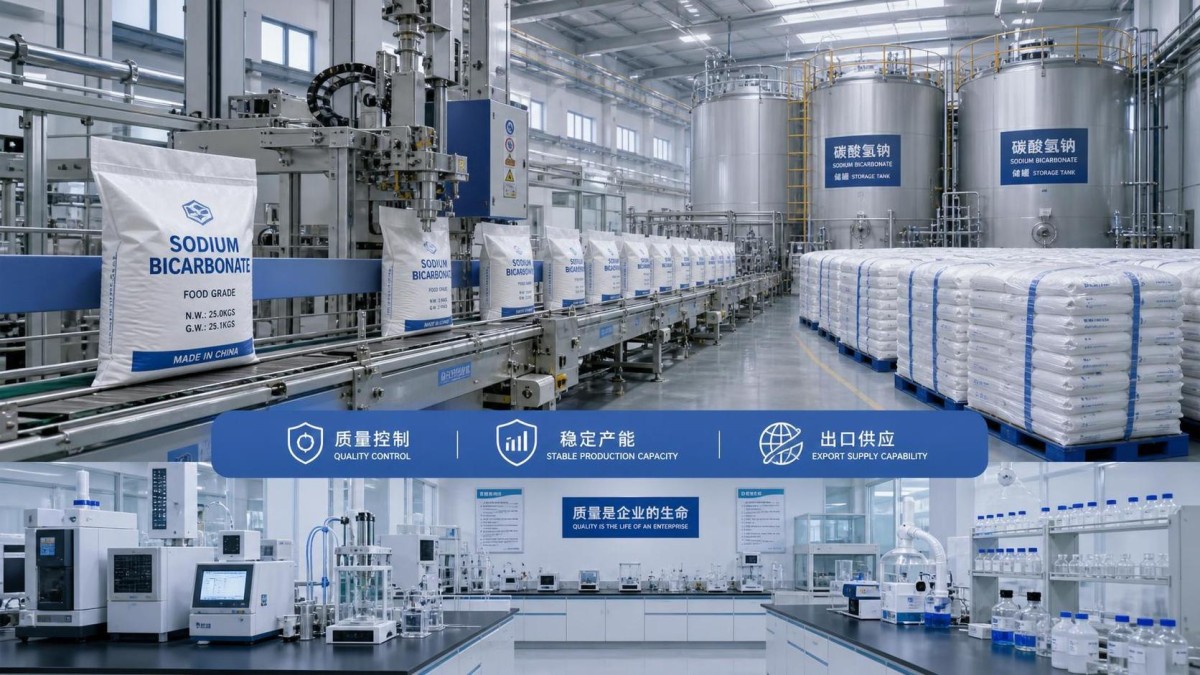
Quality systems should be tested through evidence, not only certifications
Certifications are useful, but procurement teams should avoid treating them as the end of due diligence. ISO management certificates, food safety certifications, halal or kosher documentation where relevant, and export compliance records all help establish a baseline. Still, a certificate does not tell you how exceptions are managed.
What matters in practice is how the manufacturer handles deviation. Ask questions such as:
- What happens if a batch falls near the specification limit?
- How is nonconforming product segregated?
- Is there lot traceability from raw material input to finished shipment?
- How quickly can the supplier investigate and issue corrective action reports?
- Are retained samples kept, and for how long?
These questions reveal whether the supplier has a functioning quality system or simply a documentation set prepared for audits.
For procurement teams serving food or consumer-facing industries, packaging control should also be part of the quality review. Moisture protection, bag strength, palletization quality, inner liner consistency, and labeling accuracy all affect landed usability. A chemically compliant product in damaged or poorly sealed bags can still become a costly problem.
Export performance is a separate capability from manufacturing
Many buyers underestimate the difference between being able to make sodium bicarbonate and being able to deliver it reliably across borders. International procurement depends on documentation accuracy, booking responsiveness, container loading discipline, and familiarity with destination-country requirements.
In supplier evaluation, export execution should be reviewed through operational evidence:
- experience serving the target region;
- ability to provide complete shipping documents on time;
- understanding of labeling, customs, and compliance requirements in destination markets;
- performance during peak freight periods;
- ability to manage mixed loads or one-stop chemical procurement programs.
This point becomes more important when buyers are consolidating multiple chemical products from a smaller supplier base. In practice, procurement efficiency is often improved when a partner can support broader sourcing needs beyond one SKU. For example, some buyers managing food additives or fertilizer-related materials may also source products such as Ammonium bicarbonate CAS#1066-33-7 through the same network, reducing supplier onboarding work and shipment fragmentation. That does not replace product-specific qualification, but it can improve purchasing efficiency if the supplier’s export controls are proven.
Price evaluation should focus on cost structure, not just quotation level
The cheapest offer is often the least transparent one. Procurement teams should assess how a supplier’s price is formed and what could make it unstable over the contract period.
In sodium bicarbonate, pricing is influenced by factors including:
- upstream soda ash economics;
- energy and utility costs;
- packaging type and customization;
- freight and port conditions;
- grade-specific compliance and testing requirements;
- order size and shipment frequency.
A manufacturer that offers a slightly higher price but maintains stable production, better packaging, lower claim rates, and stronger shipment planning may deliver a lower total procurement cost over time. This is particularly true for buyers that cannot afford stockouts or quality variability.
Useful pricing questions include:
- Is the offer spot-based or contract-based?
- What assumptions are built into the quote?
- How long is the validity period?
- What is the supplier’s approach when raw material costs move sharply?
- Are there seasonal supply patterns that affect pricing?
Buyers should be cautious when a supplier cannot explain its own pricing logic. Lack of transparency often signals weak control over sourcing, limited production stability, or aggressive front-end quoting designed to win orders that later become difficult to execute.
Supply risk often appears outside the product specification
Most supply failures are not caused by sodium bicarbonate chemistry itself. They come from operational and structural weaknesses around the product. Procurement teams should therefore broaden their review beyond the technical data sheet.
Some of the most important supply-risk indicators are:
- Single-site dependence: if the supplier operates only one plant, any maintenance issue, local policy restriction, or safety incident can affect all deliveries.
- Weak raw material security: dependence on outside supply for key inputs can reduce resilience.
- Overconcentration in one market: if domestic demand spikes, export customers may be deprioritized.
- Limited inventory buffers: just-in-time production can look efficient until transport disruptions occur.
- Poor account management: communication delays usually become worse when the market tightens.
Procurement teams should also assess whether the supplier has realistic contingency options. Can it shift orders between warehouses? Can it pre-build inventory for contract customers? Does it have a clear escalation process if a shipment misses schedule?
These questions are especially important for buyers who supply regulated food, feed, or process industries where production stoppages create much larger downstream losses than the value of the chemical itself.
Auditing a manufacturer should include operational questions
Whether the review is done onsite or remotely, an effective audit should move beyond presentation slides. Buyers should ask for evidence that reflects routine operation.
Examples of useful review points include:
- recent production records and batch numbering logic;
- laboratory test methods and calibration records;
- warehouse storage conditions, especially humidity control;
- bagging line condition and packaging inspection procedures;
- loading photos from recent export shipments;
- complaint history and corrective action handling.
A strong manufacturer is usually comfortable discussing limitations as well as strengths. If every answer sounds perfect, procurement teams should be more cautious, not less. The most reliable suppliers tend to be specific about lead times, batch planning, and specification tolerances.
Supplier comparison works better with scenario-based scoring
Many procurement teams use supplier scorecards, but basic scorecards can flatten important differences. A more practical approach is to compare manufacturers by purchasing scenario.
If your priority is food-grade compliance, quality system depth and documentation responsiveness should receive more weight than spot price. If your priority is high-volume industrial consumption, output stability, logistics execution, and contract pricing may matter more. If your plants run with limited inventory, on-time delivery performance and emergency support become critical.
In other words, there is no universally “best” sodium bicarbonate manufacturer. There is only a supplier that fits your risk tolerance, application requirement, and replenishment model better than others.
Some buyers also benefit from classifying suppliers into roles:
- primary contracted supplier for stable monthly volume;
- secondary approved supplier for contingency coverage;
- spot supplier for opportunistic cost balancing.
This reduces dependence on a single source while preserving leverage in price negotiations.
What procurement teams should verify before approval
Before final supplier approval, buyers should have reasonable confidence in five areas: specification fit, process consistency, available capacity, export execution, and risk response. If one of these remains unclear, the supplier may still be usable, but only with narrower allocation or stronger contract safeguards.
Practical safeguards include trial orders, tighter batch approval rules, claim-handling clauses, shipment schedules tied to forecast visibility, and backup supplier onboarding. In multi-category chemical purchasing, some procurement groups also prefer suppliers that can support adjacent products through the same trade infrastructure, such as Ammonium bicarbonate CAS#1066-33-7, provided each item is separately qualified and documented.
The most effective purchasing decisions in this category are usually not based on who offers the lowest initial number. They are based on who can supply the required grade, in the required packaging, at the required frequency, with the lowest probability of disruption. That is the real standard by which a sodium bicarbonate manufacturer should be judged.
Related Picks
 Butylated Hydroxytoluene Price Drivers: Supply, Purity, and Purchasing Risk FactorsOct 21, 2026Butylated Hydroxytoluene price trends depend on supply stability, purity, logistics, and purchasing risk. Learn how to compare quotes wisely and reduce sourcing costs.
 Sodium Tripolyphosphate Price Trends: Raw Material and Energy ExposureOct 20, 2026Explore sodium tripolyphosphate price trends, from phosphate and soda ash costs to energy exposure. Learn how to compare quotes, manage sourcing risks, and make smarter purchasing decisions.
 Acetonitrile Shipment to Vietnam Successfully Dispatched; RCEP Benefits Boost Fine Chemical Trade with ASEANSep 16, 2026A shipment of industrial-grade acetonitrile from our company has recently been loaded and dispatched following the completion of standardized hazardous material packaging and container securing procedures.
 Nigerian Client’s Order of 4 Containers of Vinyl Acetate Successfully Loaded and Shipped to West AfricaSep 16, 2026We recently completed the loading of a vinyl acetate order for a Nigerian client; four containers of the product have been successfully packed and are ready for shipment to Nigeria.




Question Consultation
Send Us Your Inquiry Today

Luxi Chemical is a professional chemical product supplier with ample stock of all chemical categories and excellent quality, welcome your purchase inquiry.

