


Why Polypropylene Plastic Pellets Cause Bubbles or Warpage During Extrusion
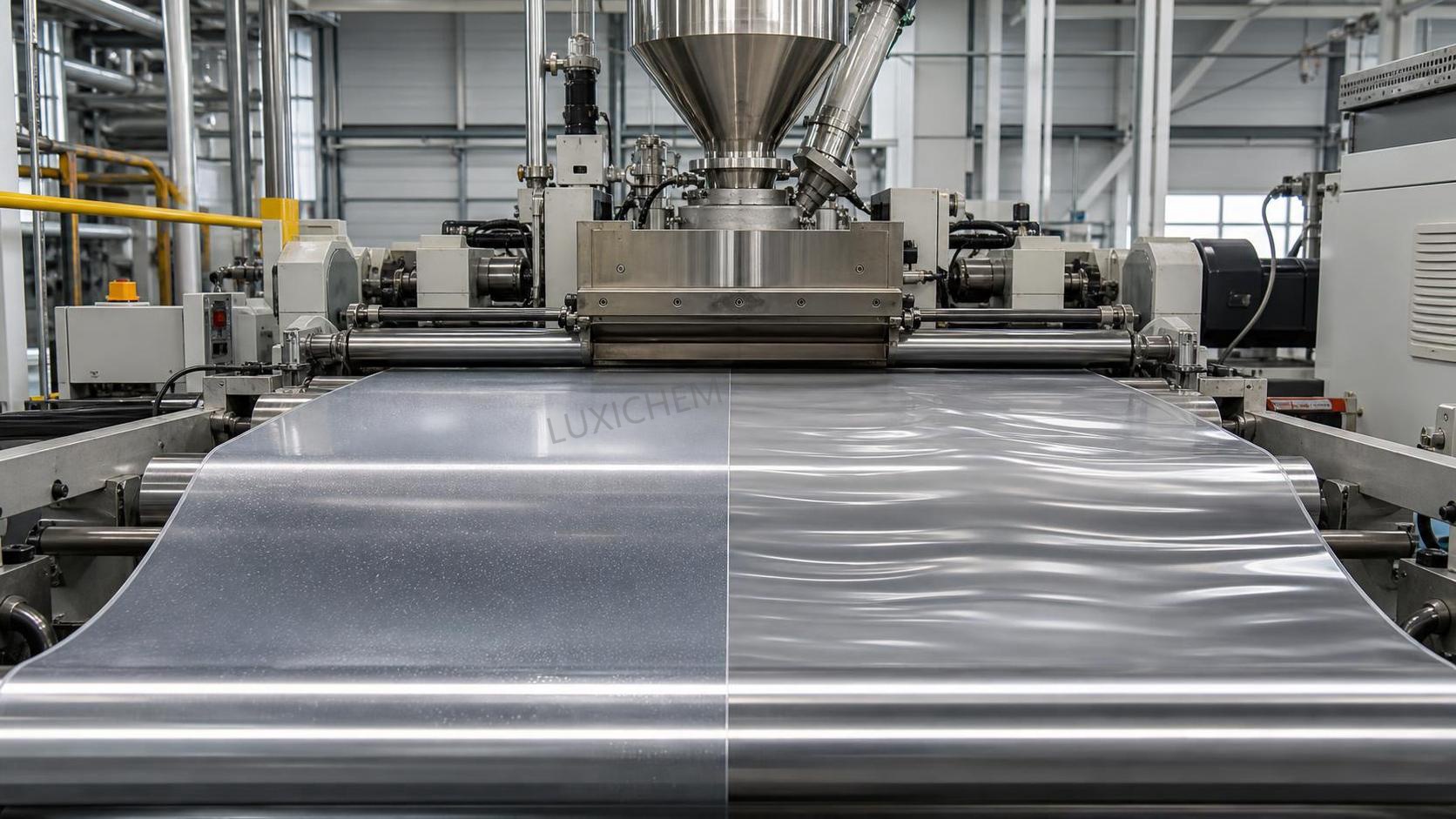
Why polypropylene pellets start bubbling or warping in extrusion
When defects show up in an extrusion line, the pressure usually lands on maintenance first. Operators may describe the issue as “foaming,” “silver streaks,” “surface blisters,” or “the profile won’t stay straight,” but in practice bubbles and warpage are rarely random. With polypropylene plastic pellets, they usually point to a combination problem: raw material condition, heat history, screw stability, die behavior, cooling balance, or contamination somewhere in the system.
That is why quick fixes do not always hold. A temperature adjustment might hide the symptom for an hour, then the defect returns on the next batch. Good troubleshooting starts by separating two questions: are you seeing gas formation inside the melt, or shape distortion after the melt leaves the die? The first is more about volatiles, moisture, degradation, and trapped air. The second is more about uneven stress release, cooling, orientation, and dimensional instability. Sometimes both happen together, which is where the line gets confusing.
In day-to-day chemical material supply, this distinction matters. Companies such as Luxi Chemical (Shandong) Co., Ltd., which handle a broad range of chemical raw materials and serve customers across many application sectors, tend to see that processing complaints are not caused by resin quality alone. Storage, packaging integrity, line cleanliness, and changeover discipline often matter just as much as the pellet specification on paper.
Bubbles: what they usually mean on a polypropylene line
Strictly speaking, polypropylene is not as hygroscopic as some engineering plastics, so “dry it more” is not always the right first answer. Still, moisture can contribute to bubbling when pellets have been poorly stored, exposed to condensation, or mixed with fillers, regrind, or additives that carry surface moisture. In humid plants, pellets brought from a cold warehouse into a warm production area can develop condensation surprisingly fast. Maintenance teams sometimes miss this because the bag or gaylord looks fine.
Another common source is contamination. A small amount of foreign polymer with different processing behavior can generate visible defects. Residual cleaning compound, degraded polymer from dead zones, paper dust from opened bags, oil from conveying equipment, or incompatible recycled content may all show up as bubbles or pitted surfaces. If the defect appears intermittently rather than continuously, contamination is often a better suspect than base resin.
Then there is thermal degradation. If melt temperature runs too high, or if residence time becomes excessive because of low throughput, hang-up, or an oversized barrel for the job, the material can start generating volatiles. In polypropylene this may not always look dramatic at first. Sometimes the first sign is a faint odor change, followed by tiny surface blisters, unstable pressure, or periodic gels that rupture at the die exit.
Air entrainment also deserves attention. Starve-fed conditions, poor throat sealing, bridging in the hopper, or inconsistent regrind feed can pull air into the system. Once trapped in the melt, it expands as pressure drops near the die. On lines running thin-wall sheet or narrow profiles, even small pockets become obvious defects.
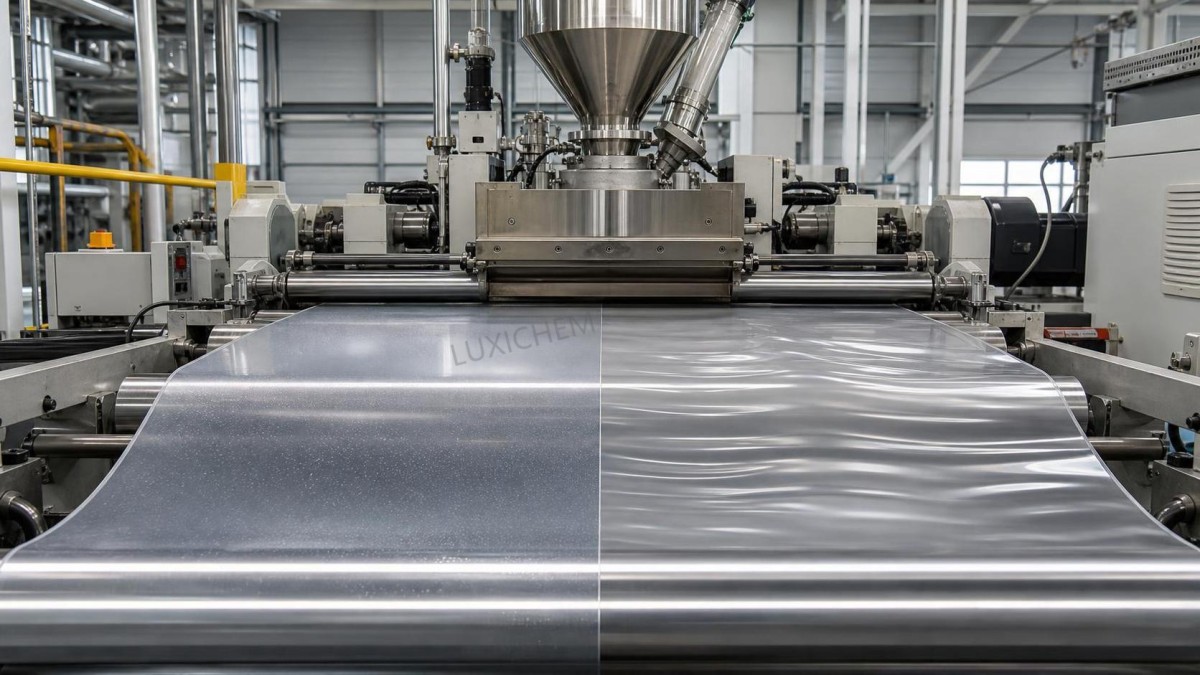
Practical checks when bubbles appear
Start with what changed, not what is theoretically possible. Was there a lot change, a shift change, a new regrind ratio, a shutdown and restart, a heater band replacement, a screen pack change, or a maintenance intervention on the feeder or vacuum loader? In real plants, defects often begin after a simple change that nobody initially considers important.
If the surface defect is uniform, check barrel temperature control and actual melt temperature. A failed thermocouple or heater overshoot can make the displayed setpoint look normal while the melt is already being overworked. If the defect pulses, look harder at screw recovery stability, feed consistency, vent performance if applicable, and pressure fluctuation before the die.
It is also worth inspecting dead spots in adapters, screen changers, and die lips. Polypropylene that sits too long in these areas can degrade, break loose, and create both bubbles and cosmetic defects. Maintenance teams often focus on the screw, but the trouble may actually be downstream.
Warpage is usually a cooling and stress problem, not just a temperature problem
Warpage after extrusion tends to frustrate people because the part may look acceptable at the die exit and distort later on the calibration table, conveyor, winder, or even after cutting. That usually means internal stress was built into the extrudate and released as the shape cooled. With polypropylene plastic pellets, this is common because the material can develop orientation and shrinkage differences if flow and cooling are not balanced.
One side of the profile may be cooling faster than the other. The die may be feeding unevenly. The haul-off may be pulling slightly off-center. The wall thickness may not be symmetrical. Even small imbalance in air knives, water flow, or calibrator contact can bend a profile over distance. On sheet lines, warpage may show up as edge lift, curl, or cross-direction distortion rather than obvious bending.
Overheating can make warpage worse, but lowering all zones is not a reliable cure. If the melt becomes too cool, flow uniformity can deteriorate and orientation may actually increase. The better approach is to look at melt homogeneity, die balance, puller speed, and cooling symmetry together.
What to inspect when extrudate will not stay straight
A useful field rule is this: if the shape bends consistently in one direction, suspect asymmetry. If it moves randomly, suspect instability. Asymmetry points to die gap variation, blocked flow channels, uneven cooling, or alignment issues. Instability points more toward fluctuating output, poor temperature control, inconsistent feed, or variable line speed.
Check these areas in sequence:
- Die and adapter cleanliness, especially carbonized residue near flow corners
- Screen pack condition and whether pressure drop increased suddenly after changeover
- Actual output stability over time, not just setpoint values
- Cooling water distribution, air flow direction, and calibrator contact points
- Puller speed synchronization and whether tension is centered
- Wall thickness uniformity across the profile or sheet
If you find both bubbles and warpage together, do not treat them as separate defects too early. A contaminated or partially degraded melt can flow unevenly, trap gas, and then cool with built-in stress. One root cause can produce a messy symptom set.
The raw material side is often underestimated
Maintenance teams are often called after the process has already become unstable, so attention naturally shifts to heaters, motors, and screws. But raw material handling deserves an equally hard look. Polypropylene pellets from different sources may process differently because of melt flow characteristics, additive packages, slip or antiblock content, filler level, or the amount and quality of reprocessed material blended in. These differences are not automatically defects, but they do change the process window.
Storage history matters more than many plants admit. Torn liners, partially open bags, dusty transfer systems, and long hold times near heat sources can all create trouble. In mixed-material operations, the risk rises further. A site that handles multiple chemistries, from polyolefins to specialty additives or even materials such as Polyvinyl Chloride Paste Resin CAS#9002-86-2, needs disciplined segregation and clean changeover routines. Cross-contamination at very low levels can still show up clearly in extrusion.
That is one reason broad-line chemical suppliers often emphasize stable supply and compliant product handling rather than talking only about nominal specifications. A one-stop procurement model can reduce sourcing complexity, but for the processor it only works if incoming material identification, packaging checks, and warehouse control stay tight at plant level.
Common misdiagnoses that waste time
One mistake is blaming “bad pellets” before checking the line. If several lots suddenly fail in the same extruder, the line condition deserves suspicion. Another is assuming every bubble is moisture-related. On polypropylene, overheating, contamination, and trapped air often explain more than moisture alone.
A third mistake is adjusting too many variables at once. When operators change barrel temperatures, screw speed, puller speed, cooling water, and feed settings together, the cause disappears into the noise. For after-sales support or maintenance records, that makes future troubleshooting much harder. Controlled changes, logged in order, usually solve the issue faster even if they feel slower in the moment.
There is also a habit of focusing only on visible product defects. Pressure trend, amperage drift, odor, die drool, startup purge behavior, and residue color all provide clues. A profile that warps 2 meters after the die often began failing much earlier inside the melt path.
A workable troubleshooting sequence
When time is tight, a simple order helps. Confirm the defect type and when it appears. Is it present from startup, after warm-up, after a lot change, or only at higher output? Then verify feed consistency and raw material condition. After that, check actual thermal behavior, not just setpoints. Next inspect filtration, adapters, and die cleanliness. Finally, review cooling balance and haul-off conditions if warpage is involved.
If you need to test whether the material or the line is the dominant factor, the cleanest method is usually comparative: run a known stable lot on the same machine without changing the setup, or run the suspect lot on a known stable line if plant conditions allow. Without that kind of controlled comparison, teams can argue about resin versus equipment for days.
For recurring issues, write down the defect pattern, line conditions, material identification, and what actually solved it. Plants that do this consistently build a much better fault library than those relying on memory. It sounds basic, but in extrusion maintenance, disciplined records usually beat heroic troubleshooting.
If polypropylene plastic pellets are causing bubbles or warpage, the answer is usually not hidden in a single number. It sits in the interaction between material condition, melt history, machine stability, and cooling balance. Once you look at those together, the defect often stops being mysterious and starts becoming traceable.
Related Picks
 Butylated Hydroxytoluene Price Drivers: Supply, Purity, and Purchasing Risk FactorsOct 21, 2026Butylated Hydroxytoluene price trends depend on supply stability, purity, logistics, and purchasing risk. Learn how to compare quotes wisely and reduce sourcing costs.
 Sodium Tripolyphosphate Price Trends: Raw Material and Energy ExposureOct 20, 2026Explore sodium tripolyphosphate price trends, from phosphate and soda ash costs to energy exposure. Learn how to compare quotes, manage sourcing risks, and make smarter purchasing decisions.
 Acetonitrile Shipment to Vietnam Successfully Dispatched; RCEP Benefits Boost Fine Chemical Trade with ASEANSep 16, 2026A shipment of industrial-grade acetonitrile from our company has recently been loaded and dispatched following the completion of standardized hazardous material packaging and container securing procedures.
 Nigerian Client’s Order of 4 Containers of Vinyl Acetate Successfully Loaded and Shipped to West AfricaSep 16, 2026We recently completed the loading of a vinyl acetate order for a Nigerian client; four containers of the product have been successfully packed and are ready for shipment to Nigeria.




Question Consultation
Send Us Your Inquiry Today

Luxi Chemical is a professional chemical product supplier with ample stock of all chemical categories and excellent quality, welcome your purchase inquiry.

