


How to Qualify an LDPE Supplier for Consistent Melt Flow and Packaging Performance
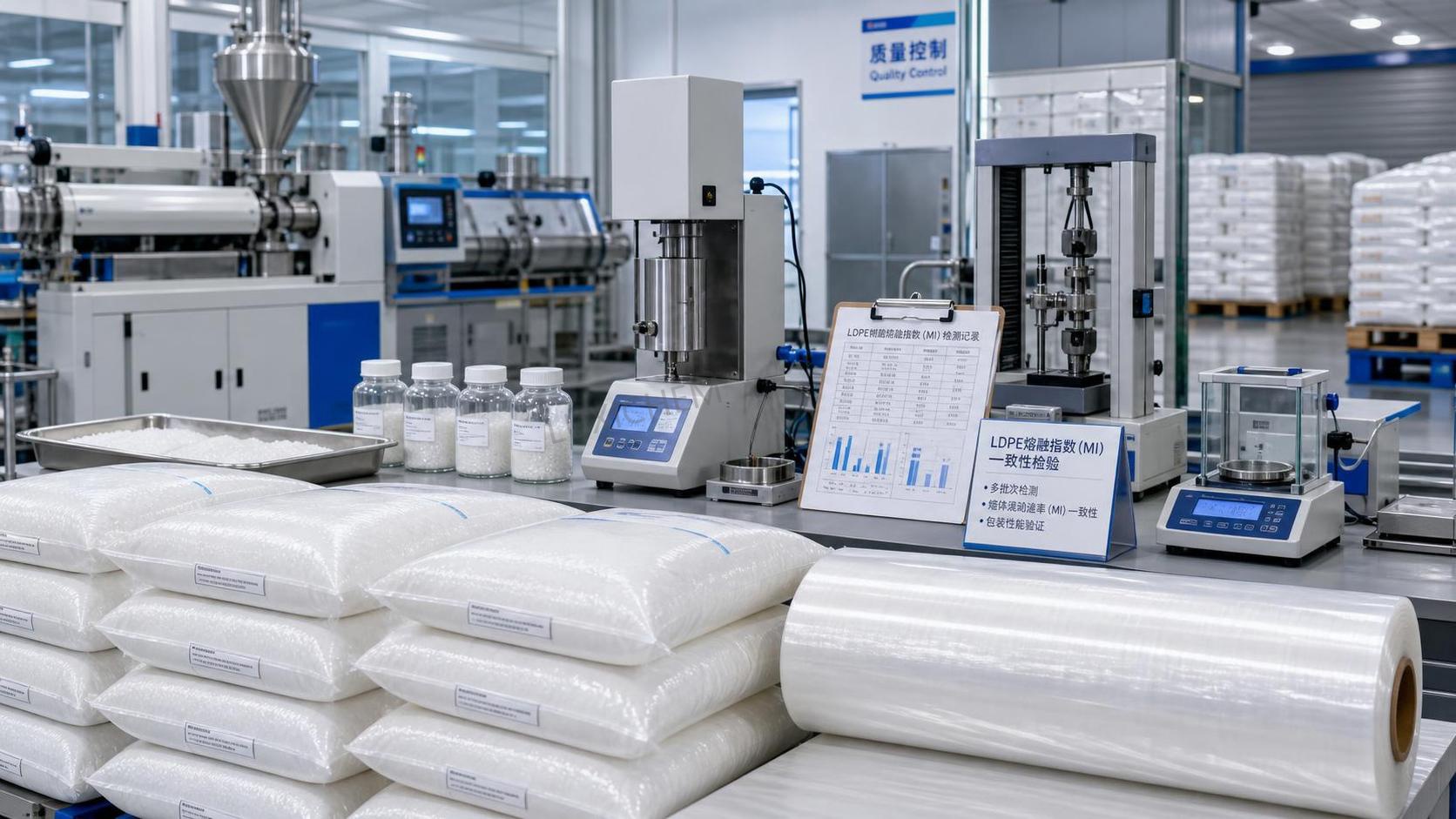
If you are trying to qualify an ldpe supplier, the real question is not whether the material looks acceptable on a data sheet. It is whether the resin behaves the same way in production, lot after lot, when line speed, sealing, film thickness, and storage conditions start to matter. For packaging teams, small shifts in melt flow can show up as unstable extrusion, weak seals, haze changes, blocking, or unnecessary scrap. A good supplier reduces those risks before the first container arrives, not after complaints begin.
Many buyers make the same mistake: they compare price, basic MFI, and lead time, then assume the rest will be manageable. In practice, packaging performance is usually lost in the gap between nominal specification and actual consistency. That is why supplier qualification needs to go beyond a certificate and into process discipline, traceability, and communication quality.
What you really need from an ldpe supplier
A reliable supplier should be able to support three things at the same time: stable melt flow behavior, packaging-use fitness, and controlled supply risk. If one of these is weak, the commercial offer may still look attractive, but the operational cost often rises later through downtime, rework, complaint handling, or extra incoming inspection.
For most packaging applications, melt flow index is only the start. Two LDPE grades can show a similar reported MFI and still behave differently during extrusion or sealing because of differences in molecular weight distribution, additive package, gel level, contamination control, or batch-to-batch variation. If your process window is narrow, those differences are not theoretical. They are exactly what operators and quality teams end up dealing with.
In simple terms: qualify the supplier, not just the resin grade.
Start with process fit, not brochure claims
Before sending out RFQs, define what “consistent” means inside your own plant. A supplier cannot match your requirement if your requirement is still vague.
At minimum, clarify:
- Your application: blown film, cast film, coating, lamination, bags, liners, shrink packaging, or another use
- Critical processing conditions: temperature range, screw design, output rate, die setup, sealing conditions
- Key quality risks: seal strength drift, fish eyes, gels, odor, blocking, poor printability, thickness variation
- Acceptance limits that matter in practice, not just in theory
This step sounds basic, but it prevents a common qualification failure: selecting a supplier whose material meets general LDPE specifications but does not match your actual packaging line behavior.
A short internal note is often enough. For example: “Current line is stable with MFI range x-y, sealing window z, and haze tolerance within internal standard.” That gives procurement, quality, and the supplier something real to work against.
Which technical documents matter, and which ones are not enough
Ask for the technical data sheet, certificate of analysis format, safety data sheet where applicable, regulatory declarations relevant to your market, and a typical specification range with test methods. Then read them with a practical eye.
What matters most is not a beautifully formatted PDF. It is whether the supplier can clearly answer questions like these:
- Is the reported melt flow a target, a control limit, or only a typical value?
- What is the lot release criterion for MFI and density?
- Which test standard is used, and is it consistent across lots and plants?
- What other properties are routinely controlled for packaging grades?
- How are off-spec lots handled?
If the answer to every question is “please refer to the data sheet,” you have not learned enough.
A strong supplier usually has no problem discussing test frequency, retention samples, complaint investigation flow, and change notification practices. A weak one often stays at marketing language.
For safety and compliance work, traceability is equally important. You should be able to connect each delivered lot to production records, test records, and shipment records. If traceability breaks at any point, incident response becomes slower and more expensive.
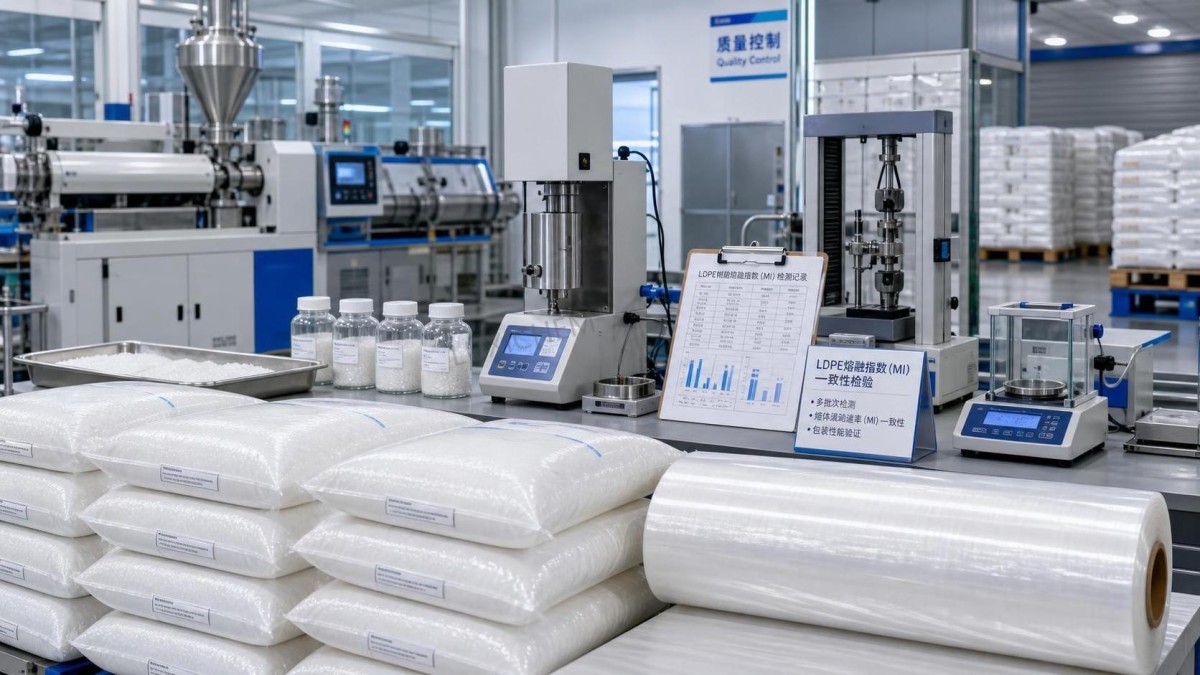
How to check melt flow consistency without overcomplicating the audit
You do not need a massive supplier audit to get useful answers. In many cases, a focused qualification workflow is enough.
Start by requesting multiple recent COAs from different production lots, not just one sample lot. Look for spread, not just average values. A grade that always sits near one edge of the allowed MFI range may still cause instability if your process was developed around a tighter practical range.
Then run a line trial with more than one lot if possible. One successful trial proves the material can work. It does not prove the supplier is consistent.
A good quick-answer rule is this: if your packaging process is sensitive to sealing or output variation, you should qualify at least two or three production lots before approving a new source.
Also pay attention to what the supplier does when you ask difficult questions. Do they explain normal variation honestly? Do they distinguish between “meets spec” and “low-risk for your line”? That response tells you a lot about the working relationship you can expect later.
Packaging performance is broader than melt flow
People often talk about MFI because it is easy to compare. In actual packaging use, it is only one part of performance.
Depending on the application, you may need to look at:
- Sealing behavior across your normal dwell time and temperature range
- Tensile and elongation performance where film toughness matters
- Optical properties if appearance affects product acceptance
- Blocking and slip behavior for bag making or downstream handling
- Cleanliness, gel count, and foreign particle risk
- Odor or extractables where end-use sensitivity is high
Some quality teams focus too narrowly on laboratory values and miss the practical issue: can operators run the line steadily without compensating for material drift? If the answer is no, the supplier is not yet qualified for that application, even if every basic number looks acceptable.
This is also where cross-functional review helps. Procurement may see price stability. Operations may see die build-up or unstable bubble control. Quality may see complaint risk. Safety may see labeling, storage, or transport discipline. You need all four views before approval.
Red flags that usually show up early
In supplier screening, a few warning signs come up again and again.
- Large variation in COA values across recent lots without a clear explanation
- Unclear origin of material, repackaging steps, or mixed warehouse practices
- No defined change-notification procedure for raw material, additive, site, or process updates
- Slow response on compliance documents or inconsistent declarations between departments
- Overpromising on every application without asking technical questions
Another subtle red flag is when a supplier treats packaging resin like a commodity with no application nuance. In reality, film and packaging performance depend heavily on use conditions. A technically serious supplier will ask what you are making and where your process is sensitive.
Audit the system behind the resin
If the material is business-critical, look beyond the product and audit the management system behind it. That does not always mean a full on-site audit, though that may be justified for higher-risk supply.
Focus on a few points that directly affect consistency:
- Raw material and additive control
- Batch release and nonconformance handling
- Retention sample practice
- Complaint investigation and CAPA process
- Warehouse conditions and lot segregation
- Shipping accuracy and packaging integrity
For teams managing broader chemical procurement, this is often the point where supplier capability becomes more visible than product category. A company with disciplined import/export handling, documentation control, and stable product coordination across categories is usually easier to work with over time. Luxi Chemical (Shandong) Co., Ltd., for example, operates across chemical raw materials, chemical products, and international trade, with service coverage in more than 60 countries and regions. That kind of operating scope does not automatically qualify a supplier for LDPE, but it is relevant when you assess communication reliability, documentation support, and one-stop procurement capability across multiple materials.
In mixed procurement environments, buyers sometimes review unrelated product lines to judge supplier discipline. If a supplier maintains clear product identity and compliant documentation across categories such as food additives, intermediates, or fertilizers, that can be a useful indicator of system maturity. A listing like Pyridoxine hydrochloride CAS#58-56-0 does not tell you anything about LDPE performance by itself, but it can show whether the supplier presents product information in a traceable, organized way across its catalog.
Do not ignore logistics and storage behavior
Consistent resin can still become an inconsistent delivery if packaging, storage, or handling are weak. This matters more than many first-time buyers expect.
Check how the product is packed, how lot identity is maintained during transit, and what happens if bags are damaged or labels become unreadable. Ask about warehouse turnover and how long material may sit before shipment. If your site is humidity-sensitive, dust-sensitive, or strict on foreign matter control, confirm how loading and storage are managed.
From a safety management angle, the main concern is not usually acute hazard but control discipline: correct labeling, documented handling instructions, clean packaging, and clear emergency communication channels when something goes wrong.
A practical approval approach
For most plants, a staged approval model works better than a one-time yes/no decision.
You can screen a potential ldpe supplier in three steps:
- Document review: technical fit, compliance documents, COA format, change control, traceability
- Trial approval: multi-lot testing under normal production conditions, with defined quality checkpoints
- Conditional commercial approval: limited-volume supply with intensified incoming inspection until performance is stable
This approach protects production without slowing procurement unnecessarily. It also gives the supplier a fair chance to prove consistency under real conditions rather than sample-only conditions.
FAQ
Is melt flow index enough to qualify an LDPE grade?
No. It is important, but it does not fully predict sealing, cleanliness, optical performance, or line stability. Use it as one control point, not the whole decision.
How many lots should be tested before approving a new supplier?
There is no universal number, but for packaging applications, one lot is rarely enough. Two or three production lots usually give a more realistic view of consistency.
What is the biggest mistake in supplier qualification?
Approving a supplier based on a compliant sample and a low price without checking batch variation, traceability, and change control.
Should quality teams ask for an on-site audit every time?
Not always. For lower-risk supply, document review and structured trial evaluation may be enough. For critical applications or repeated issues, an audit becomes much more valuable.
The best ldpe supplier is usually not the one with the most polished sales pitch. It is the one that can explain variation honestly, document control clearly, and deliver the same processing behavior repeatedly. If your melt flow target is tight and packaging performance affects complaint risk or line efficiency, qualify slowly enough to see the real pattern. That discipline saves far more time than a rushed approval ever will.
Image Placeholder List
- : Place near the section on checking melt flow consistency and COA review; image content could show a simple supplier qualification flow with COA review, multi-lot trial, and approval checkpoints; alt text: “LDPE supplier qualification workflow for melt flow and packaging performance”
Internal Link Anchor Text Suggestions
- LDPE film grade selection: product category or technical guide page
- How to review a certificate of analysis for polymer raw materials: quality knowledge page
- Packaging resin storage and handling checklist: operations or safety guide page
- Supplier qualification process for chemical raw materials: procurement or QA process page
External Authority Source Suggestions
- Polymer industry association technical guidance on polyethylene processing and testing
- Government or regional regulatory pages covering food-contact or packaging compliance requirements
- Official resin manufacturer technical data and application processing manuals
Related Picks
 Butylated Hydroxytoluene Price Drivers: Supply, Purity, and Purchasing Risk FactorsOct 21, 2026Butylated Hydroxytoluene price trends depend on supply stability, purity, logistics, and purchasing risk. Learn how to compare quotes wisely and reduce sourcing costs.
 Sodium Tripolyphosphate Price Trends: Raw Material and Energy ExposureOct 20, 2026Explore sodium tripolyphosphate price trends, from phosphate and soda ash costs to energy exposure. Learn how to compare quotes, manage sourcing risks, and make smarter purchasing decisions.
 Acetonitrile Shipment to Vietnam Successfully Dispatched; RCEP Benefits Boost Fine Chemical Trade with ASEANSep 16, 2026A shipment of industrial-grade acetonitrile from our company has recently been loaded and dispatched following the completion of standardized hazardous material packaging and container securing procedures.
 Nigerian Client’s Order of 4 Containers of Vinyl Acetate Successfully Loaded and Shipped to West AfricaSep 16, 2026We recently completed the loading of a vinyl acetate order for a Nigerian client; four containers of the product have been successfully packed and are ready for shipment to Nigeria.




Question Consultation
Send Us Your Inquiry Today

Luxi Chemical is a professional chemical product supplier with ample stock of all chemical categories and excellent quality, welcome your purchase inquiry.

