


PE Granules Selection Guide: Matching Resin Properties to Film, Pipe, and Molding Uses
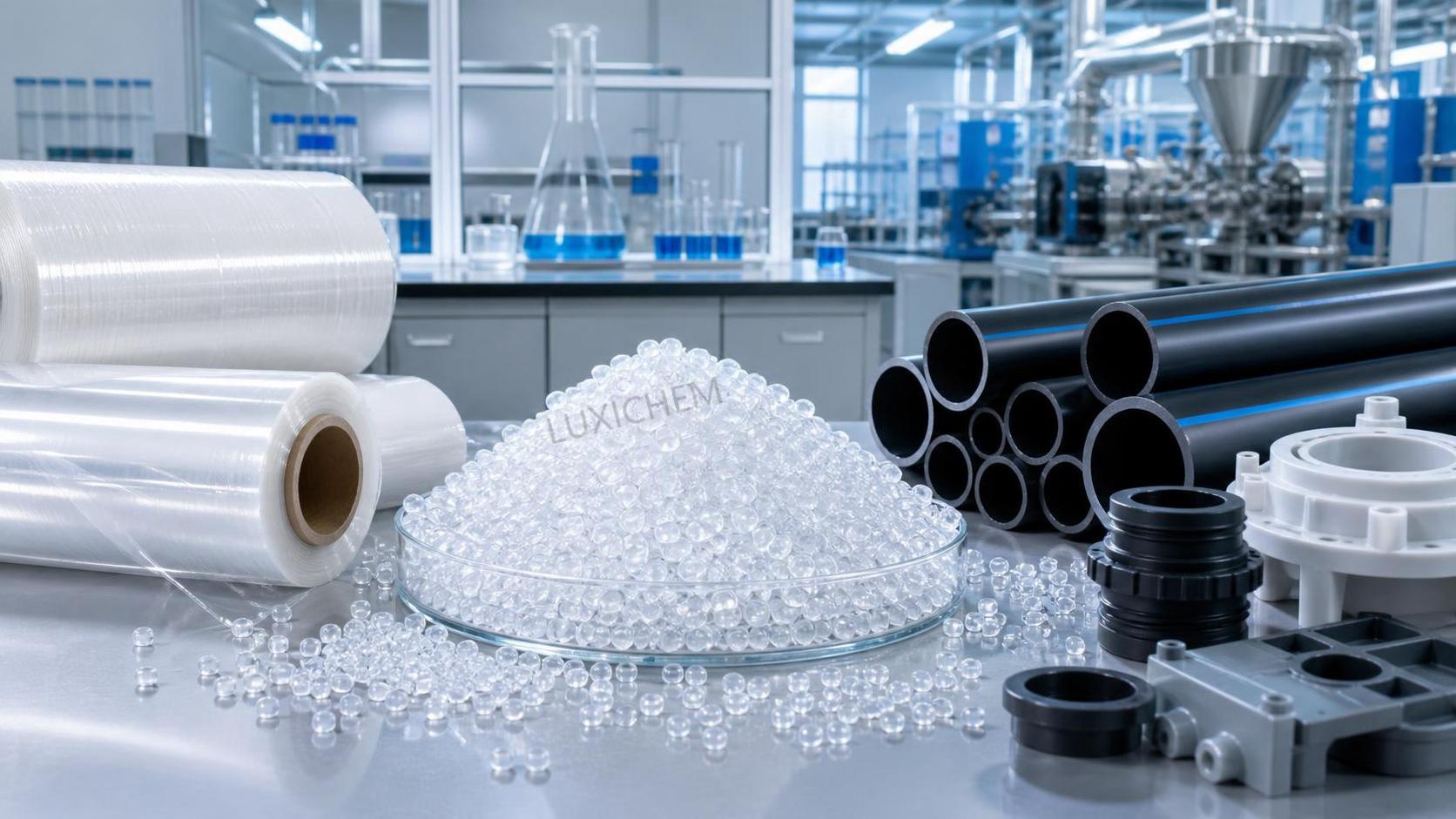
Selecting the right pe granules starts with one practical question: what failure mode is least acceptable in the final product? For film, it is often tear, haze, or unstable sealing. For pipe, it is long-term pressure resistance and crack growth. For molding, it is dimensional control, cycle time, and impact balance. Technical evaluators rarely need a generic resin overview. They need a way to compare resin properties against processing conditions, end-use stress, compliance demands, and cost targets.
The core search intent behind this topic is clear: buyers, engineers, and technical reviewers want a faster, more reliable method for matching polyethylene resin characteristics to specific applications. They are not simply looking for definitions of density or melt flow index. They want to know which properties matter most for film, pipe, and molding, how those properties interact, and what tradeoffs should be accepted or avoided during specification and procurement.
For this audience, the biggest concerns are usually consistency, processability, mechanical performance, and supply reliability. A resin that looks acceptable on a basic data sheet can still create problems on the line if melt strength is wrong, environmental stress crack resistance is too low, or batch-to-batch variation is poorly controlled. That is why the most useful content is not broad theory. It is an application-focused selection guide that translates resin data into purchasing and qualification decisions.
This article therefore emphasizes four areas: how to read the most decision-critical resin properties, how to match those properties to film, pipe, and molding uses, how to evaluate supplier data beyond headline numbers, and how to reduce technical and commercial risk before approval. General background on polyethylene chemistry is kept brief because it does not help technical evaluators make a better shortlisting decision.
Start with application stress, not with resin grade names
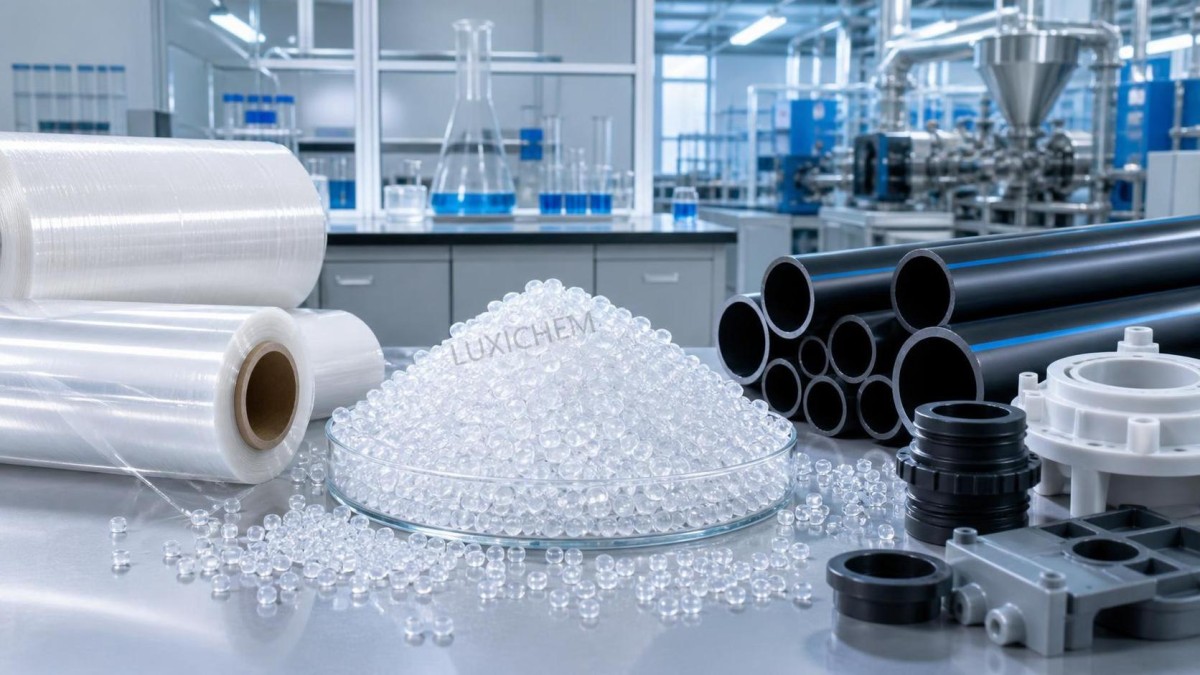
Many resin selection mistakes happen because teams begin with familiar grade labels such as LDPE, LLDPE, HDPE, or injection grade, then try to make the product fit. A more effective route is to start from the end-use profile. Ask what mechanical loads, thermal exposure, chemical contact, processing window, and compliance requirements the part will face. Once those are defined, resin screening becomes much more precise.
In practical terms, pe granules should be judged against three filters. First is performance under real service conditions. Second is processing behavior on the available equipment. Third is supply and quality consistency across production campaigns. A resin that performs well in laboratory data but runs poorly on existing extrusion or molding equipment may not be the right commercial choice.
Technical evaluators should also separate must-have properties from adjustable properties. Some targets can be corrected through additives, blending, or machine settings. Others cannot. For example, poor long-term hydrostatic strength in pipe compounds cannot be treated as a minor process issue. Likewise, inadequate seal performance in film structures may not be solved economically through downstream adjustments alone.
Which resin properties matter most when comparing PE granules?
Although polyethylene data sheets can contain many values, a few properties usually drive the decision. Density is one of the most important because it strongly influences stiffness, tensile behavior, hardness, and barrier tendencies. In broad terms, higher density often increases rigidity and strength, while lower density can improve flexibility and toughness. However, density should never be read alone because it interacts with molecular structure and processing method.
Melt flow index, or MFI, is equally important because it indicates how easily the resin flows during processing. Higher MFI usually supports easier filling and faster molding, but it can reduce melt strength or toughness in some applications. Lower MFI often favors stronger melt behavior and better mechanical properties, but may require more energy, tighter temperature control, or more robust equipment capability.
Impact strength, environmental stress crack resistance, tensile properties, and elongation are the next group of key metrics. For many technical assessments, these values reveal whether the resin can tolerate handling shock, load concentration, repeated stress, or service exposure without premature failure. In pipe and containers especially, slow crack growth resistance and ESCR can be more important than a headline tensile value.
Other properties become decisive depending on the application. These include flexural modulus, Vicat softening point, haze, gloss, dart impact, tear resistance, shrinkage, warpage behavior, and seal initiation temperature. Evaluators should also ask about additives, slip or antiblock systems, food-contact status, and regulatory documentation when the final use requires controlled compliance or predictable converting performance.
How to match PE granules to film applications
Film applications are diverse, so the correct resin depends on whether the target is blown film, cast film, lamination film, liner film, agricultural film, heavy-duty packaging, or specialty flexible packaging. The main technical challenge is balance. Film producers usually need enough toughness and puncture resistance for handling, enough process stability for consistent gauge, and enough optical or sealing performance for the package design.
For flexible film, lower density polyethylene materials are often selected where softness, flexibility, and sealability matter. LLDPE is widely favored for toughness and puncture strength, while LDPE is often valued for processing ease, clarity, and seal performance. Blends are common because a single resin rarely delivers the best mix of bubble stability, drawdown, optics, and mechanical strength.
When assessing pe granules for film, technical buyers should look closely at melt index, density, dart impact, Elmendorf tear, haze, gloss, and seal behavior. A resin with suitable mechanical strength but unstable bubble behavior can still damage output and scrap rates. Likewise, a film that meets tensile targets but seals inconsistently will create packaging line losses that outweigh a small raw material cost saving.
Another critical point is processing fit. Some film lines are optimized for narrow melt windows, while others can manage more demanding structures. Resin selection should therefore consider frost line behavior, neck-in tendencies, die buildup risk, and compatibility with masterbatches or recycled content if used. A technically acceptable resin becomes commercially valuable only when it runs predictably at target throughput.
How to match PE granules to pipe applications
Pipe is one of the most demanding polyethylene applications because failure consequences can be severe and long term. Here, technical evaluation should focus less on short-term flow convenience and more on pressure performance, durability, and resistance to crack propagation. Pipe resins are usually selected from high-density polyethylene families engineered for long service life under internal pressure and environmental stress.
The most important screening factors for pipe include density, melt flow characteristics, hydrostatic strength classification, slow crack growth resistance, and resistance to rapid crack propagation where relevant. These properties influence whether the material can maintain integrity across years of use in water, gas, industrial fluid, or infrastructure systems. A low-cost resin without proven long-term performance data is a false economy in this segment.
Technical evaluators should also examine how the resin behaves during extrusion. Stable melt, dimensional consistency, weldability, and surface quality all affect downstream pipe performance. Variability in resin can lead to wall thickness inconsistency, poor fusion, or defects that are not obvious during production but appear later in service. That makes supplier quality discipline and traceability especially important for pipe-grade sourcing.
In this category, it is useful to request not just a standard technical data sheet but also information on test methods, certification scope, and production consistency. Global buyers working with diversified chemical supply partners often value broader sourcing support as well. Companies such as Luxi Chemical (Shandong) Co., Ltd., which serve customers across multiple markets and product categories, can support procurement efficiency when technical teams need both material quality and dependable documentation flow.
How to match PE granules to molding applications
Molding applications cover a wide range, including caps, closures, household items, crates, industrial parts, containers, tanks, and technical components. Because processing routes differ, evaluators should first confirm whether the target process is injection molding, blow molding, or rotational molding. The required flow behavior, cooling response, and part performance will change significantly depending on the process.
For injection molding, higher melt flow is often preferred to support easier cavity filling, shorter cycle times, and better replication of detailed features. However, high flow alone should not drive the decision. If the part requires impact resistance, hinge performance, or dimensional stability, the evaluator must balance flow against toughness and stiffness. Excessive focus on cycle speed can cause brittle parts or higher reject rates.
For blow molding, melt strength becomes more important because the parison must remain stable before inflation. Container performance may also depend on ESCR, top load strength, drop resistance, and chemical compatibility with the packaged contents. In industrial packaging and chemical containers, these criteria often outweigh simple MFI comparisons. Material selection should be tied directly to the filling, stacking, transport, and storage conditions the product will experience.
Rotational molding introduces another set of priorities, including powder behavior, sintering quality, and impact retention in thick-walled parts. Even when procurement teams are focused on pellets or granules, it is still necessary to understand whether the selected base resin can be converted appropriately for the intended process. Upstream resin suitability and downstream conversion capability should be reviewed together, not as separate decisions.
How technical evaluators should compare supplier data sheets
One of the most common mistakes in resin buying is comparing only two or three headline numbers across suppliers. Data sheets are useful, but they can hide meaningful differences in test conditions, additive packages, molecular weight distribution, and processing recommendations. A grade with similar density and MFI may behave differently in real production because the underlying resin design is not the same.
It is better to build a comparison table around application outcomes rather than only material parameters. For film, compare seal range, optics, and bubble stability. For pipe, compare pressure rating support, crack resistance, and extrusion consistency. For molding, compare cycle behavior, impact retention, shrinkage, and dimensional control. This converts raw data into decision-ready information.
Technical teams should also ask a few disciplined questions during supplier evaluation. What is the normal production source? How stable are lot-to-lot properties? Which compliance statements are available? Are there known processing windows? Can the supplier share application references or trial support? These questions often reveal more practical value than a longer list of generic technical claims.
In broader sourcing conversations, some buyers also prefer working with suppliers that can support multiple chemical procurement needs through one channel. While unrelated to polyethylene performance itself, procurement efficiency matters in many industrial organizations. For example, businesses already purchasing diverse compliant chemical products may also review other catalog items such as Hexafluorosilicic acid CAS#16961-83-4 when consolidating vendor relationships and reducing sourcing complexity.
Common selection mistakes and how to avoid them
The first mistake is specifying resin by habit. A grade that performed well in one product may fail in a new geometry, new machine, or new service environment. The second mistake is overvaluing low price per ton and undervaluing scrap, downtime, qualification delay, or field failure risk. The third is treating processing problems as purely machine issues when the resin-property match is actually wrong.
Another frequent problem is approving a material after a short successful trial without checking long-term consistency. A resin should be evaluated across realistic production conditions, including startup, full-speed operation, seasonal temperature variation, and compatibility with additives or recycled streams when relevant. Commercial acceptance based on narrow trial conditions creates avoidable downstream risk.
Technical evaluators should also watch for hidden specification gaps. A customer may state only basic tensile and density requirements, while the actual application depends on seal integrity, low-temperature impact, ESCR, or pressure life. If those hidden requirements are not surfaced during selection, the approved resin may meet the paper specification while underperforming in service.
A practical framework for shortlisting the right PE granules
A workable shortlisting method begins with end-use conditions, then narrows by processing method, then confirms critical resin properties, and finally checks compliance and supply reliability. This sequence keeps the discussion anchored in application reality. It also reduces the chance that a technically elegant resin will be chosen despite poor fit for the plant or purchasing model.
For film, start with strength, seal, and optical targets, then validate process stability. For pipe, begin with long-term durability and crack resistance, then confirm extrusion consistency and certification support. For molding, define flow needs, mechanical demands, and dimensional tolerances first, then test cycle performance and reject behavior under actual production settings.
Where possible, use controlled trials with written pass-fail criteria. Include not only laboratory data but also line observations, scrap rate, output stability, and downstream product performance. Procurement and technical teams should review results together. This avoids a common disconnect where a cheaper resin is favored commercially even though production teams see unresolved technical risk.
Conclusion: choose PE granules by performance fit, processing fit, and supply fit
The best pe granules are not the ones with the most attractive isolated property values. They are the ones that fit the application, run consistently on the intended equipment, and arrive with the quality and documentation needed for repeatable procurement. For technical evaluators, the right approach is to compare resins through the lens of end-use risk, processing efficiency, and total cost of ownership.
For film, prioritize toughness, seal behavior, optics, and stable extrusion. For pipe, prioritize long-term pressure performance, crack resistance, and traceable quality consistency. For molding, prioritize the balance between flow, cycle efficiency, stiffness, and impact retention. When these factors are matched carefully, resin selection becomes less about guesswork and more about controlled technical judgment.
In practice, that is what makes this selection process valuable: it turns resin data into better product performance, lower conversion risk, and more confident sourcing decisions. Technical teams that evaluate polyethylene this way are better positioned to approve materials that perform in real manufacturing environments, not just on paper.
Related Picks
 Butylated Hydroxytoluene Price Drivers: Supply, Purity, and Purchasing Risk FactorsOct 21, 2026Butylated Hydroxytoluene price trends depend on supply stability, purity, logistics, and purchasing risk. Learn how to compare quotes wisely and reduce sourcing costs.
 Sodium Tripolyphosphate Price Trends: Raw Material and Energy ExposureOct 20, 2026Explore sodium tripolyphosphate price trends, from phosphate and soda ash costs to energy exposure. Learn how to compare quotes, manage sourcing risks, and make smarter purchasing decisions.
 Acetonitrile Shipment to Vietnam Successfully Dispatched; RCEP Benefits Boost Fine Chemical Trade with ASEANSep 16, 2026A shipment of industrial-grade acetonitrile from our company has recently been loaded and dispatched following the completion of standardized hazardous material packaging and container securing procedures.
 Nigerian Client’s Order of 4 Containers of Vinyl Acetate Successfully Loaded and Shipped to West AfricaSep 16, 2026We recently completed the loading of a vinyl acetate order for a Nigerian client; four containers of the product have been successfully packed and are ready for shipment to Nigeria.




Question Consultation
Send Us Your Inquiry Today

Luxi Chemical is a professional chemical product supplier with ample stock of all chemical categories and excellent quality, welcome your purchase inquiry.

