


How to assess production consistency before choosing a pp factory
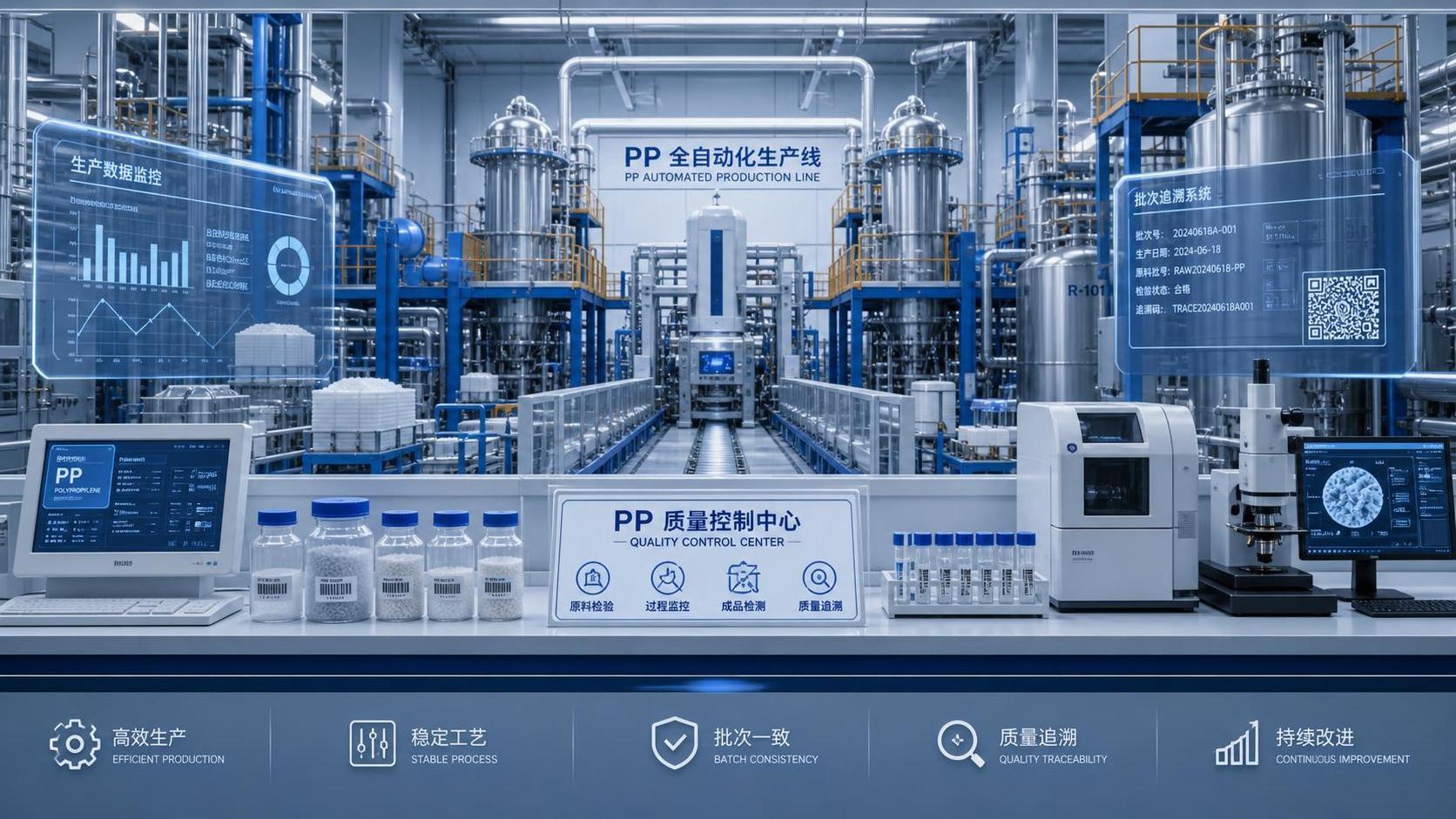
Before selecting a pp factory for your project, production consistency should be a top priority. Stable output, reliable quality control, and dependable delivery directly affect project timelines, cost management, and long-term supply security. For project managers and engineering leaders, assessing these factors early helps reduce procurement risks and ensures smoother cooperation with suppliers in the chemical industry.
In practice, “consistency” is often misunderstood. Many buyers focus on whether a supplier can meet a specification on the day of sampling. That matters, but it is not the same as proving that the same supplier can maintain product quality across batches, sustain output under varying raw material conditions, and keep shipment schedules during periods of plant maintenance, energy restrictions, or logistics disruption. A pp factory may look competitive on paper and still create costly instability once the project moves into regular supply.
For project-based purchasing, the consequences are rarely limited to a single delayed truck or one off-spec lot. In chemical and materials supply chains, inconsistent production can force requalification, trigger line adjustments, create downstream process deviations, and increase inventory buffers that were never included in the original budget. That is why a proper factory assessment should go beyond price, nameplate capacity, and basic certifications.
Why production consistency matters more than headline capacity
Nameplate capacity is easy to present and easy to compare, which is why it often dominates early supplier conversations. But project teams usually suffer from operational inconsistency, not from the absence of theoretical capacity. A factory may claim large annual output while still struggling with:
- unstable monthly operating rates;
- variation in key process parameters from batch to batch;
- dependence on a narrow raw material supply base;
- frequent shutdowns for equipment issues;
- weak change-control practices when switching grades or formulations.
For a project manager, the real question is not “How much can this supplier make in a year?” but “Can this supplier deliver the same acceptable material, in the required quantity, on the required timeline, repeatedly?” Those are different questions, and they require different evidence.
Start with the production system, not the sales promise
The best early indicator of consistency is not a polished presentation but the structure of the production system itself. A reliable pp factory should be able to explain how it controls variability at each stage: raw material intake, reaction or processing conditions, in-process testing, packaging control, warehouse handling, and shipment release.
Ask for specifics rather than broad statements. A factory that genuinely manages consistency can usually describe:
- which parameters are monitored in real time;
- which parameters are tested per batch;
- what the internal control limits are compared with customer specifications;
- how nonconforming lots are handled;
- how production records are retained and traced.
If the answer remains at the level of “we inspect carefully” or “our quality is stable,” you still do not have enough to support a project decision.
Batch history tells you more than a sample ever will
One qualified sample proves almost nothing about long-term supply performance. A more useful request is a recent batch history covering several months, ideally for the same grade or a closely comparable product family. The purpose is not to obtain confidential process know-how, but to see whether the supplier’s output is centered and stable over time.
Useful documents may include certificates of analysis from multiple consecutive lots, internal trend charts for critical indicators, and records showing the distribution of results against specification limits. If a parameter repeatedly sits near the edge of tolerance, that should be treated differently from a process that runs comfortably within control range.
This is especially important when the supplied material affects reaction efficiency, dosage precision, coating behavior, impurity carryover, or equipment corrosion risk in downstream use. In some chemical projects, narrow spec compliance is not enough; process predictability is what protects commissioning and ramp-up schedules.
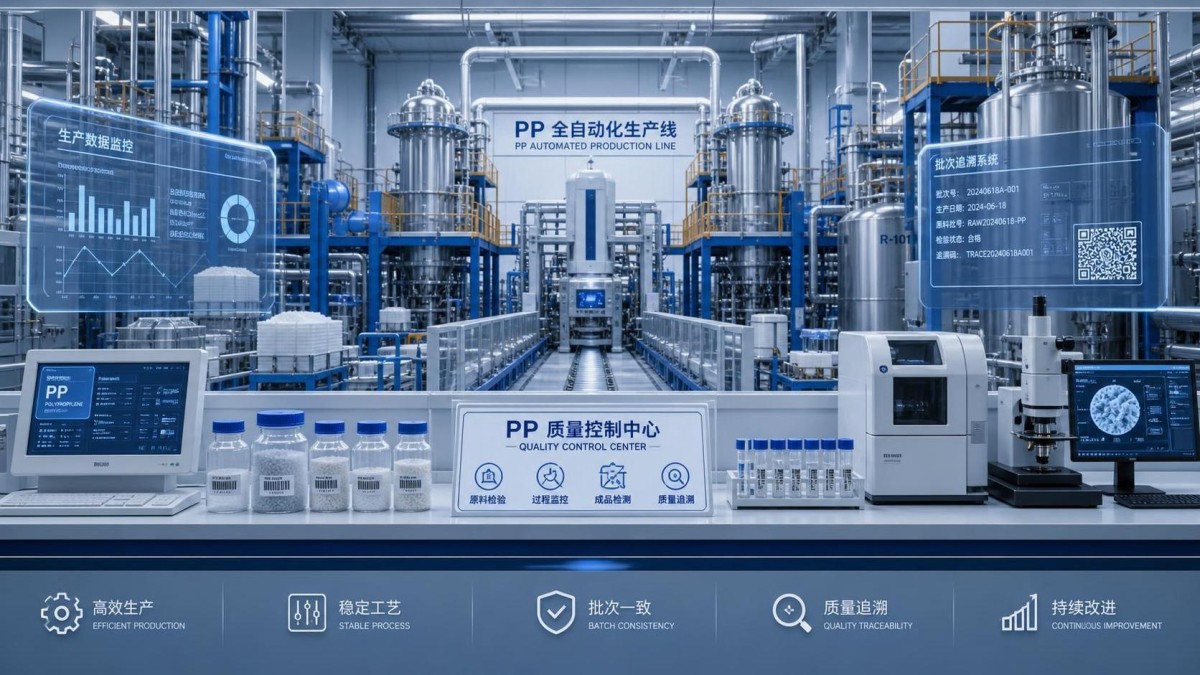
Evaluate raw material control and supply resilience
Many consistency problems do not originate in the main production line. They start upstream. A factory may have sound equipment and experienced operators but still produce variable output if incoming raw materials fluctuate in purity, moisture, particle profile, or impurity composition.
That is why supplier assessment should include questions such as:
- How many approved raw material sources are used?
- Are incoming materials tested lot by lot or by reduced frequency?
- What happens when the primary upstream source is interrupted?
- Has the factory recently changed key raw material suppliers?
- Are there seasonal variations that affect feedstock quality or availability?
A supplier with robust incoming quality control and multiple qualified upstream channels is usually better positioned to protect project delivery. This matters even for products outside commodity-scale procurement. In specialty and inorganic chemical sourcing, including products such as Hexafluorosilicic acid CAS#16961-83-4, buyers often need to understand not only product specification but also whether upstream sourcing and process discipline can support stable export-grade supply over time.
Look closely at change control and grade-switching practices
This point is often overlooked in factory visits. A plant producing multiple products or multiple grades may appear flexible and commercially attractive. Yet operational flexibility can also introduce contamination risk, specification drift, or cleaning-related variability if changeover management is weak.
Ask the factory how it handles:
- campaign scheduling between different products;
- line cleaning and verification after changeovers;
- segregation of packaging materials and labels;
- approval procedures for process changes;
- customer notification when material, method, or source changes occur.
For project execution, this is not a theoretical concern. A supplier that changes process conditions, additives, equipment configuration, or upstream source without formal control may still ship material within a broad specification while causing downstream performance changes that only become visible during production. By then, the cost sits with the buyer.
Quality documents matter, but operating discipline matters more
Certifications can support credibility, but they should not be mistaken for proof of consistency. A valid management certificate may indicate that systems exist; it does not prove that those systems are executed rigorously every day. The same applies to a well-prepared audit package.
During evaluation, it is more useful to connect documents to operations. For example:
- Does the batch number on the packaging match internal production and testing records?
- Can the factory show deviation reports and corrective actions for recent issues?
- Are retained samples archived and traceable?
- Is there a documented release procedure before shipment?
- Do laboratory practices align with actual production risk, not just formal compliance?
A factory with mature discipline is usually transparent about minor issues and clear about how they were corrected. A factory that claims to have no deviations at all is not necessarily stronger; sometimes it simply means poor reporting culture.
Assess maintenance reality, not just equipment appearance
New-looking equipment can create a false sense of confidence. Production consistency depends less on visual neatness than on maintenance planning, spare parts availability, and the plant’s ability to keep utilities stable. In chemical production, interruptions often come from pumps, instrumentation, heat exchange systems, storage tanks, dosing units, or utility instability rather than from core reactor failure alone.
Questions worth asking include:
- What is the preventive maintenance schedule?
- How much unplanned downtime occurred in the past 12 months?
- Which critical spare parts are kept in inventory?
- Are key analytical instruments calibrated on a defined schedule?
- How are steam, power, water, or compressed air interruptions managed?
For overseas buyers, this point is tied directly to delivery reliability. A factory that recovers slowly from maintenance issues can become a hidden schedule risk, especially when project demand ramps up faster than expected.
Check whether export execution is as stable as production
A factory may produce consistently and still perform poorly in international execution. For cross-border projects, supply reliability includes packaging integrity, container loading discipline, document accuracy, dangerous goods handling where applicable, and coordination between production release and shipping schedule.
Buyers should verify:
- export experience for the target market;
- packaging options and compatibility with transport conditions;
- lead time from production release to port dispatch;
- ability to manage urgent documentation corrections;
- traceability between shipped lots and quality documents.
In chemical trade, many disputes labeled as “quality issues” actually begin as packaging damage, moisture exposure, mixed labeling, or shipment document mismatch. For a project manager, these are still production consistency risks because they disrupt usable supply.
Use a trial order to test repeatability, not just product acceptance
If the supplier passes document review and factory assessment, the next useful step is not immediate volume commitment but a controlled trial order. The purpose should be broader than confirming that the material can be used once. It should test whether the supplier can repeat performance across at least several lots, under real logistics conditions, with the same documentation quality and communication responsiveness promised during evaluation.
A good trial assessment often tracks:
- lot-to-lot analytical variation;
- arrival condition of packaging;
- shipment punctuality versus agreed schedule;
- response time for technical questions;
- consistency between pre-shipment documents and received goods.
For some chemical products, it is also worth validating whether the supplier’s retained sample and the received lot remain fully traceable after delivery. That becomes important if a complaint or process adjustment arises later.
Warning signs that should slow down supplier approval
Not every risk means immediate rejection, but several signals should trigger deeper review:
- large gaps between sample quality and historical batch data;
- unclear explanation of upstream raw material sources;
- frequent recent changes in plant layout, ownership, or product mix;
- reluctance to share trend-based quality evidence;
- dependence on manual records for key release decisions;
- delivery commitments that seem detached from actual operating rhythm;
- inconsistent answers from sales, quality, and production personnel.
These issues do not automatically mean the factory is unreliable. But they do mean that project teams should avoid making decisions based on price advantage alone.
The most practical decision rule
When choosing a pp factory, the most practical rule is simple: prefer the supplier whose process stability is observable, documented, and repeatable, even if its price is not the lowest. In project environments, consistent supply usually saves more money than nominal unit-price reductions. It reduces rework, emergency procurement, engineering disruption, and the need to build expensive safety stock into the schedule.
A capable supplier should be able to demonstrate not only that it can make the product, but that it can keep making the same product reliably when conditions are less than ideal. That distinction is what separates a promising vendor from a dependable project partner. The same logic applies across many chemical sourcing decisions, whether the material is a broad industrial input or a more specialized item such as Hexafluorosilicic acid CAS#16961-83-4: consistency is not a marketing claim, but an operating capability that must be verified.
For teams managing deadlines, commissioning risk, and cross-border supply pressure, that verification is not extra work. It is part of protecting the project itself.
Related Picks
 Butylated Hydroxytoluene Price Drivers: Supply, Purity, and Purchasing Risk FactorsOct 21, 2026Butylated Hydroxytoluene price trends depend on supply stability, purity, logistics, and purchasing risk. Learn how to compare quotes wisely and reduce sourcing costs.
 Sodium Tripolyphosphate Price Trends: Raw Material and Energy ExposureOct 20, 2026Explore sodium tripolyphosphate price trends, from phosphate and soda ash costs to energy exposure. Learn how to compare quotes, manage sourcing risks, and make smarter purchasing decisions.
 Acetonitrile Shipment to Vietnam Successfully Dispatched; RCEP Benefits Boost Fine Chemical Trade with ASEANSep 16, 2026A shipment of industrial-grade acetonitrile from our company has recently been loaded and dispatched following the completion of standardized hazardous material packaging and container securing procedures.
 Nigerian Client’s Order of 4 Containers of Vinyl Acetate Successfully Loaded and Shipped to West AfricaSep 16, 2026We recently completed the loading of a vinyl acetate order for a Nigerian client; four containers of the product have been successfully packed and are ready for shipment to Nigeria.




Question Consultation
Send Us Your Inquiry Today

Luxi Chemical is a professional chemical product supplier with ample stock of all chemical categories and excellent quality, welcome your purchase inquiry.

