


How to reduce supplier risk during a sodium bicarbonate purchase
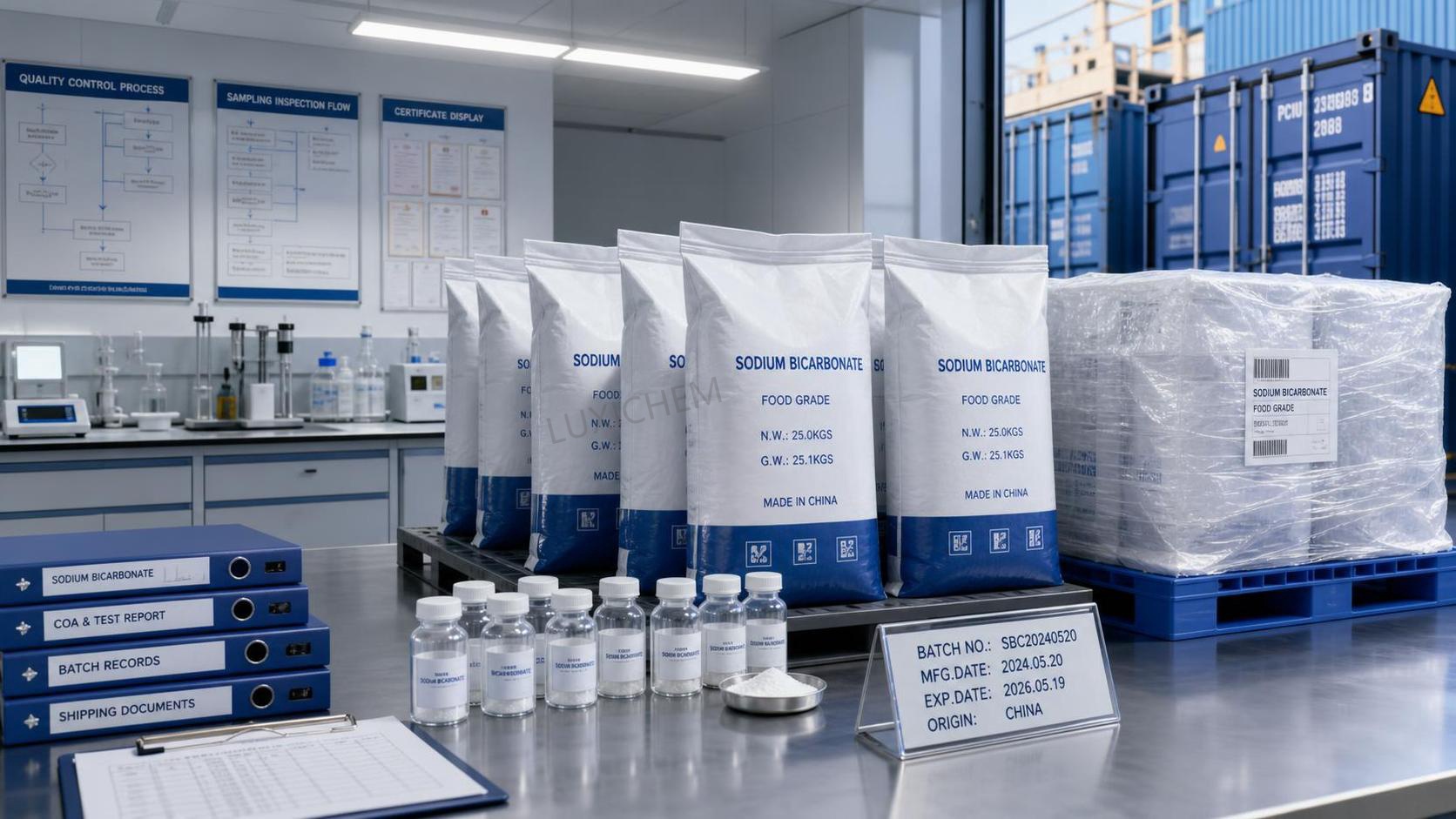
A sodium bicarbonate purchase looks simple on paper: the material is widely available, specification sheets often appear similar, and price competition can be aggressive. In practice, supplier risk is rarely driven by the headline quotation alone. It usually shows up later—through inconsistent particle size, moisture-related caking, delayed customs paperwork, incomplete food-grade documentation, unstable replenishment schedules, or a supplier that can offer a low first order but cannot support a 12-month contract.
For decision-makers, the real question is not merely where to buy sodium bicarbonate, but how to reduce the probability that one purchase decision will create quality, compliance, or supply disruption downstream. That requires treating supplier evaluation as a risk-screening exercise rather than a price comparison exercise.
In sodium bicarbonate procurement, four categories of risk matter most: product suitability, supplier operational reliability, compliance exposure, and total landed cost volatility. If any one of these is assessed superficially, the transaction may still close smoothly—but the commercial risk remains inside your supply chain.
Why sodium bicarbonate sourcing risk is often underestimated
Sodium bicarbonate is used across food processing, feed, flue gas treatment, pharmaceuticals, detergents, and other industrial applications. The same chemical name does not mean the same procurement standard. A purchasing team sourcing for bakery applications, for example, is managing a very different risk profile from a buyer sourcing for industrial emissions treatment.
The common mistake is to assume that “commodity” equals “low risk.” In reality, sodium bicarbonate sits in a category where small quality differences can create large application consequences. Purity, bulk density, sieve distribution, whiteness, insoluble matter, packaging integrity, and storage stability all affect whether the material performs consistently in production. When a supplier cannot maintain batch-to-batch consistency, the cost is not limited to material replacement. It can extend to process instability, customer complaints, line stoppages, and additional internal QA time.
That is why a sodium bicarbonate purchase should begin with application mapping, not vendor outreach. Before comparing suppliers, buyers need to define what failure would look like in their own operation.
Start with the specification that your business actually needs
Many supplier disputes begin because the purchase specification was too generic. “Sodium bicarbonate 99%” is not a complete buying standard for most commercial uses. Decision-makers should make sure procurement, technical, and quality teams agree on the minimum acceptable specification before asking for offers.
Key variables usually include:
- Purity and assay range
- Particle size distribution
- Moisture content
- Bulk density
- Chloride, sulfate, or heavy metal limits where relevant
- Loss on drying or related stability indicators
- Packaging format: 25 kg bags, jumbo bags, palletization, liner type
- Shelf life and storage recommendations
For food or pharmaceutical-linked use, documentation standards become more demanding. A decision-maker should confirm not only the product grade but also which market the material must legally enter. Requirements can differ by destination country and end use. Claims such as “food grade” or “export grade” are not sufficient on their own unless backed by traceable certificates, test methods, and plant-level quality management evidence.
If your team cannot clearly explain which specification matters most, that is already a sourcing risk. It means suppliers will quote against assumptions, and low-priced offers may not be technically comparable.
Evaluate the supplier’s production system, not just the sample
A qualified lab sample proves very little if the supplier’s production controls are weak. One of the most practical ways to reduce supplier risk is to separate sample quality from manufacturing reliability.
Questions worth asking include:
- Is the supplier a manufacturer, trader, or a hybrid model?
- What is the plant’s annual or monthly output range?
- How stable is access to raw materials and utilities?
- How are batches identified and traced?
- What is the frequency of in-process and finished-product testing?
- Can the supplier provide recent, consistent COAs from multiple batches rather than one best-case sample?
- What is the historical record on shipment delays, claim handling, and replacement response?
For enterprise buyers, production stability is often more important than a marginally lower unit price. A supplier with disciplined QA, documented batch traceability, and stable export operations usually creates less total cost over time than a low-cost source that struggles with consistency.
This is also where experienced buyers look beyond the sodium bicarbonate line itself. A chemical supplier with broader product management capabilities often has stronger internal controls in export documentation, warehousing, and account support. Companies that manage multiple chemical categories—such as food additives, intermediates, or other industrial raw materials like Poly(vinyl alcohol) CAS#9002-89-5—may be better positioned to support coordinated procurement, provided their quality systems are verifiable and not just broad in catalog scope.
Certifications matter, but only when matched to your end market
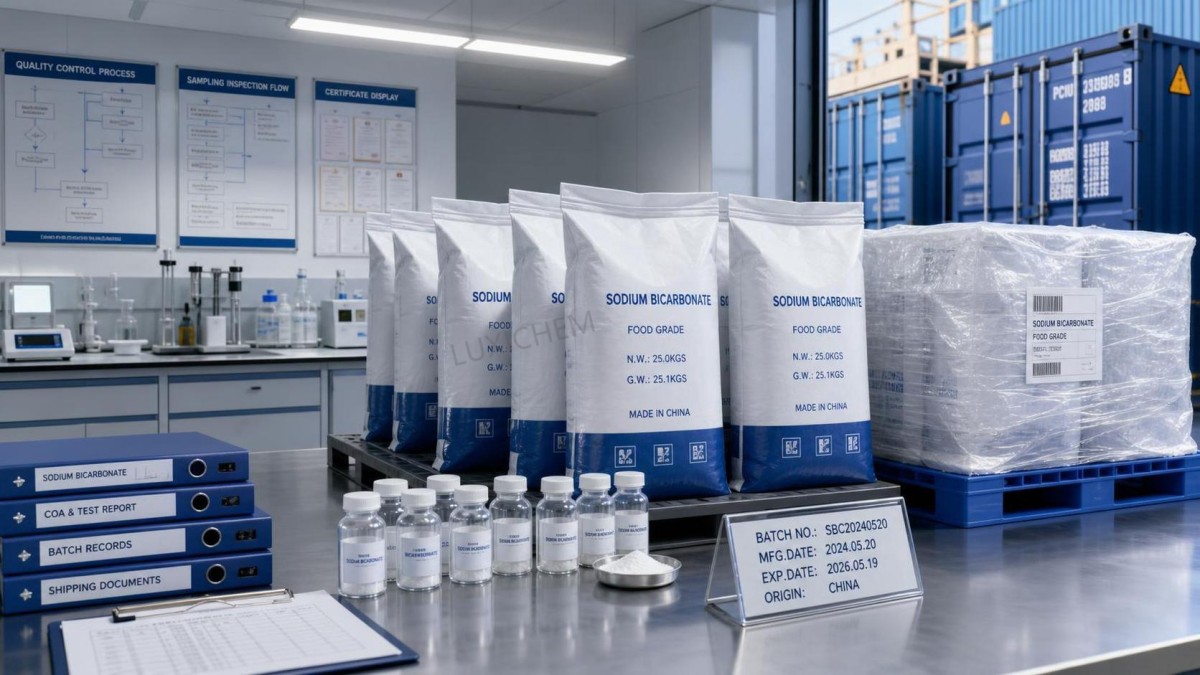
Buyers often overvalue the existence of certificates and undervalue their relevance. A supplier may present ISO documentation, product test reports, or regulatory statements, but the key question is whether those documents align with your application, destination country, and customer audit expectations.
Depending on use case, buyers may need to review:
- Certificate of Analysis for each batch
- ISO 9001 or comparable quality management certification
- Food safety-related documentation where applicable
- Halal, Kosher, or other market-specific certifications if customer-required
- REACH-related status for relevant markets【待核实 based on supply route and role in import】
- Safety Data Sheet in the required language and format
- Statement on allergens, contaminants, or prohibited substances where applicable
What reduces risk is not the presence of many documents, but the supplier’s ability to explain them clearly, update them consistently, and issue shipment-specific paperwork without repeated correction. In cross-border chemical trade, paperwork quality is a direct operational capability indicator.
Test commercial reliability through the quote structure
Supplier risk often becomes visible in the quotation itself. Decision-makers should examine whether the commercial offer is transparent enough to reveal hidden cost or execution issues.
A reliable quotation should define at least:
- Grade and specification reference
- Packaging details
- Incoterm
- Lead time
- Minimum order quantity
- Loading capacity per container
- Document set included
- Payment terms
- Validity period
- Claim handling terms
Vague offers create room for later disputes. For example, a low FOB price may look attractive until the buyer discovers that palletization, special labeling, food-contact packaging confirmation, or document legalization is charged separately. In other cases, a supplier may quote aggressively on a trial order but apply very different economics to repeat volumes.
Enterprise buyers should compare suppliers using total landed cost, not ex-works or FOB price alone. This means considering freight exposure, customs clearance complexity, inland delivery, financing terms, expected rejection rate, and the internal cost of supplier management. A supplier with a slightly higher offer can still be the lower-risk and lower-cost option over the contract cycle.
Use batch history and claim response to judge consistency
Consistency is one of the hardest risks to measure before a supplier is onboarded. Yet there are practical signals. Ask for COAs from multiple recent lots, not just one sample. Review whether the values cluster tightly or fluctuate near specification limits. A supplier whose assay, moisture, or particle size regularly sits close to the threshold is more likely to create out-of-spec risk later.
It is also useful to ask how non-conformance is handled. Serious suppliers can usually explain:
- How a complaint is logged
- How retained samples are managed
- How root cause analysis is performed
- Whether replacement, credit, or technical review is standard practice
These details matter because defects in chemical procurement are rarely solved by argument alone. They are solved by process. When a supplier has no documented claim mechanism, buyers often end up absorbing the loss themselves.
Assess logistics resilience before the first order is placed
In many sodium bicarbonate transactions, the supplier’s operational risk is less about making the product and more about moving it reliably across borders. This is especially important for buyers serving seasonal demand, regulated industries, or multi-site production networks.
Risk factors to examine include:
- Port proximity and export routing options
- Container loading experience
- Ability to handle peak-season booking pressure
- Packaging protection against moisture during transit
- Accuracy of HS code use and export declaration support【待核实 by destination】
- Track record in destination-country documentation compliance
Sodium bicarbonate is sensitive to storage and packaging quality in practical terms, even if it is not among the most difficult chemicals to ship. Poor bag quality, weak inner liners, or uncontrolled warehouse humidity can lead to caking and handling problems on arrival. Those are avoidable losses, but only if buyers evaluate logistics execution as part of supplier qualification.
Do not separate procurement risk from finance risk
Decision-makers often ask procurement teams to reduce cost while asking operations to avoid disruption. These goals are compatible only when finance risk is built into the supplier review.
Several warning signs deserve attention:
- Large advance payment requests without relationship history
- Unusually low prices unsupported by raw material logic
- Frequent changes in beneficiary account details
- Reluctance to provide company registration or export records
- Pressure to close quickly before documentation review
In volatile freight or raw material periods, some suppliers quote below sustainable levels to secure cash flow, then seek renegotiation before shipment. For enterprise buyers, this creates a false saving followed by emergency procurement at a higher replacement cost. A supplier’s commercial discipline is therefore part of risk control, not an administrative issue.
Build a staged approval model instead of making a yes-or-no decision too early
The safest procurement organizations do not treat supplier selection as a one-time approval. They use stages. A practical model may include document pre-screening, technical sample approval, trial shipment review, and only then a larger contract commitment.
This staged approach helps buyers test the gap between what a supplier promises and what the supplier can repeatedly execute. It also creates internal alignment: procurement validates commercial reliability, QA validates conformity, and management retains control over exposure size.
For strategic sourcing, dual-supplier structures are often worth considering. Even when one supplier is technically preferred, maintaining a qualified backup source can reduce negotiation pressure and protect business continuity. The cost of qualifying a second source is often lower than the cost of a production interruption.
What a lower-risk sodium bicarbonate purchase usually looks like
In practice, lower-risk purchases share several traits. The buyer has a use-specific specification. The supplier can demonstrate manufacturing or sourcing control rather than just trading access. Documents are relevant to the destination market. Quotations are detailed enough to compare fairly. Trial orders are used to validate packaging, paperwork, and consistency. And the commercial relationship is built around repeatability, not a one-off bargain.
For decision-makers, the most important mindset shift is this: sodium bicarbonate should be purchased as a managed supply input, not as a generic low-value commodity. Once the material touches food systems, regulated markets, process-sensitive applications, or export-dependent production, supplier quality becomes a business continuity issue.
A disciplined sodium bicarbonate purchase process will not eliminate all risk, but it can remove the most expensive forms of avoidable uncertainty—quality surprises, compliance gaps, shipment delays, and price illusions that disappear after the order is placed. That is where procurement creates real value: not by chasing the cheapest offer, but by protecting margin, continuity, and customer confidence over time.
Related Picks
 Butylated Hydroxytoluene Price Drivers: Supply, Purity, and Purchasing Risk FactorsOct 21, 2026Butylated Hydroxytoluene price trends depend on supply stability, purity, logistics, and purchasing risk. Learn how to compare quotes wisely and reduce sourcing costs.
 Sodium Tripolyphosphate Price Trends: Raw Material and Energy ExposureOct 20, 2026Explore sodium tripolyphosphate price trends, from phosphate and soda ash costs to energy exposure. Learn how to compare quotes, manage sourcing risks, and make smarter purchasing decisions.
 Acetonitrile Shipment to Vietnam Successfully Dispatched; RCEP Benefits Boost Fine Chemical Trade with ASEANSep 16, 2026A shipment of industrial-grade acetonitrile from our company has recently been loaded and dispatched following the completion of standardized hazardous material packaging and container securing procedures.
 Nigerian Client’s Order of 4 Containers of Vinyl Acetate Successfully Loaded and Shipped to West AfricaSep 16, 2026We recently completed the loading of a vinyl acetate order for a Nigerian client; four containers of the product have been successfully packed and are ready for shipment to Nigeria.




Question Consultation
Send Us Your Inquiry Today

Luxi Chemical is a professional chemical product supplier with ample stock of all chemical categories and excellent quality, welcome your purchase inquiry.

