


Natrium hydrogen carbonate vs sodium bicarbonate in export documents
Natrium hydrogen carbonate vs sodium bicarbonate in export documents
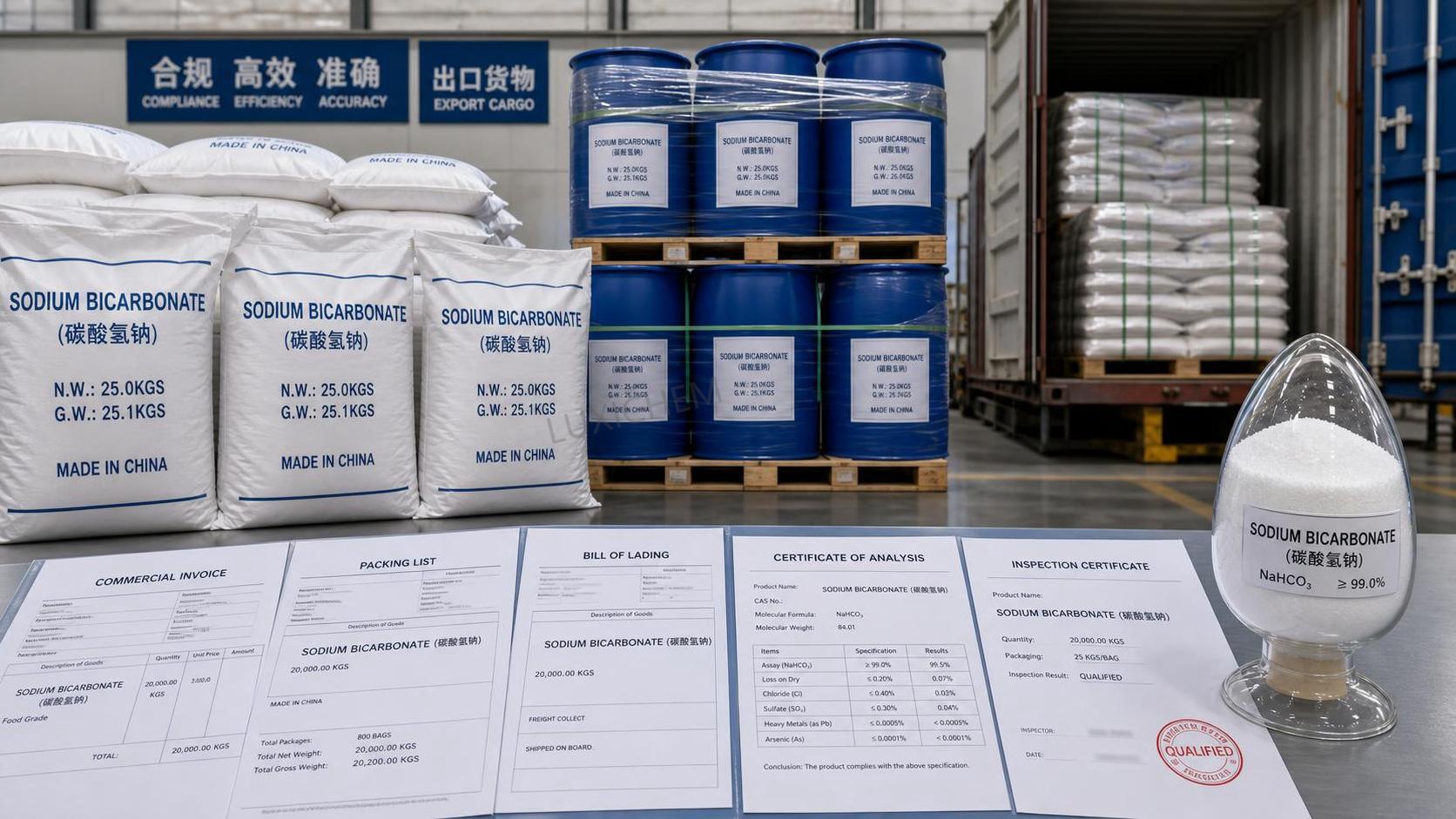
When handling international trade paperwork, many buyers and suppliers pause at the same question: is natrium hydrogen carbonate different from sodium bicarbonate, or is it simply another name for the same substance? In most practical export situations, they refer to the same chemical compound, commonly known as baking soda in food and household contexts. The confusion comes from naming systems, translation habits, and the way chemical names move across languages, standards, and customs platforms.
That sounds like a small wording issue, but in export documentation, wording matters. A mismatch between contract terms, product labels, customs declarations, MSDS/SDS, COA, packing list, and shipping marks can trigger questions from freight forwarders, customs brokers, or destination authorities. In chemicals trade, delays often start with something that looked harmless in email communication.
For importers doing early-stage research, the key point is not just whether the names are equivalent. It is whether every document in the transaction identifies the product clearly enough for compliance, transport, customs clearance, and end use.
Why two names appear for one product
Sodium bicarbonate is the more widely used English commercial name. Natrium hydrogen carbonate comes from a naming pattern influenced by Latin and by European language usage, where “natrium” corresponds to sodium. Chemists, traders, and document teams may all recognize the equivalence, but software systems and border procedures do not always interpret language flexibly.
In theory, a customs officer or document reviewer should rely on identifiers such as CAS number, HS code, composition, grade, and manufacturer information. In practice, the product name is still one of the first fields reviewed. If one file says sodium bicarbonate and another says natrium hydrogen carbonate, the shipment may still clear smoothly, but it creates an avoidable point of friction.
This becomes more sensitive when the product is food grade, feed grade, pharmaceutical-related, or intended for regulated downstream applications. Different markets may ask for different naming conventions on labels and certificates, and those requirements usually need to be checked against the local standard or importer’s registration format rather than assumed.
What should stay consistent across export documents
If the shipment is sodium bicarbonate, the safest approach is usually to keep one primary English name across the full document set, then add equivalent identifiers where needed. That means the contract, proforma invoice, commercial invoice, packing list, certificate of analysis, and safety documentation should not drift into different naming styles unless there is a specific legal or customer requirement.
A practical document check often includes these points:
- Product name is written consistently on commercial and regulatory documents.
- CAS number, if used in the project, matches the product identity.
- Grade is clear: industrial, food, feed, or another applicable specification.
- The COA reflects the actual standard agreed in the contract.
- Packaging description and labeling align with what will be physically shipped.
- Importer-specific naming preferences are reflected before documents are finalized.
The point is not administrative perfection for its own sake. It is to reduce the chance that a broker asks for corrections after the cargo is already at port.
Where buyers usually run into trouble
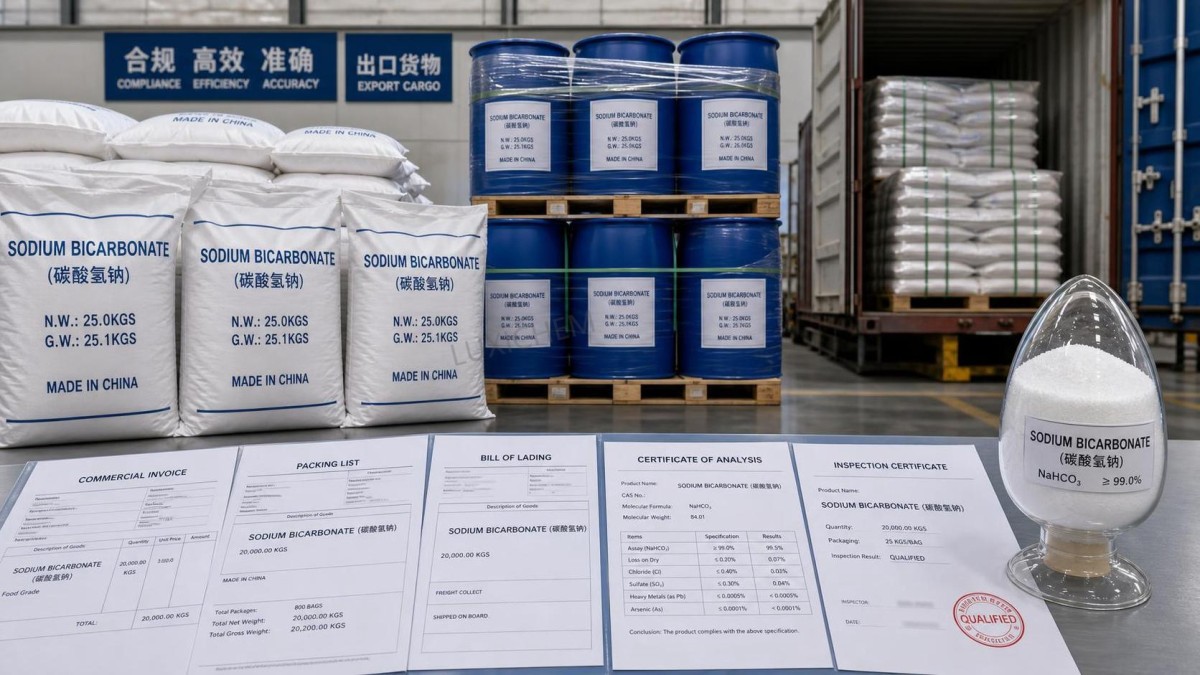
One common issue is copying product names from older purchase records without checking whether those records were written for the same market. A European customer may have used a naming style influenced by local language habits, while a destination customs portal may expect standard English naming or match against a product database differently.
Another issue is mixing technical identity with marketing terminology. “Baking soda,” “sodium bicarbonate,” and “natrium hydrogen carbonate” may all point to the same substance in general conversation, but not all of them are equally suitable for formal trade documents. A sales team might understand the product immediately; a compliance reviewer may not appreciate ambiguity.
Then there is the grade problem. A document may name the material correctly but still be incomplete if it does not state the relevant grade or standard. In chemical trade, the name alone rarely tells the full story. Importers usually need to confirm what specification governs purity, impurities, moisture, particle size, or application suitability. That part depends on the agreed standard and destination use.
A simple way to think about document language
Even for experienced importers, this cross-check is worth doing line by line. The larger the shipment program or the more countries involved, the more useful document discipline becomes.
In broader chemical sourcing, the same principle applies well beyond bicarbonates. A buyer comparing corrosion-control materials, pigments, or processing additives may face similar naming variation between scientific terminology and export paperwork. That is one reason diversified suppliers often build internal review habits across product categories, whether the shipment involves food additives or products such as Zinc phosphate CAS#7779-90-0. The chemistry may differ completely, but the document risk pattern is familiar.
How experienced exporters usually reduce avoidable friction
Reliable exporters tend to solve this early, not at the port. They ask what name the importer wants on the invoice, what standard the customer needs on the COA, whether local registration or language rules affect label text, and whether the consignee’s customs broker has a preferred declaration format. These are not formalities. They are part of delivering the right material with the right paperwork.
Luxi Chemical (Shandong) Co., Ltd. works across chemical raw materials, chemical products, and import/export trade, so this kind of coordination matters in everyday operations. When a company supplies food additives, organic intermediates, fertilizers, and other compliant chemical products to customers across many regions, consistency in documents becomes part of product stability in a broader sense. One-stop supply only saves time when the files move as smoothly as the goods.
That is especially true when customers are consolidating multiple products in one purchasing cycle. Buyers may focus on price and availability first, but once the order is confirmed, naming, grade description, packaging details, and certificate alignment quickly become the details that decide whether delivery remains on schedule.
Should natrium hydrogen carbonate ever appear on documents?
It can, if the buyer, destination market, or technical file uses that naming convention. The issue is not that the term is wrong in chemistry. The issue is whether it is the clearest and most acceptable term for the full trade chain involved. If one party prefers natrium hydrogen carbonate, a common solution is to keep sodium bicarbonate as the primary commercial name and include the equivalent name where appropriate, provided that format fits the receiving market’s requirements.
What should not happen is casual inconsistency: one name on the PO, another on the label, a third on the SDS, and no shared identifier to tie them together. That invites unnecessary questions.
What importers should confirm before shipment
Before approving final documents, importers usually benefit from checking five things with the supplier or broker:
- Which exact product name will be used across the entire document pack.
- Whether the declared grade matches the intended application.
- Whether destination customs or local authorities expect a specific naming style.
- Whether label text, COA wording, and shipping documents are aligned.
- Whether any additional identifiers should be shown to avoid interpretation gaps.
None of this is complicated, but it is easier to fix before cargo release than after arrival.
So, natrium hydrogen carbonate and sodium bicarbonate generally point to the same substance. In export documents, however, “same substance” is not the only question. Clear, consistent, market-appropriate naming is what keeps a straightforward chemical shipment from turning into a paperwork problem. If there is any uncertainty, the practical next step is to verify the preferred document name, grade reference, and destination requirements before the final invoice and certificates are issued.
Related Picks
 Butylated Hydroxytoluene Price Drivers: Supply, Purity, and Purchasing Risk FactorsOct 21, 2026Butylated Hydroxytoluene price trends depend on supply stability, purity, logistics, and purchasing risk. Learn how to compare quotes wisely and reduce sourcing costs.
 Sodium Tripolyphosphate Price Trends: Raw Material and Energy ExposureOct 20, 2026Explore sodium tripolyphosphate price trends, from phosphate and soda ash costs to energy exposure. Learn how to compare quotes, manage sourcing risks, and make smarter purchasing decisions.
 Acetonitrile Shipment to Vietnam Successfully Dispatched; RCEP Benefits Boost Fine Chemical Trade with ASEANSep 16, 2026A shipment of industrial-grade acetonitrile from our company has recently been loaded and dispatched following the completion of standardized hazardous material packaging and container securing procedures.
 Nigerian Client’s Order of 4 Containers of Vinyl Acetate Successfully Loaded and Shipped to West AfricaSep 16, 2026We recently completed the loading of a vinyl acetate order for a Nigerian client; four containers of the product have been successfully packed and are ready for shipment to Nigeria.




Question Consultation
Send Us Your Inquiry Today

Luxi Chemical is a professional chemical product supplier with ample stock of all chemical categories and excellent quality, welcome your purchase inquiry.

