


Insecticides for Agriculture: A Technical Comparison of Organophosphates, Neonicotinoids and Bio-Insecticides by Efficacy & Regulatory Status
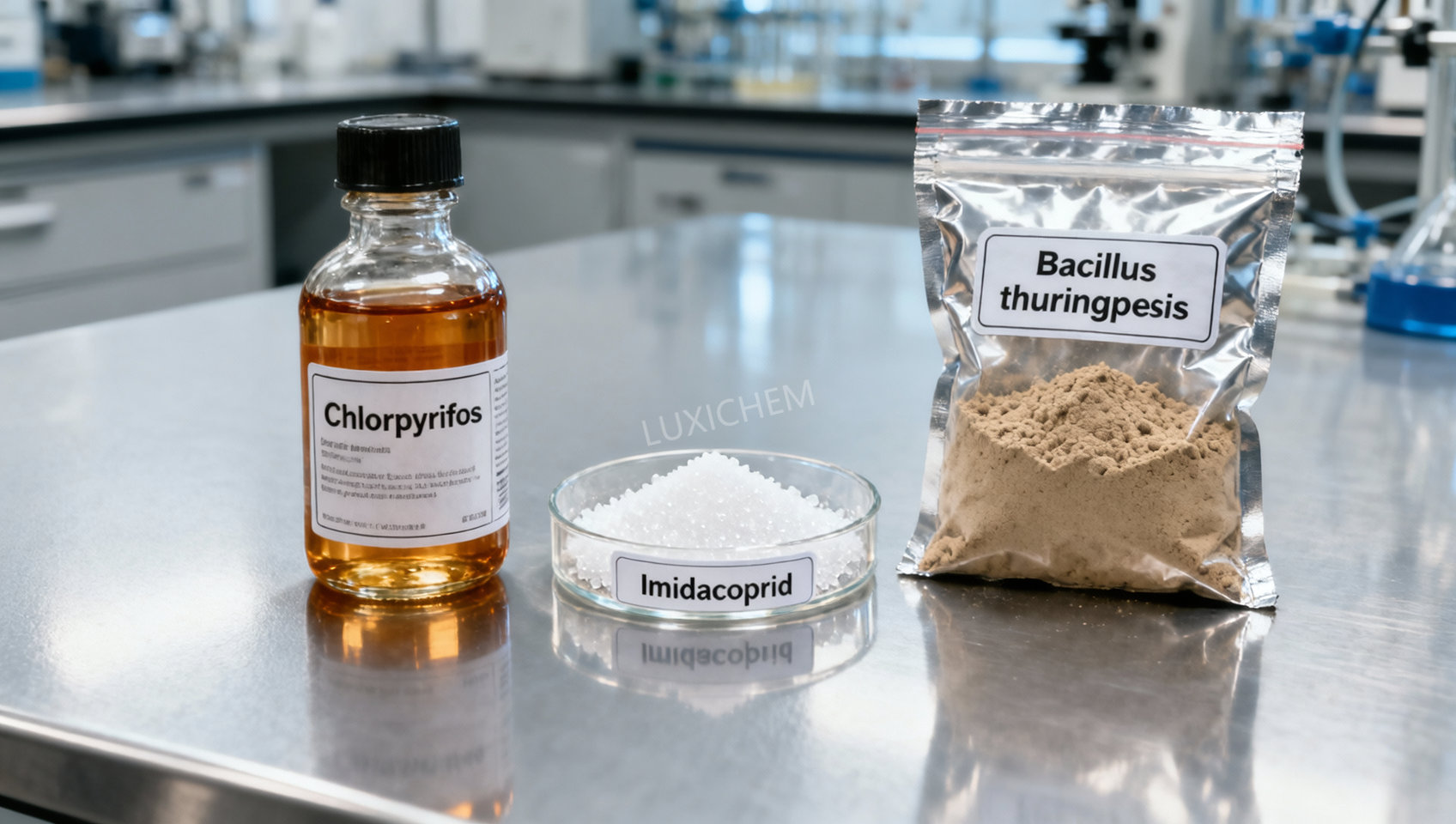
Choosing Insecticides for Agriculture: What Technical Evaluators Need to Know Today
Selecting the right insecticides for agriculture is no longer just about field performance. It’s a multi-dimensional technical assessment—balancing efficacy against resistance development, environmental fate, residue limits, and rapidly diverging regulatory expectations across markets. For procurement specialists, R&D chemists, and regulatory affairs officers, this means evaluating not only what works in the field, but whether it will clear customs in Rotterdam, pass residue testing in Shanghai, or remain authorized under EU Regulation (EC) No 1107/2009.
This comparison focuses on three major classes: organophosphates (OPs), neonicotinoids (neonics), and bio-insecticides. We avoid broad generalizations. Instead, we anchor each point in measurable parameters—field persistence (DT50), binding affinity (Kd), resistance risk indices where published, and current status under key regulatory frameworks: the EU, USA (EPA), China (MARA), and Brazil (ANVISA). Where data is inconsistent or jurisdiction-specific, we flag it—not as a gap, but as a decision signal.
Organophosphates: High Efficacy, Narrowing Regulatory Windows
OPs like chlorpyrifos and diazinon deliver rapid knockdown and broad-spectrum activity, especially against lepidopteran and coleopteran pests. Their acetylcholinesterase inhibition mechanism remains highly effective—when resistance hasn’t emerged. Field studies in maize and rice systems show 85–92% control at labeled rates within 48 hours. But efficacy comes with trade-offs: moderate to high mammalian toxicity (WHO Class II or Ia), relatively short soil half-lives (typically 7–30 days), and high volatility—making drift management critical.
Regulatory status is now fragmented. The EU banned all OPs for agricultural use by 2020 under strict endocrine disruption and neurotoxicity criteria. In the USA, chlorpyrifos was revoked for food uses in 2022 after EPA’s revised risk assessment, though non-food applications remain. China phased out 20+ OPs between 2018–2023, including omethoate for most crops. Brazil maintains conditional registrations but requires updated ecotoxicology dossiers every five years—many older OP submissions haven’t been renewed.
Neonicotinoids: Systemic Power, Ecological Scrutiny
Neonics—imidacloprid, thiamethoxam, clothianidin—offer strong systemic activity, rainfastness, and low vertebrate toxicity. Their nAChR binding confers excellent control of sap-feeding pests (aphids, whiteflies, planthoppers), especially via seed treatment. Field trials in soybean and cotton show 70–80% season-long aphid suppression with single-dose application.
However, their persistence (soil DT50 up to 1,000 days for imidacloprid in clay soils) and water solubility (>0.5 g/L) raise concerns about leaching into groundwater and off-site exposure. This drove the EU’s 2018 full outdoor ban—a decision reinforced by EFSA’s 2023 re-evaluation citing “unacceptable risks to bees and other pollinators.” The USA retains most neonics but enforces strict buffer zones and pollinator protection plans. China allows limited use but tightened MRLs in 2022 for tea and leafy vegetables. Brazil permits them but mandates annual monitoring of surface water near treated fields—an operational burden many importers overlook.
Bio-Insecticides: Lower Risk, Higher Complexity
Bio-insecticides—including Bacillus thuringiensis (Bt) strains, spinosyns (e.g., spinosad), and botanicals like azadirachtin—operate through highly specific modes: pore-forming toxins, nicotinic receptor modulation, or growth disruption. Their advantages are clear: low non-target toxicity, minimal residue concerns, and generally favorable regulatory pathways. Spinosa, for instance, is approved in all four jurisdictions with simplified renewal processes.
But technical limitations persist. Bt formulations degrade rapidly under UV light (half-life <24 hrs in full sun), requiring precise timing and adjuvant support. Spinosad shows variable efficacy below 15°C and can be antagonized by certain fungicides. Resistance monitoring is less standardized than for synthetics—meaning field failure may go unreported until widespread. Still, their compatibility with IPM and organic certification makes them increasingly central—not just as replacements, but as rotational anchors.
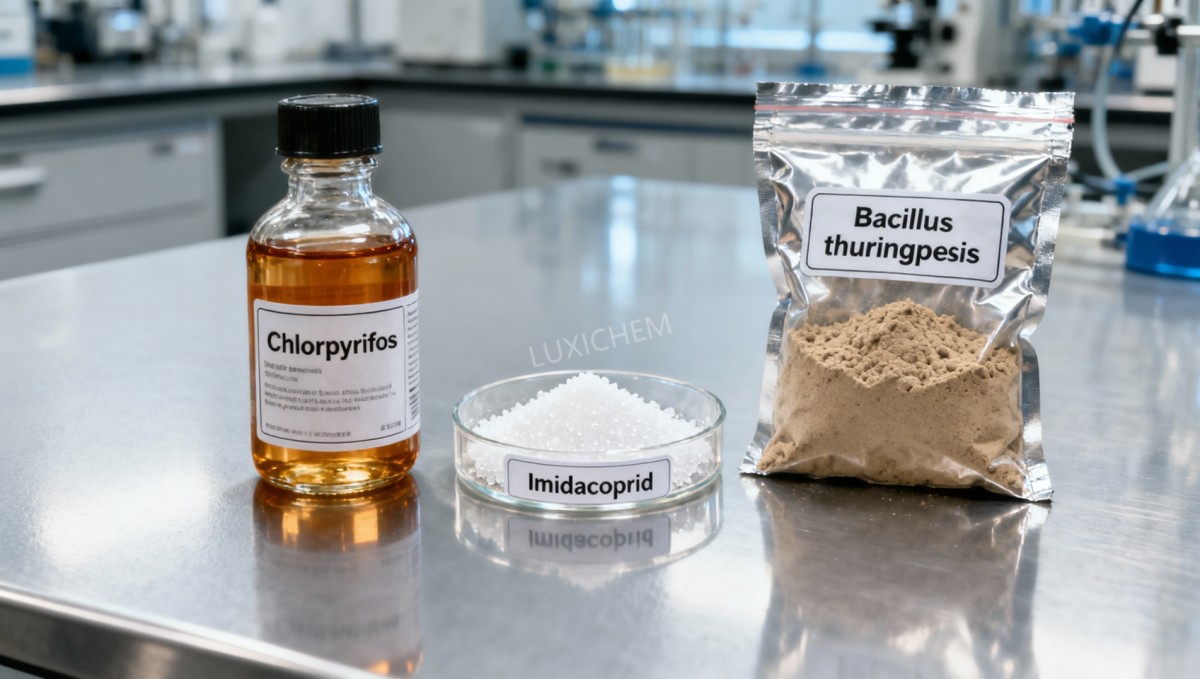
Comparative Decision Levers for Technical Teams
No single class wins across all criteria. Here’s how technical evaluators can weigh trade-offs:
- Persistence vs. Residue Risk: Neonics offer long residual control but trigger stricter MRL enforcement in export markets—especially for high-value horticulture bound for the EU.
- Resistance Management: OPs and neonics carry documented field resistance (e.g., Myzus persicae with >100-fold resistance to imidacloprid). Bio-insecticides reduce selection pressure—but require disciplined rotation to delay adaptation.
- Supply Chain Readiness: A product registered in Brazil may lack MARA approval for China, even if identical in composition. Batch-level analytical method validation, impurity profiling (e.g., ethyl carbamate in spinosyns), and GMP documentation become decisive—not just registration status.
This is where chemical sourcing rigor matters. At Luxi Chemical (Shandong) Co., Ltd., our work with agrochemical formulators includes verifying compliance across target markets—not just listing registrations, but confirming that analytical methods align with local pharmacopoeial standards (e.g., USP <851>, ChP 2020), and that stability data covers real-world storage conditions (40°C/75% RH for 24 months).
In some cases, formulation stability hinges on ancillary materials—like nickel-based catalysts used in synthesizing certain pyrethroid intermediates. For such applications, consistency in metal salt purity and crystalline form directly affects reaction yield and byproduct profile. Our Nickel Sulfate CAS#7786-81-4, for example, meets strict specifications for solubility (27.3–27.7 g/100 mL at 20°C) and orthorhombic crystal structure—parameters that influence dissolution kinetics in catalytic slurries.
What Comes Next?
The trend isn’t toward one dominant class—but toward layered, jurisdiction-aware portfolios. Smart procurement now means mapping not just pest pressure, but regulatory timelines: Brazil’s ANVISA sunset clauses, China’s new pesticide registration guidelines (effective 2024), and the EU’s upcoming review of biopesticide data requirements.
For technical evaluators, that means treating regulatory status not as static approval, but as a dynamic parameter—updated quarterly, verified per batch, and validated against actual shipping destinations. It also means looking beyond active ingredients: co-formulants, stabilizers, and catalyst-grade salts all contribute to final compliance—and final field performance.
If your team needs support interpreting regional MRL updates, validating analytical methods against ISO 17025-compliant labs, or assessing supply chain alignment for multi-market launches—we work directly with R&D and regulatory teams to translate technical specs into trade-ready execution.
Related Picks
 Butylated Hydroxytoluene Price Drivers: Supply, Purity, and Purchasing Risk FactorsOct 21, 2026Butylated Hydroxytoluene price trends depend on supply stability, purity, logistics, and purchasing risk. Learn how to compare quotes wisely and reduce sourcing costs.
 Sodium Tripolyphosphate Price Trends: Raw Material and Energy ExposureOct 20, 2026Explore sodium tripolyphosphate price trends, from phosphate and soda ash costs to energy exposure. Learn how to compare quotes, manage sourcing risks, and make smarter purchasing decisions.
 Acetonitrile Shipment to Vietnam Successfully Dispatched; RCEP Benefits Boost Fine Chemical Trade with ASEANSep 16, 2026A shipment of industrial-grade acetonitrile from our company has recently been loaded and dispatched following the completion of standardized hazardous material packaging and container securing procedures.
 Nigerian Client’s Order of 4 Containers of Vinyl Acetate Successfully Loaded and Shipped to West AfricaSep 16, 2026We recently completed the loading of a vinyl acetate order for a Nigerian client; four containers of the product have been successfully packed and are ready for shipment to Nigeria.




Question Consultation
Send Us Your Inquiry Today

Luxi Chemical is a professional chemical product supplier with ample stock of all chemical categories and excellent quality, welcome your purchase inquiry.

