


Is Citric Acid Organic? What Buyers Need to Know About Source and Certification
It usually starts with a small but expensive question in procurement or formulation review: a supplier says the material is “natural,” another says it is “organic,” and a third sends a certificate that seems relevant but does not quite answer the point. If you are trying to buy citric acid for food processing, supplements, personal care, or even certain industrial applications, that wording can quickly become a problem. The label sounds simple, but the meaning is not.
Many people run into this when comparing quotations from different origins. One specification sheet emphasizes fermentation, another mentions corn or sugar feedstock, and another highlights food-grade compliance but says nothing about organic status. At that moment, the question “is citric acid organic?” is no longer just academic. It affects product claims, audit preparation, import paperwork, supplier approval, and whether a purchase can be used in a certified production chain without creating trouble later.
The most common misunderstanding is assuming that “organic” means the same thing in every context. In chemistry, an organic acid is a carbon-containing compound, so citric acid fits that description. In commercial sourcing and certification, though, citric acid organic usually refers to whether the product complies with recognized organic standards for agricultural or food-related use. Those are two different conversations, and mixing them is where buyers lose time.
Where the confusion usually comes from
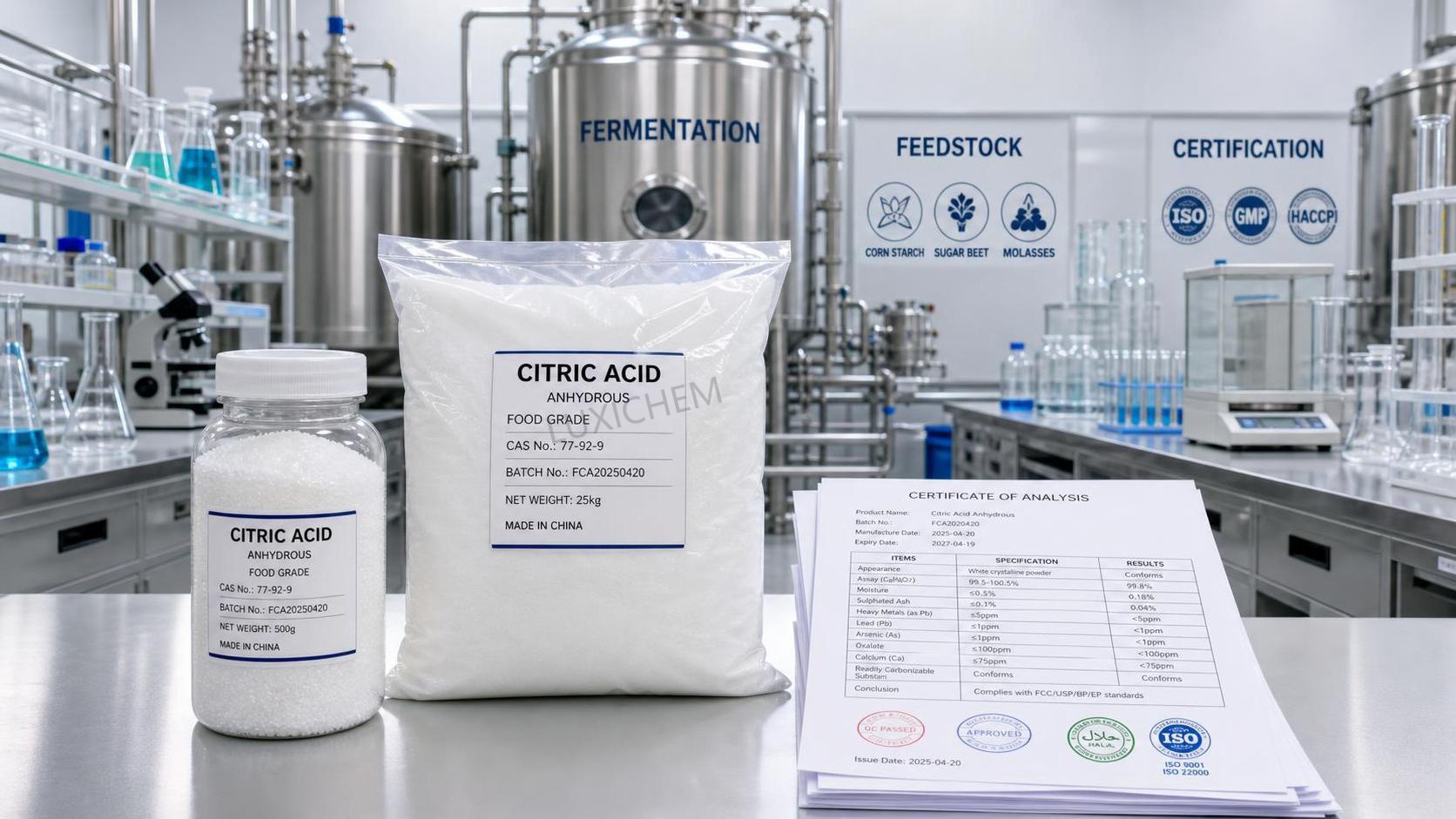
Citric acid is widely known as a naturally occurring acid found in citrus fruits. That fact leads many buyers to assume the commercial product is extracted directly from lemons or limes. In most supply chains, that is not how bulk citric acid is produced. Commercial citric acid is commonly made through fermentation using carbohydrate sources such as corn or sugar-based raw materials. After fermentation, the material is purified, crystallized, and standardized for sale.
That production route matters because buyers often hear three different claims and treat them as equivalent:
- citric acid is a naturally occurring substance;
- citric acid is produced by fermentation from agricultural feedstock;
- citric acid is certified for organic use or accepted within an organic processing system.
They are related, but they are not interchangeable. A product can be chemically identical while falling into different compliance categories depending on raw material origin, processing aids, manufacturing controls, and certification status.
A better way to read “organic” on supplier documents
When buyers ask whether citric acid is organic, the first thing to clarify is the purpose of the question. Are you checking if it is an organic compound in the scientific sense? Are you trying to confirm whether it can be used in an organic food or beverage product? Are you reviewing whether the supplier has third-party documentation that supports a regulated claim in your target market?
Once you define the purpose, the document review becomes easier. Instead of relying on one word in a product description, look at the supporting file set around the product. A useful starting point includes the specification, manufacturing statement if available, certificate status, allergen or GMO-related declarations where relevant, and any processing or origin statement that explains the feedstock and route of manufacture.
If a seller only says “organic acid,” that usually tells you the product belongs to a chemical class. It does not confirm agricultural organic certification. If the seller says “made from natural fermentation,” that may describe production but still does not prove recognized organic status. If the material is truly being sold into organic-certified applications, there should normally be supporting certification language rather than marketing-style wording.
The source question buyers should ask before anything else
Source is often where a review should begin, but source alone is not enough to make the decision. For citric acid, buyers generally need to understand three layers:
1. Feedstock origin.
Was the fermentation substrate derived from agricultural materials such as corn or sugar? If yes, is that agricultural source itself covered by an organic program, if that matters for your use?
2. Manufacturing route.
Was the citric acid produced by microbial fermentation and then purified through a process accepted for the intended certification pathway? Buyers sometimes skip this step and focus only on the starting material, but processing controls can be just as important.
3. Certification chain.
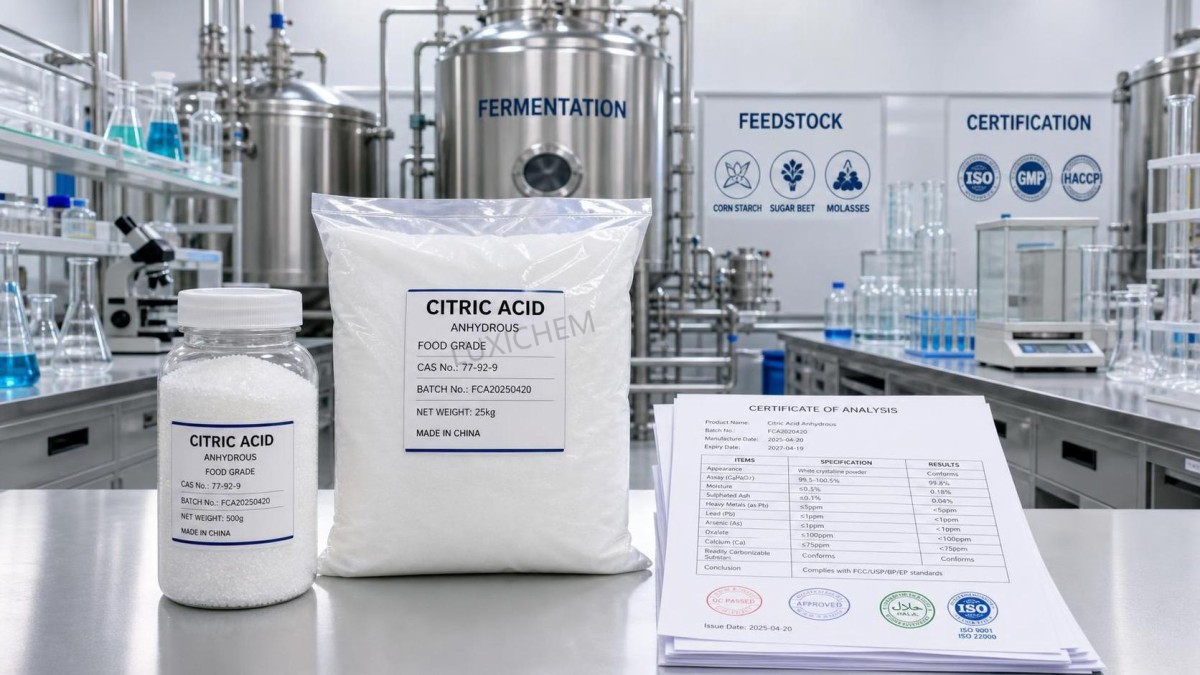
Is there a valid certificate from a recognized body, and does it apply to the exact product, manufacturer, and site you are reviewing? A generic company certificate is not the same as product-level confirmation.
This is why a simple yes-or-no answer to “is citric acid organic?” often disappoints people. The chemistry may be straightforward, but the purchasing answer depends on the chain of evidence.
Why food-grade and organic-grade are not the same purchase decision
Another frequent mistake is assuming food-grade compliance settles the question. Food-grade status is important, but it addresses suitability for food use under applicable quality and safety requirements. Organic status is a separate issue tied to how the product is sourced, handled, and certified. A citric acid product may be food-grade and still not support an organic product claim. It may also be accepted in certain formulations under specific rules while still requiring extra review from your certification body or compliance team.
This distinction becomes especially important for importers and distributors. If your downstream customer is manufacturing conventional beverages, confectionery, or cleaning products, food-grade documentation may be enough. If the downstream customer is producing certified organic goods, they may need stronger proof, including traceable certificates and confirmation that the supply chain handling did not break compliance.
In other words, the question is not simply whether citric acid comes from nature. The practical question is whether the material, from this supplier, from this site, under this documentation package, is acceptable for your intended commercial use.
Signs that a supplier answer is still incomplete
There are a few patterns that usually mean the buyer should keep asking questions.
If the wording stays broad—such as “eco-friendly,” “natural source,” or “bio-based”—without naming the actual certification basis, you probably do not have enough information. If the supplier provides a certificate but the product description on the certificate does not clearly match the item in the quotation, that is another pause point. The same applies when the manufacturing address on shipping documents differs from the address connected to the certificate and no explanation is provided.
Sometimes the gap is more subtle. A seller may send a statement confirming the product is manufactured by fermentation, but not state whether the feedstock is conventional or organically certified. For some buyers, that difference is crucial. For others, it is not. What matters is that the purchasing team recognizes the difference before committing to a use claim that cannot be supported later.
Practical review steps that reduce sourcing mistakes
When handling a citric acid organic inquiry, a short internal review process can prevent a lot of rework. Start by writing down the exact claim or use case you need to support. “Need citric acid for organic-certified beverage production” is a different request from “need food-grade citric acid produced by fermentation.” If the request itself is vague, the supplier response will be vague too.
Next, compare the offer documents line by line. The product name, grade, manufacturer, production site, and certificate scope should all align. If the product is being considered for regulated food or nutritional applications, also verify whether your internal quality team needs additional declarations.
It can also help to compare related ingredient sourcing practices across your portfolio. Buyers who work with amino acids, acidulants, or fermentation-derived ingredients often discover that each category has its own certification nuance. For example, if your purchasing team also reviews other fermentation-based materials such as L-Leucine CAS#61-90-5, the same habit applies: do not assume production method, purity, and certification category are automatically the same thing.
Finally, keep the supplier conversation specific. Instead of asking “Is this organic?”, ask questions like:
- Is this exact product covered by an organic certificate?
- Which certification body issued it?
- Does the certificate apply to the listed manufacturing site?
- Can you provide a current copy and confirm the product description matches the quoted item?
- Is there any limitation on intended use or market?
These questions are more useful than general wording because they lead to documents that can actually be reviewed.
When source matters more than chemistry
From a formulation perspective, buyers often focus on assay, particle size, solubility, or appearance. Those are important quality points, but certification questions do not disappear just because the chemistry is consistent. Two citric acid products may behave similarly in production while creating very different outcomes in a certification audit.
This is especially relevant when the material will appear in a finished product with label claims. In that setting, procurement is not only buying a functional acidulant. It is buying a documentation position. If the source statement and certificate package are weak, the risk appears later, usually when a customer asks for proof, a compliance review starts, or a shipment is held for clarification.
That is why experienced buyers treat source verification as part of product qualification rather than an afterthought. The manufacturing route can be acceptable, but unless the claim is documented correctly, the practical answer may still be “not suitable for this program.”
It helps to separate three different answers
For day-to-day decision making, it is useful to keep these three answers separate in your notes:
Chemical answer: yes, citric acid is an organic acid in the chemistry sense.
Production answer: commercial citric acid is often made by fermentation from agricultural feedstocks rather than direct fruit extraction.
Certification answer: whether a product can be called or used as organic depends on certification, process acceptability, and documented supply chain status.
Once buyers separate those meanings, supplier comparisons become much less confusing. It also becomes easier to explain internally why one product can be approved for general food manufacturing while another may be preferred for certified applications.
Where buyers often overcomplicate the decision
Not every purchase requires the same level of scrutiny. If your application does not involve organic claims, you may only need to verify grade, compliance, and normal quality documentation. If the intended market or customer requirement does involve certified status, then the review has to go deeper. The problem is not that buyers ask too many questions. It is that they sometimes ask the right questions too late.
A practical approach is to classify the requirement at the quotation stage. If the end use could involve organic labeling, ask for certification support at the same time as the initial price and specification request. This avoids selecting a technically acceptable product that later fails a documentation screen.
The same principle carries across other ingredient categories. Whether you are reviewing acidulants, additives, or fermentation-derived materials such as L-Leucine CAS#61-90-5, early clarification around source and certificate scope usually saves more time than any later correction.
A simple working conclusion for procurement teams
If you are trying to answer “is citric acid organic?” for a real purchasing decision, the safest response is: not until the claim is defined and the documentation supports it. Citric acid may be naturally occurring, and commercial material may be made from fermentation, but neither fact alone confirms certified organic status.
For buyers, the practical path is straightforward. Define the intended use, ask for product-specific certification documents, confirm the manufacturing site and scope match the quotation, and avoid relying on broad terms that sound reassuring but do not prove compliance. That way, the decision is based on evidence rather than wording, and the sourcing process becomes much easier to defend later.
Related Picks
 Butylated Hydroxytoluene Price Drivers: Supply, Purity, and Purchasing Risk FactorsOct 21, 2026Butylated Hydroxytoluene price trends depend on supply stability, purity, logistics, and purchasing risk. Learn how to compare quotes wisely and reduce sourcing costs.
 Sodium Tripolyphosphate Price Trends: Raw Material and Energy ExposureOct 20, 2026Explore sodium tripolyphosphate price trends, from phosphate and soda ash costs to energy exposure. Learn how to compare quotes, manage sourcing risks, and make smarter purchasing decisions.
 Acetonitrile Shipment to Vietnam Successfully Dispatched; RCEP Benefits Boost Fine Chemical Trade with ASEANSep 16, 2026A shipment of industrial-grade acetonitrile from our company has recently been loaded and dispatched following the completion of standardized hazardous material packaging and container securing procedures.
 Nigerian Client’s Order of 4 Containers of Vinyl Acetate Successfully Loaded and Shipped to West AfricaSep 16, 2026We recently completed the loading of a vinyl acetate order for a Nigerian client; four containers of the product have been successfully packed and are ready for shipment to Nigeria.




Question Consultation
Send Us Your Inquiry Today

Luxi Chemical is a professional chemical product supplier with ample stock of all chemical categories and excellent quality, welcome your purchase inquiry.

