


PVC Material Properties Explained: What Matters Most for Industrial Product Design
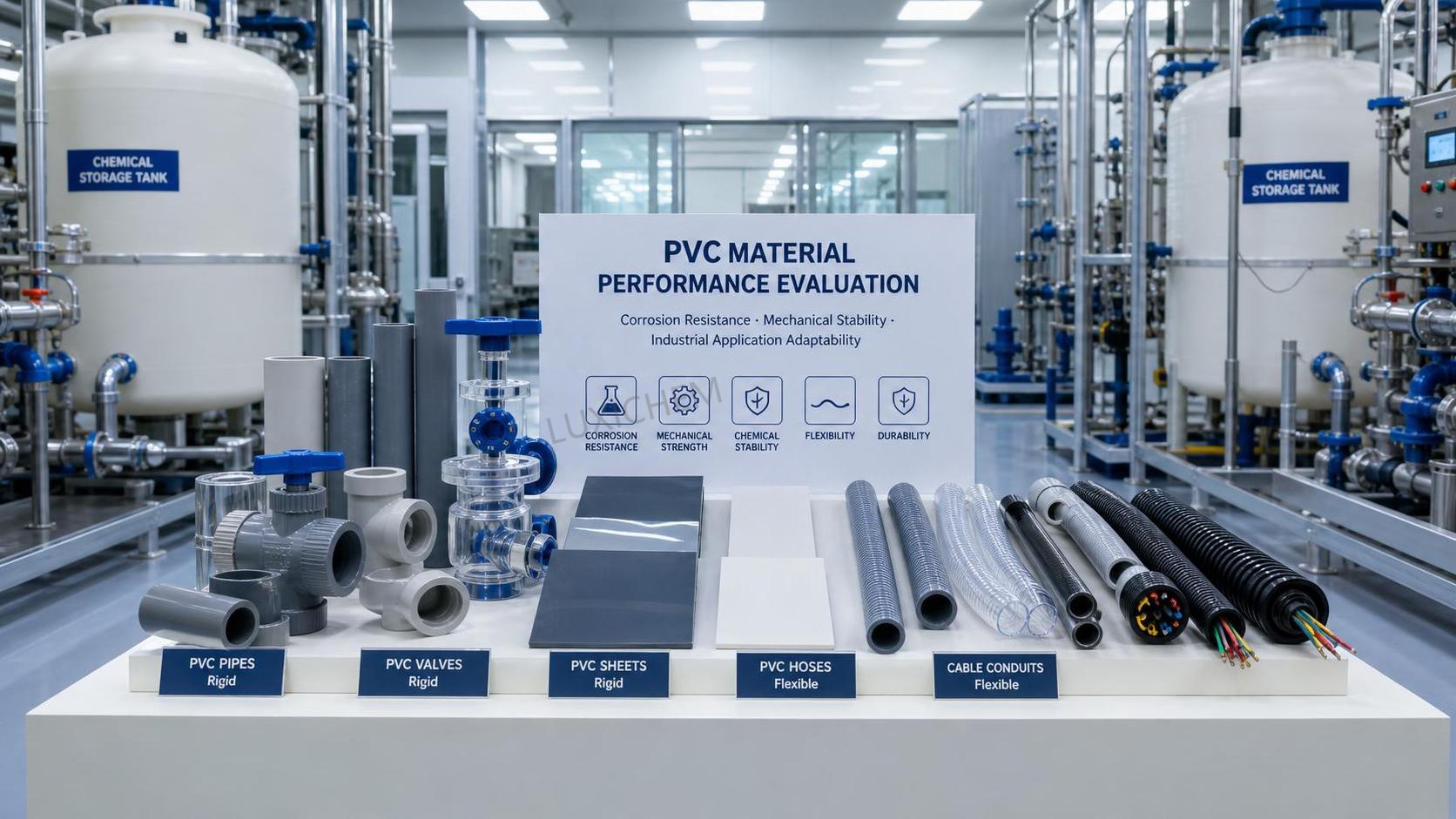
For technical evaluators involved in industrial product design, understanding PVC performance is less about memorizing a datasheet and more about knowing which properties actually govern risk in service. PVC is widely used because it offers a useful balance of chemical resistance, processability, electrical insulation, and cost control. But those strengths are often overstated in generic material discussions. In practice, whether pvc material is suitable depends on the exact media, temperature window, mechanical loading, regulatory requirements, and fabrication route. For industrial design teams, the key task is to separate “generally good” from “fit for this duty.”
Why PVC keeps showing up in industrial design reviews
PVC remains a common candidate in chemical processing, water handling, cable protection, building systems, and selected packaging or housings because it can be engineered into both rigid and flexible forms. That gives designers a broad application range: pipes, ducts, fittings, liners, profiles, sheets, insulation layers, and molded parts can all come from the same polymer family.
For a technical evaluator, that versatility is both an advantage and a source of confusion. Many internal discussions refer to “PVC” as if it were one material. It is not. Plasticizer content, stabilizer package, filler loading, impact modifiers, and processing history can significantly change performance. A rigid unplasticized PVC fitting and a flexible PVC hose may share the same polymer base, but they behave very differently under stress, heat, and chemical exposure. Any serious evaluation should therefore begin with the specific formulation class, not the polymer name alone.
The first decision point: rigid or flexible PVC
The distinction between rigid PVC and flexible PVC is not a detail. It determines how the material should be tested, where it can fail, and what long-term issues are likely to appear.
Rigid PVC, often used in pipes, valves, tanks, cable conduits, and structural profiles, is valued for dimensional stability, good corrosion resistance, and relatively high stiffness. It is usually the default form considered in industrial fluid handling and infrastructure applications.
Flexible PVC introduces plasticizers to improve softness and bendability. That makes it suitable for tubing, seals, cable jackets, and some protective covers, but also introduces new concerns: plasticizer migration, reduced high-temperature performance, potential compatibility issues with oils or solvents, and more complex compliance review depending on end use.
If the design team is still speaking about “PVC” in broad terms after concept selection, the evaluation is not yet mature enough.
Chemical resistance is important, but only under defined conditions
PVC is often selected because of its resistance to many acids, alkalis, and salts. In many industrial environments, that reputation is deserved. It can perform well in contact with a wide range of aqueous chemicals and is commonly used where metal corrosion would be difficult or expensive to manage.
However, chemical resistance data must be read with discipline. The same material that performs well in diluted acid at ambient temperature may become unsuitable at higher concentration, elevated temperature, or in the presence of mixed solvents. Organic solvents are a common blind spot. Certain chlorinated, aromatic, or ketone-based media can cause swelling, softening, stress cracking, or property loss. Oxidizing environments also require careful review.
For industrial product design, the real question is not “Is PVC chemically resistant?” but “Is this specific grade resistant to this exact chemical system over the expected life cycle, including upset conditions?” If there is intermittent cleaning exposure, trace contamination, or a thermal excursion scenario, those should be part of the evaluation scope.
A practical review should include:
- chemical identity, concentration, and impurities
- continuous and peak service temperature
- pressure or vacuum load
- exposure duration and cycling frequency
- whether the part is under residual assembly stress
- cleaning agents and maintenance chemicals
Stress plus chemistry is where many field failures begin. A material that looks acceptable in immersion charts may still fail in a molded or welded part carrying load.
Temperature limits matter more than many buyers expect
One of the most important limitations of pvc material in industrial design is thermal performance. PVC is not usually the right answer when sustained high temperature is part of the duty profile. Mechanical strength and pressure capability typically decrease as temperature rises, while thermal aging and deformation risk increase. Exact limits depend on grade and formulation, so any fixed threshold should be treated as application-specific and verified against supplier data and design code requirements.
This matters because designers sometimes select PVC based on room-temperature properties, then discover late in the project that summer ambient conditions, nearby process heat, or hot CIP-related exposure push the part outside a reliable operating window. Even if the polymer does not immediately fail, long-term creep, joint weakness, and embrittlement can shorten service life.
For outdoor or semi-outdoor systems, the evaluation should include solar heat gain, not just air temperature. In dark-colored assemblies or enclosed spaces, the actual part temperature may run materially above ambient.
Mechanical strength is only useful when paired with impact and creep data
Rigid PVC offers good stiffness for many industrial components, but stiffness alone is not enough for design approval. Evaluators should pay particular attention to impact behavior, notch sensitivity, long-term creep, and joint design.
PVC can become more brittle at low temperature or after aging, depending on grade and service environment. A component that survives steady-state loading may still crack during installation, transport, or accidental impact. This is especially relevant for large fabricated parts, pipe fittings, covers, and enclosures that experience handling damage before they ever enter service.
Long-term loading is another point that deserves more attention than it usually gets in early sourcing discussions. For parts under continuous stress, the short-term tensile value on a datasheet is a poor predictor of real field life. Creep resistance, fastening method, wall thickness, and stress concentration around holes or threads often determine whether the design remains stable over time.
When comparing candidate grades, it is often more useful to ask for:
- impact test data under relevant temperature conditions
- creep or long-term hydrostatic performance where applicable
- weld line performance for molded parts
- joining recommendations and allowable assembly stresses
- aging data after UV, thermal, or chemical exposure
Flame behavior is a strength, but not a complete fire strategy
PVC is often favored for its inherent flame-retardant characteristics compared with some other commodity plastics. That can be valuable in cable insulation, building products, and electrical housings. But technical evaluators should not treat this as a standalone safety answer.
Fire performance involves more than ignition resistance. Smoke generation, corrosive combustion byproducts, local fire codes, and application-specific certification can all become decisive. In enclosed industrial facilities, data centers, tunnels, or transport-related systems, the conversation may quickly move beyond “flame retardant” toward system-level requirements that PVC alone may or may not satisfy.
If the product is being designed for regulated markets, request the actual test basis and certificate scope rather than relying on generic claims. Terminology around flame class, smoke performance, or low-toxicity behavior can be inconsistent across suppliers and regions.
Electrical insulation is useful, but formulation control is critical
PVC has long been used in wire and cable applications because it provides useful electrical insulation combined with processing flexibility and acceptable cost. That said, insulation performance is highly formulation-dependent. Additives that improve flexibility, flame resistance, or processing may also affect dielectric behavior, heat aging, or migration risk.
For cable-related and electronics-adjacent applications, the technical review should consider voltage class, heat build-up, long-term embrittlement, and any environmental stressors such as oils, moisture, or UV exposure. A low-cost compound that performs adequately in indoor static service may be a weak choice for mobile equipment, outdoor routing, or bundled high-temperature zones.
Weatherability and UV resistance are not automatic
Many buyers assume PVC is naturally durable outdoors. The reality is more conditional. PVC can perform well in external environments, but weatherability depends heavily on stabilizers, pigments, surface condition, and exposure intensity. Poorly specified outdoor grades may discolor, chalk, lose impact strength, or become brittle over time.
This is especially relevant for industrial covers, profiles, conduit systems, and signage-related components exposed to sunlight and temperature cycling. The design review should ask whether the grade is intended for prolonged outdoor exposure and what evidence supports that claim. Accelerated weathering data can help, but it should be interpreted carefully because test protocols and correlation to field conditions vary.
Processing method changes the risk profile
One reason PVC remains commercially attractive is that it can be extruded, calendered, molded, thermoformed, and fabricated into many shapes. But processability is not just a manufacturing topic; it directly affects product reliability.
PVC has a narrower thermal processing window than some alternative polymers. If processing control is poor, degradation can occur, affecting color, mechanical properties, and consistency. Weld quality, residual stress, and dimensional tolerance can also shift depending on fabrication route.
For technical evaluators working with outsourced manufacturing, this means material approval should not stop at compound selection. The supplier’s process discipline matters. Questions worth asking include:
- What is the primary conversion process?
- How is thermal history controlled?
- What joining methods are used?
- How are batch-to-batch variations monitored?
- Are regrind levels controlled or restricted?
These are ordinary operational questions, but they often reveal whether a design will behave consistently at scale.
Compliance review is now part of material selection, not a late-stage check
In many markets, PVC selection can trigger a wider compliance review because additives matter. Depending on application and destination region, the concern may involve plasticizers, heavy-metal stabilizer history, food-contact status, drinking water suitability, electrical safety, or sector-specific restrictions. Requirements differ by geography and end use, so broad compliance claims should be treated cautiously unless they are tied to a declared standard, version, and product grade.
For technical buyers in B2B supply chains, this means the approved material is not just “PVC resin” or even “PVC compound.” It is a specific commercial grade with a traceable formulation and documentation package. If the product may later shift into food processing, consumer-facing assemblies, or export-controlled sectors, that should be considered before approval, not after tooling is committed.
This is also why many industrial sourcing teams now treat raw-material relationships more strategically. A company that already manages documentation across multiple chemical categories, whether for polymers, additives, intermediates, or niche materials such as Potassium iodide CAS#7681-11-0, may be better positioned to support cross-border paperwork and specification continuity than a trader focused only on spot availability. The point is not product overlap, but supply discipline.
Cost advantage is real, but total cost depends on service life
PVC is often chosen because it is cost-effective relative to higher-performance engineering plastics and corrosion-resistant alloys. That is a legitimate advantage, especially in large-volume systems. But technical evaluators should separate low initial material cost from low lifecycle cost.
If the application is near PVC’s temperature ceiling, exposed to aggressive solvents, or highly dependent on impact toughness, a cheaper material can become expensive through premature replacement, unplanned downtime, or excessive derating. On the other hand, in well-matched corrosive aqueous service, PVC can be a highly efficient choice that avoids overengineering.
The most useful procurement question is not “Is PVC cheaper?” but “What conditions allow PVC to remain the cheapest reliable option over the intended service interval?”
How to compare PVC with alternatives without wasting time
In industrial design reviews, PVC is often compared with CPVC, PE, PP, ABS, PVDF, or metal-based solutions. The comparison becomes more efficient when the team focuses on failure drivers rather than property tables alone.
This type of screening usually leads to better decisions faster than broad claims about one material family being universally superior.
What a solid PVC evaluation package should include
For technical and sourcing teams, a credible approval process for pvc material should combine formulation clarity, processing control, and service-condition verification. At minimum, the file should include the exact grade identity, property data relevant to the application, chemical compatibility evidence, compliance documents where needed, and some view of manufacturing consistency.
If the application is critical, ask for retained sample practice, change-notification terms, and a clear statement on substitution control. Many costly field issues are not caused by the original grade choice, but by an undocumented formulation change or inconsistent conversion quality later in the supply chain.
PVC remains one of the most useful industrial polymers because it solves real problems economically. But its performance is conditional, not generic. For design evaluators, the central question is simple: under the real combination of media, heat, stress, fabrication, and compliance requirements, does this specific PVC grade still have margin? That is the point where material selection stops being a catalog exercise and becomes sound engineering judgment.
Related Picks
 Butylated Hydroxytoluene Price Drivers: Supply, Purity, and Purchasing Risk FactorsOct 21, 2026Butylated Hydroxytoluene price trends depend on supply stability, purity, logistics, and purchasing risk. Learn how to compare quotes wisely and reduce sourcing costs.
 Sodium Tripolyphosphate Price Trends: Raw Material and Energy ExposureOct 20, 2026Explore sodium tripolyphosphate price trends, from phosphate and soda ash costs to energy exposure. Learn how to compare quotes, manage sourcing risks, and make smarter purchasing decisions.
 Acetonitrile Shipment to Vietnam Successfully Dispatched; RCEP Benefits Boost Fine Chemical Trade with ASEANSep 16, 2026A shipment of industrial-grade acetonitrile from our company has recently been loaded and dispatched following the completion of standardized hazardous material packaging and container securing procedures.
 Nigerian Client’s Order of 4 Containers of Vinyl Acetate Successfully Loaded and Shipped to West AfricaSep 16, 2026We recently completed the loading of a vinyl acetate order for a Nigerian client; four containers of the product have been successfully packed and are ready for shipment to Nigeria.




Question Consultation
Send Us Your Inquiry Today

Luxi Chemical is a professional chemical product supplier with ample stock of all chemical categories and excellent quality, welcome your purchase inquiry.

