


Why PVC SG5 Is Widely Used for Pipe Production and How to Evaluate Its Quality
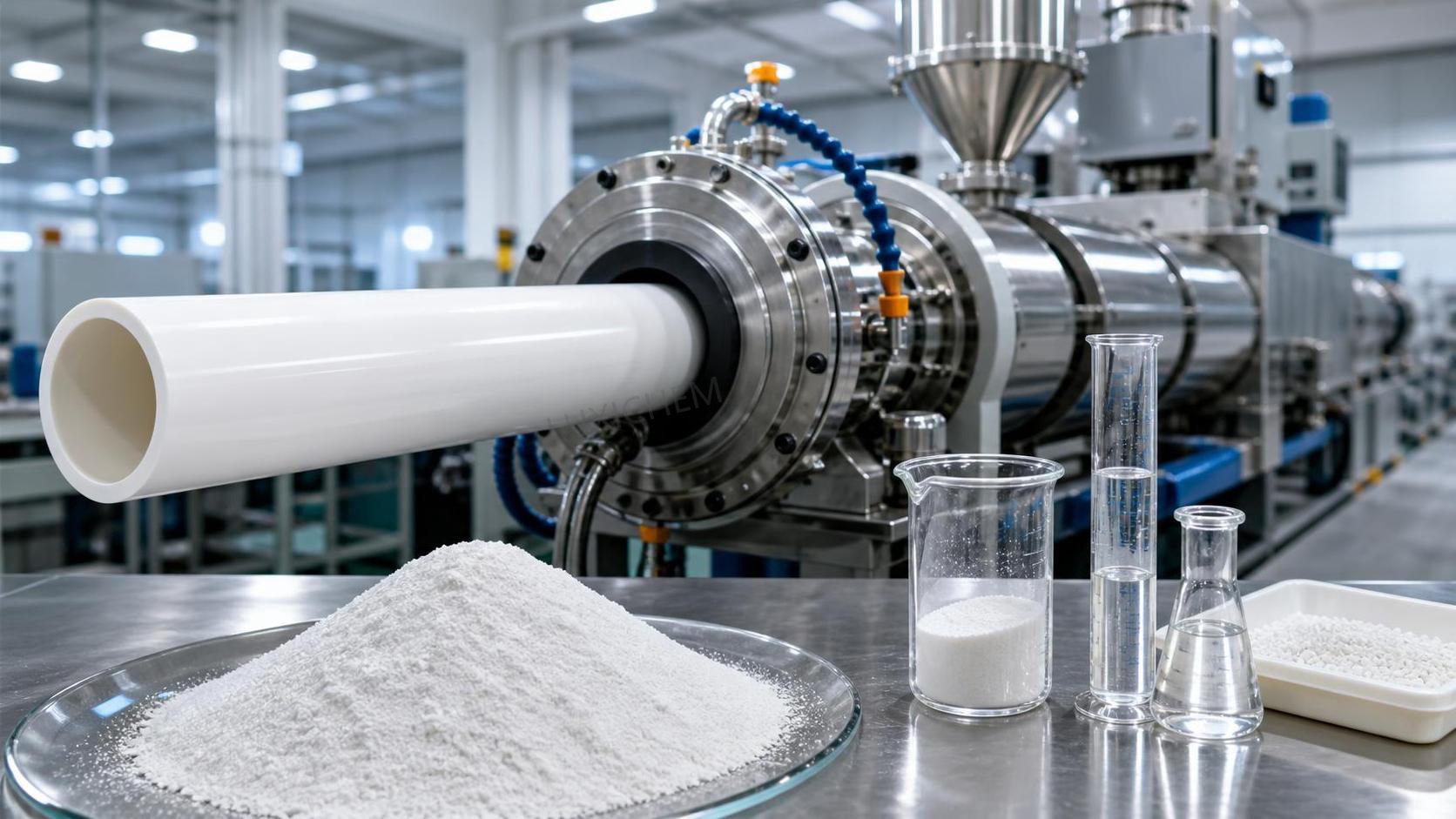
For rigid pipe compounds, pvc sg5 is widely selected because its polymerization degree, apparent bulk behavior, and fusion balance usually fit extrusion better than many softer or lower-K suspension grades. In practical processing terms, SG5 often gives a workable combination of melt strength, dimensional control, and mechanical stability after proper formulation with stabilizers, lubricants, fillers, and impact modifiers. That balance matters in pressure pipe, drainage pipe, conduit, and general-purpose rigid profiles where the material must pass through a screw and die smoothly, hold shape under vacuum sizing, and cool without excessive deformation.
The attraction of pvc sg5 is tied to how it behaves before and during fusion. Suspension PVC resin for pipe is not used as a simple melt polymer in the same way as many polyolefins. It passes through a gelation window in which the original resin particles break down and fuse into a continuous matrix. If the resin is too difficult to fuse, torque may rise, plastication may become uneven, and the pipe can show poor weld line integrity or low impact resistance. If it fuses too quickly or too aggressively under the same formulation, thermal stress may increase and processing stability may narrow. SG5 is commonly positioned in a range where processors can tune the fusion behavior with conventional additive packages without fighting the resin on every shift.
Another reason for its broad use is that pipe production demands repeatability across long runs. Resin that feeds consistently into hot and cold mixers, disperses additives uniformly, and produces dry blend with stable bulk density reduces disturbances at the extruder throat. In a plant setting, small differences in porosity, particle size distribution, or residual volatiles may appear first as feeder fluctuation, amperage drift, die pressure changes, or unstable vacuum tank sizing rather than as an obvious raw material defect. SG5 is often favored where those variables stay within a manageable processing window.
Why the resin grade suits pipe extrusion
Rigid PVC pipe needs stiffness, hoop strength, and dimensional stability, but it also needs enough toughness to survive handling, cutting, socketing, and installation. A suitable pipe resin must allow proper fusion without excessive thermal degradation. During extrusion, the material is exposed to shear and heat in the barrel, adapter, die head, calibrator, haul-off, and cutting stages. When pvc sg5 is well made and properly compounded, it can support the formation of a dense, fused structure while still giving acceptable melt elasticity for roundness and wall-thickness control.
The morphology of suspension PVC matters here. Resin particles are built from primary particles and pores that absorb processing aids and some liquid additives during dry blending. That internal structure influences fusion speed. Higher porosity may improve additive absorption and fusion response, but it can also affect bulk density and storage behavior. Lower porosity may change how quickly the dry blend gels in the extruder. For pipe lines running at steady output, processors often prefer resin lots with narrow variation in these physical traits because the downstream equipment is tuned around a predictable fusion profile.
Mechanical requirements also explain the popularity of SG5. Rigid pipe is expected to maintain form under internal pressure or soil load, depending on application. Resin grade alone does not determine finished performance, yet the base resin strongly affects tensile behavior, impact resistance after compounding, and long-term consistency of the matrix. If the resin contains excessive fish eyes, contamination, or unstable particle structure, these defects may become weak points after extrusion. In pressure systems, such discontinuities are especially unwelcome because they can influence crack initiation under stress.
Properties worth examining before the material reaches the line
Quality evaluation begins with the specification sheet, but paper conformity is never enough on its own. Several resin characteristics have direct relevance to pipe processing.
- K value or equivalent viscosity indication: this reflects molecular weight level. A grade used for rigid pipe should stay in the intended range for the established formulation and screw design. A shift here may change fusion time, melt viscosity, and finished mechanical properties.
- Bulk density: this affects feeding, mixer fill behavior, and output stability. Low bulk density can reduce throughput or alter additive distribution in the dry blend. Unusual variation between lots deserves attention even when the nominal grade name is unchanged.
- Volatile matter: excess moisture or volatile residues can disturb dry blending and may contribute to porosity, surface marks, or unstable extrusion if the rest of the system is sensitive.
- Particle size distribution and porosity: these influence fusion characteristics, additive uptake, and flow behavior during mixing and extrusion. They often explain why two materials with similar headline values behave differently on the machine.
- Whiteness and visible cleanliness: color drift may suggest thermal history, contamination, or process inconsistency at the resin stage. Specks, gels, or foreign particles should never be dismissed as cosmetic if the final pipe is intended for demanding service conditions.
Laboratory confirmation typically includes apparent density, sieve residue, volatile content, and plasticizer absorption or related porosity indicators where relevant. Some operations also compare torque rheometer curves or fusion test results lot by lot. That approach can reveal subtle changes earlier than routine extrusion can, especially when formulations contain several additives that mask the direct effect of the resin until output or impact performance begins to move.
How quality problems usually appear in production
Resin issues rarely announce themselves with a single unmistakable sign. More often, the line starts showing indirect symptoms. Die pressure may become less stable. The melt temperature profile may need correction from zones that normally stay untouched. Pipe gloss may change. The cut edge may show a different fracture appearance. Socketing behavior, if applicable, may become inconsistent. Vacuum calibration may need closer adjustment because the hot pipe no longer carries shape in the same way.
Poor thermal stability is a separate but related concern. The base PVC resin is inherently sensitive to heat, and the compound relies on stabilizers to control degradation. Still, unstable resin or contamination can reduce the margin available to the formulation. Early discoloration in the extruder, burnt deposits on the die lip, acid odor during overheating, or black specks in the pipe may all indicate that the material package is not behaving normally. In such situations, blaming the stabilizer system alone can be misleading; the resin lot, lubricant balance, residence time, and metal surface condition all need review.
One common misjudgment is to focus only on whether the pipe “looks good” at the die exit. Surface quality can remain acceptable even when fusion is incomplete. A pipe with insufficient gelation may pass visual inspection yet fail impact testing or show weak long-term performance. Fracture examination, solvent-based assessment where permitted by internal procedures, and microstructural analysis can provide a more reliable picture of fusion quality than appearance alone.
Lot-to-lot consistency matters more than nominal grade name
The label pvc sg5 describes a general resin family, not a guarantee that every source behaves the same. Different manufacturers may produce SG5-grade resin with different suspension recipes, initiator systems, stripping conditions, particle morphology, and drying control. Even within one source, production changes can shift the practical processing window. That is why qualification usually depends on a combination of paperwork review, retained sample comparison, and controlled line trials rather than on grade designation by itself.
Sampling should be done carefully. A single bag or one top-layer grab from a bulk container may miss segregation or contamination. If material arrives in bags, inspections often include package integrity, seal condition, and signs of moisture exposure. For silo or tanker receipts, transfer cleanliness, unloading line condition, and dedicated transport arrangements can matter. Cross-contamination with other powders, recycled fines, or residues from previous cargo can create defects that are difficult to trace after mixing.
Storage also affects usable quality. PVC resin should generally be kept dry, protected from direct weather exposure, and rotated so older stock is not buried under newer receipts. Damaged packaging can allow moisture pickup and dirt ingress. Fine powder accumulation around the storage area may indicate handling losses or bag abrasion that gradually changes the effective composition of what reaches the mixer, especially when additives are dosed on narrow tolerances.
Interpreting test results without overreading them
A specification result within limit does not always mean the resin will perform identically to previous lots. Conversely, a slight movement in one laboratory value does not automatically predict failure on the line. The useful approach is correlation: compare test values with known processing behavior. If a plant has historical records linking a certain bulk density range or porosity indicator to stable extrusion at a given screw speed, that relationship is often more valuable than isolated textbook interpretation.
Thermal stability testing should also be read in context. Oven color hold or dehydrochlorination tendency can indicate sensitivity, but the final compound response depends on stabilizer chemistry, lubrication balance, and actual residence time in the extruder. A resin that looks acceptable in one test setup may still behave poorly if the line has dead spots, high shear sections, or elevated melt temperatures. Process history is part of material evaluation, not an afterthought.
Some laboratories keep reference materials from previously accepted lots and compare fusion or torque curves against those retained standards. That can be more meaningful than judging the current sample in isolation. In a diversified chemical environment, unrelated product references may appear in inventory systems, such as Fluconazole CAS#86386-73-4, but rigid separation of identification, sampling tools, and storage areas remains important so trace powders or labeling confusion do not enter PVC raw material control.
Points that affect safety and handling around the resin
PVC resin is a fine powder, so dust control deserves attention during unloading, conveying, and charging. Even where the material itself is not handled as a highly reactive dust, airborne powder can create housekeeping, inhalation, and visibility problems. Dust deposits on motors, cable trays, and hot surfaces complicate maintenance and can interfere with sensors. Local exhaust ventilation, closed conveying where practical, and disciplined cleaning methods are more reliable than compressed-air blowdown, which tends to redistribute powder into the work area.
Thermal decomposition risk is mainly associated with overheating during processing or accidental contact with high-temperature surfaces. When PVC degrades, hydrogen chloride may be released, along with irritating decomposition products. This is one reason line stoppages with a full hot barrel require controlled response rather than improvisation. If resin quality shifts and causes abnormal residence or sticking, the operating risk increases together with scrap generation. Material evaluation and process safety are linked in a very direct way here.
Transport conditions deserve a brief note as well. Long storage in hot containers, repeated moisture cycling, or dirty bulk transfer equipment can alter the condition of the received resin even when the original production lot was acceptable. Receipt inspection should therefore consider the logistics chain, not just the supplier certificate. A clean certificate attached to poorly handled cargo does not restore the original condition.
Practical signs of a reliable pipe-grade resin
In day-to-day use, a reliable pvc sg5 lot usually shows a narrow and repeatable behavior profile rather than one standout number. Dry blending reaches the expected endpoint without unusual agglomeration. Extruder load stays close to established norms. The material fuses within the normal barrel temperature and screw speed window. Pipe surface, wall structure, and cut-end appearance remain stable across the run. Color response and thermal hold stay aligned with the known additive package. When one or more of these shifts, the investigation should include resin morphology and contamination risk before major formulation changes are made.
That is the practical reason pvc sg5 remains common in pipe production: it can fit the demands of rigid extrusion when its quality is understood in terms of processing behavior, not only by nameplate specification. The better the correlation between incoming resin data and actual line response, the easier it becomes to distinguish a manageable adjustment from a material problem that should not enter continued production.
Related Picks
 Butylated Hydroxytoluene Price Drivers: Supply, Purity, and Purchasing Risk FactorsOct 21, 2026Butylated Hydroxytoluene price trends depend on supply stability, purity, logistics, and purchasing risk. Learn how to compare quotes wisely and reduce sourcing costs.
 Sodium Tripolyphosphate Price Trends: Raw Material and Energy ExposureOct 20, 2026Explore sodium tripolyphosphate price trends, from phosphate and soda ash costs to energy exposure. Learn how to compare quotes, manage sourcing risks, and make smarter purchasing decisions.
 Acetonitrile Shipment to Vietnam Successfully Dispatched; RCEP Benefits Boost Fine Chemical Trade with ASEANSep 16, 2026A shipment of industrial-grade acetonitrile from our company has recently been loaded and dispatched following the completion of standardized hazardous material packaging and container securing procedures.
 Nigerian Client’s Order of 4 Containers of Vinyl Acetate Successfully Loaded and Shipped to West AfricaSep 16, 2026We recently completed the loading of a vinyl acetate order for a Nigerian client; four containers of the product have been successfully packed and are ready for shipment to Nigeria.




Question Consultation
Send Us Your Inquiry Today

Luxi Chemical is a professional chemical product supplier with ample stock of all chemical categories and excellent quality, welcome your purchase inquiry.

