


PVC Raw Material Forms: Powder, Resin, and Compounds for Manufacturing
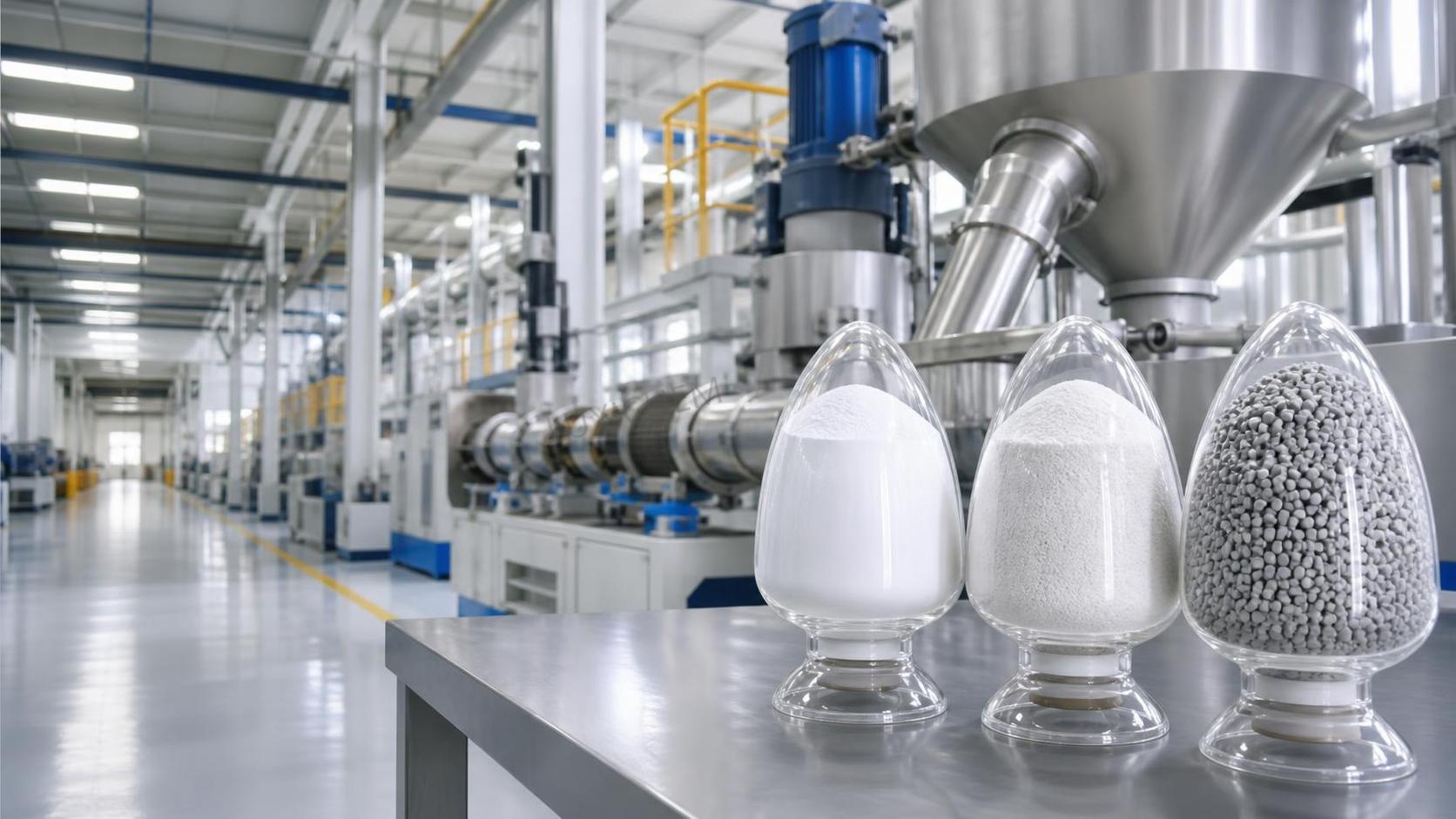
When people search for PVC raw materials, they are often looking for a simple answer: what form of PVC should be purchased for a particular product? In practice, the answer depends on far more than the word “PVC.” A rigid drainage pipe, a soft medical-style tube, a vinyl floor layer, and an injection-molded fitting may all begin with polyvinyl chloride, yet they require very different material states, formulations, and processing behavior.
PVC raw materials are commonly discussed as powder, resin, and compounds. These terms overlap in everyday trade language, which can create confusion for new buyers and non-specialist procurement teams. PVC resin is frequently supplied as a powder; a PVC compound may also be supplied as a powder, or as granules and pellets ready for processing. The important distinction is not only physical appearance, but how much formulation and processing responsibility remains with the manufacturer.
For industrial buyers, understanding these forms makes it easier to compare offers, communicate with processors, and avoid a material that looks correct on a specification sheet but performs poorly on the production line.
Start with the material family: what is PVC resin?
Polyvinyl chloride is a thermoplastic polymer produced from vinyl chloride monomer. In its unmodified form, PVC is relatively rigid and has a narrow processing window compared with some other commodity plastics. It is valued for chemical resistance, electrical insulation, durability, flame-retardant characteristics, and broad formulation flexibility. That flexibility is one reason PVC appears in construction, cable systems, packaging, footwear, medical-related applications, coated fabrics, consumer goods, and many industrial components.
The base polymer itself is generally referred to as PVC resin. Suppliers may describe it by polymerization route, viscosity grade, K-value, molecular-weight range, or intended application. Suspension PVC is widely used for rigid and flexible extrusion, injection molding, calendaring, and many general-purpose products. Emulsion PVC and microsuspension PVC are more commonly associated with plastisols, coatings, synthetic leather, wallcoverings, gloves, and other paste-processing applications.
A buyer should not assume that “PVC resin” identifies a finished processing material. Resin tells you what the polymer is; it does not automatically tell you whether stabilizers, plasticizers, lubricants, fillers, pigments, impact modifiers, or processing aids have already been added.
PVC powder: a physical form with several meanings
In commercial discussions, PVC powder often means dry, free-flowing resin powder. Suspension-grade PVC resin is typically supplied in this form. It may look like a uniform white powder, but its particle structure, bulk density, porosity, and flow characteristics influence how it absorbs additives and behaves during mixing and fusion.
For a compounder, PVC powder is a starting point. The compounder can build a formulation around the intended end use: a weather-resistant window profile, for example, needs a different balance of additives than a flexible cable insulation layer. This route provides meaningful control, but it also requires formulation knowledge, reliable mixing equipment, dust management, and consistent quality checks.
The word “powder” can also refer to a dry blend. A dry blend is not simply raw resin. It is a prepared mixture of PVC resin and selected additives, often supplied in powder form for further extrusion or molding. The difference matters because a dry blend has already moved partway through the formulation process, while unmodified resin has not.
Powder handling deserves practical attention. Fine PVC material can generate dust during transfer, bag opening, blending, and feeding. Plants normally consider enclosed conveying, filtration, housekeeping, grounding where appropriate, and worker protection as part of the material-handling plan. Moisture exposure and contamination should also be controlled, especially where color consistency or surface finish is critical.
What makes a PVC compound different?
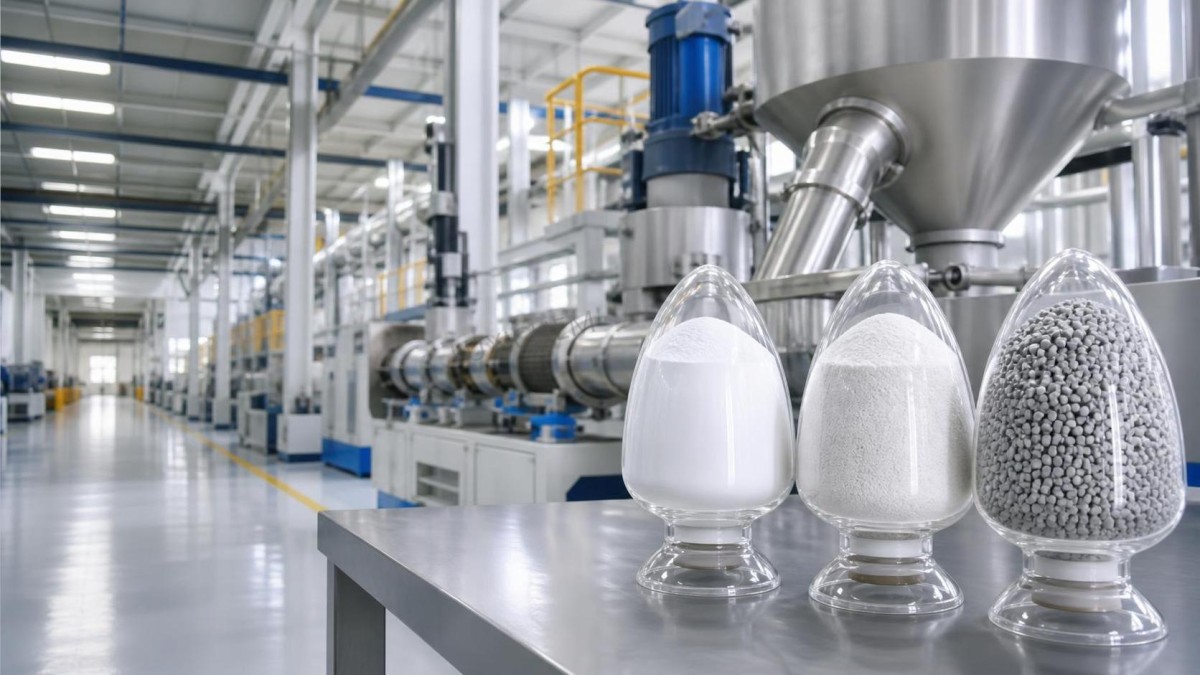
A PVC compound is a formulated material designed for a defined processing method and performance target. It begins with PVC resin, then incorporates additives that change how the material melts, flows, looks, feels, resists weathering, or performs in service. Depending on the formulation, the compound may be supplied as pellets, granules, powder, or dry blend.
Common ingredient categories include:
- Stabilizers, which help PVC withstand heat during processing and support long-term performance.
- Plasticizers, used where flexibility, softness, and low-temperature bend performance are needed.
- Fillers, such as calcium carbonate, which can influence stiffness, cost structure, processing, and finished-part properties.
- Lubricants and processing aids, which affect fusion, melt flow, surface quality, and release behavior.
- Impact modifiers, often used in rigid PVC products needing better resistance to impact.
- Pigments, UV absorbers, and functional additives, selected for color, outdoor exposure, flame behavior, or specialized performance requirements.
Choosing compound instead of resin is often a question of where expertise and control should sit. A manufacturer with established compounding capability may prefer resin powder because it can optimize formulations internally. A converter focused on stable, repeatable production may prefer a ready-to-process compound, reducing the number of ingredients to source and the variables to manage. Neither option is universally better; the right one is the one that matches the plant’s equipment, quality system, and product design.
Rigid, flexible, and paste-grade PVC are not interchangeable
One of the most common misunderstandings in PVC raw material sourcing is treating all grades as substitutes. PVC is a highly formable material family, but its end-use behavior comes largely from grade selection and formulation.
Rigid PVC, often called uPVC when unplasticized, is used in pipes, fittings, sheets, window profiles, conduits, siding, and certain packaging applications. Its formulation typically emphasizes dimensional stability, strength, processability, impact performance, and resistance to outdoor aging where relevant. Rigid compounds are commonly used in extrusion and injection molding.
Flexible PVC contains plasticizers or other flexibilizing components. It is found in cable jackets, hoses, flooring, films, seals, footwear, coated textiles, and soft consumer products. Here, a buyer may focus on hardness range, tensile behavior, elongation, migration characteristics, odor, low-temperature flexibility, and regulatory suitability for the final application.
Paste PVC, sometimes called dispersion resin, is formulated into plastisols or organosols rather than processed like conventional dry-blend extrusion material. It is widely used for coating, dipping, screen printing, and spreading processes. Particle characteristics and rheology become central concerns because viscosity, flow, gelation, and surface appearance influence the finished coating or article.
The practical lesson is simple: do not purchase a PVC raw material based on polymer name alone. State the process first—extrusion, injection molding, calendering, coating, dipping, or rotational use—then define the required final properties.
A buyer’s comparison: resin versus prepared compound
This comparison should not be reduced to price per ton. Resin may appear less expensive at the point of purchase, but a true comparison includes additive procurement, warehouse space, mixing losses, quality-control resources, production downtime risk, and the cost of managing multiple incoming materials. Conversely, a compound offers convenience but may limit fast formula adjustments when a customer changes a specification.
What to ask before requesting a PVC raw material quotation
A clear inquiry saves time for both buyer and supplier. Rather than asking only for “PVC raw,” provide the context that determines grade suitability. Begin with the intended product and processing route. Is the material for a rigid pipe extrusion line, a flexible cable compound, a sheet, a molded fitting, or a plastisol coating? The answer changes the discussion immediately.
Then describe the properties that truly matter. These may include hardness, color, transparency, density, tensile strength, impact resistance, weatherability, electrical properties, flame-related requirements, food-contact suitability, or resistance to oils and chemicals. Not every project needs every parameter, but identifying the critical ones prevents a generic grade from being mistaken for an application-ready material.
For resin, useful technical points may include K-value or viscosity grade, bulk density, volatile content, particle size distribution, porosity, and residual monomer limits where applicable. For compounds, buyers often ask for hardness, density, melt behavior, color standard, tensile and elongation values, and processing temperature guidance. The appropriate test methods and acceptance limits should be agreed rather than assumed.
Packaging and logistics are equally real considerations. Powder may be delivered in bags or bulk formats, while compounds may arrive in bags, octabins, or other agreed packaging. A material that performs well in laboratory trials can still create problems if it bridges in a hopper, suffers from inconsistent bag weights, or is stored in unsuitable conditions during long-distance transport.
Compliance is part of the material decision
PVC formulations can be affected by regulations tied to the final market and end use. Requirements differ for building materials, electrical products, toys, food-contact articles, medical-related applications, and consumer goods. The presence or absence of specific stabilizer systems, plasticizers, pigments, or other additives may be commercially important.
Buyers should request the documentation relevant to their application and destination market, then review it against their own obligations. A general statement of compliance is not a substitute for matching a particular product formulation to the applicable legal and customer requirements. This is especially important where materials may come into contact with food, skin, drinking water, or sensitive environments.
Chemical sourcing often involves more than one material family. A procurement partner serving industrial manufacturers may support PVC-related requirements alongside other inputs used in formulation and downstream production. For example, companies managing diversified supply chains may also source color ingredients such as Beet Red CAS#7659-95-2 for separate food or consumer-product applications. The key is to keep product specifications, end-use restrictions, and handling requirements clearly separated across each category.
How to evaluate a supplier beyond the data sheet
A technical data sheet is essential, but it is only the opening document. Good sourcing decisions also consider lot-to-lot consistency, traceability, packaging integrity, communication speed, and the supplier’s ability to clarify whether an offered material is virgin resin, dry blend, pelletized compound, or a specialty grade. Terms that sound similar can represent significantly different materials.
For international purchasing, documents such as certificates of analysis, safety data sheets, packing details, and shipping information should be reviewed before the first commercial order. It is also wise to confirm the sample-to-bulk relationship: a laboratory sample should represent the same production route and specification that will be supplied at scale. Where a finished product has demanding visual or mechanical requirements, processing trials remain one of the most reliable checks.
Luxi Chemical (Shandong) Co., Ltd. works across chemical raw materials, chemical products, and import/export trade, supporting customers in a broad range of industries. For buyers building multi-category procurement programs, a supplier’s ability to communicate specifications accurately and coordinate stable supply can be as valuable as the material itself. Clear, honest technical dialogue is particularly important with PVC, where a small formulation or grade mismatch can affect an entire production run.
The most useful way to think about PVC forms
Think of PVC resin powder as the foundation, PVC powder as a physical description that may refer to resin or a prepared dry blend, and PVC compound as a formulation designed to deliver more specific processing and end-use behavior. From that point, the purchase decision becomes much less mysterious.
Buyers who need freedom to formulate should investigate resin grades and additive compatibility. Buyers seeking operational simplicity should focus on compounds matched to their machinery and product requirements. In both cases, the strongest decision comes from linking the PVC raw material to three practical questions: what will be made, how will it be processed, and what must it do after it leaves the factory?
Related Picks
 Butylated Hydroxytoluene Price Drivers: Supply, Purity, and Purchasing Risk FactorsOct 21, 2026Butylated Hydroxytoluene price trends depend on supply stability, purity, logistics, and purchasing risk. Learn how to compare quotes wisely and reduce sourcing costs.
 Sodium Tripolyphosphate Price Trends: Raw Material and Energy ExposureOct 20, 2026Explore sodium tripolyphosphate price trends, from phosphate and soda ash costs to energy exposure. Learn how to compare quotes, manage sourcing risks, and make smarter purchasing decisions.
 Acetonitrile Shipment to Vietnam Successfully Dispatched; RCEP Benefits Boost Fine Chemical Trade with ASEANSep 16, 2026A shipment of industrial-grade acetonitrile from our company has recently been loaded and dispatched following the completion of standardized hazardous material packaging and container securing procedures.
 Nigerian Client’s Order of 4 Containers of Vinyl Acetate Successfully Loaded and Shipped to West AfricaSep 16, 2026We recently completed the loading of a vinyl acetate order for a Nigerian client; four containers of the product have been successfully packed and are ready for shipment to Nigeria.




Question Consultation
Send Us Your Inquiry Today

Luxi Chemical is a professional chemical product supplier with ample stock of all chemical categories and excellent quality, welcome your purchase inquiry.

