


When Does CPVC Resin Outperform PVC in High-Temperature Chemical Systems?
When Does CPVC Resin Outperform PVC in High-Temperature Chemical Systems?
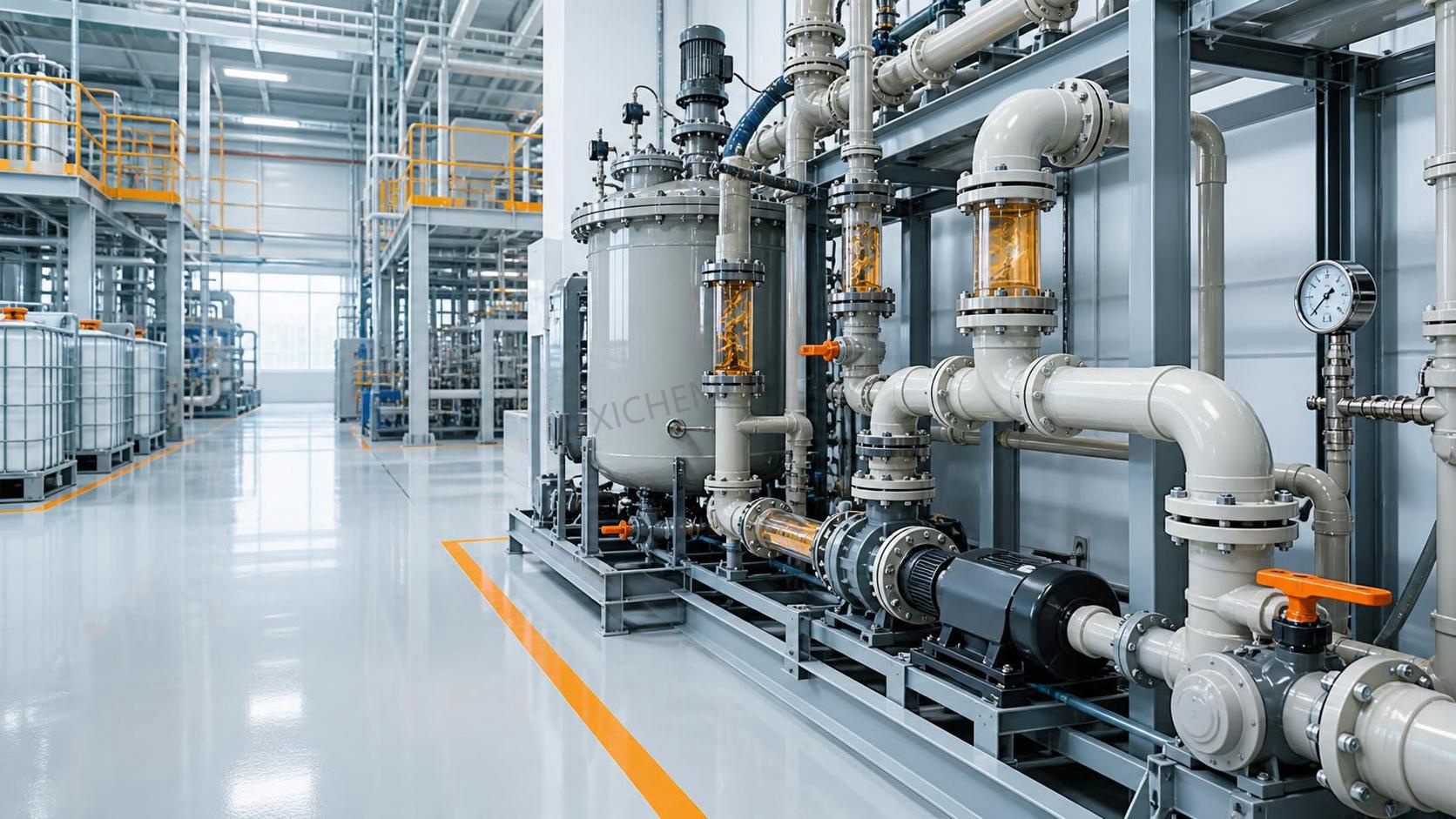
For project managers designing chemical systems exposed to elevated temperatures, selecting the right thermoplastic can determine long-term safety, uptime, and maintenance costs. Chlorinated polyvinyl chloride resin offers improved heat resistance and chemical durability over standard PVC, making it a practical option for demanding piping, processing, and fluid-handling applications. The question is not whether CPVC is universally better than PVC. It is whether the real operating envelope of a project exceeds what standard PVC can reliably handle.
That distinction matters. A line may operate at a moderate average temperature but still experience hot cleaning cycles, pump deadhead conditions, heated tank recirculation, or short-term excursions during upset conditions. In those cases, a material selected only for the normal process temperature can become the weak point in an otherwise well-designed system. CPVC is often chosen not for a headline temperature rating, but for the design margin it provides when thermal exposure and chemical exposure occur together.
The Practical Difference Between PVC and CPVC
Both materials are based on polyvinyl chloride chemistry, but CPVC contains a higher level of chlorination. This changes the polymer structure and raises its ability to retain stiffness and pressure-bearing performance as temperature rises. Standard rigid PVC is widely used in ambient-temperature water, drainage, ventilation, and chemical service. It remains an economical and effective choice where its temperature and chemical limits are respected.
CPVC moves the usable range upward. Depending on the specific compound, pipe system, pressure class, jointing method, and governing design standard, CPVC systems are commonly considered for continuous service at temperatures beyond the range normally associated with PVC. Project teams should not treat this as permission to use CPVC at any elevated temperature. Pressure capability declines as temperature rises, and manufacturer pressure-derating information is essential.
The engineering advantage becomes meaningful when the system needs to carry warm corrosive liquids, when a process has frequent thermal cycling, or when an installation must tolerate occasional high-temperature cleaning or flushing. In a cold, low-pressure chemical transfer line, PVC may remain the more rational choice. In a hot chemical recirculation loop, the cost of choosing PVC simply because it is less expensive can be much higher than the initial material saving.
Where Chlorinated Polyvinyl Chloride Resin Creates a Clear Advantage
The strongest case for chlorinated polyvinyl chloride resin usually appears where heat is not an isolated condition. Aqueous acids, alkaline wash solutions, salt-bearing process streams, oxidation-related treatment circuits, and heated effluent lines can all combine temperature with corrosion risk. Metals may offer thermal strength, but corrosion allowance, alloy selection, lining integrity, contamination concerns, and fabrication costs can complicate the decision. CPVC can be an attractive middle ground when the fluid is chemically compatible and the pressure-temperature envelope is within the applicable system rating.
Typical decision points include heated process-water distribution, chemical dosing skids, scrubber circulation piping, industrial washdown systems, plating-related ancillary lines, and wastewater treatment sections handling warm corrosive streams. It may also be relevant in facilities where the same piping network sees alternating chemical transfer and cleaning cycles. A material that is acceptable at 25°C can behave very differently after repeated exposure at substantially higher temperatures.
Temperature also affects installation details. Plastic piping expands and contracts more than steel, and this movement becomes more pronounced in long warm runs. A CPVC specification therefore needs more than a resin decision. Supports, guides, expansion loops, anchors, valve weight, flange restraint, and transitions to metal equipment all need review. Many field problems blamed on “material failure” are actually support or expansion-management failures.
Do Not Separate Chemical Compatibility From Temperature
A common procurement mistake is to consult a chemical-resistance chart at room temperature and assume the result remains valid for the full process condition. Compatibility is a combination of chemical identity, concentration, temperature, pressure, exposure duration, stress level, and the presence of impurities or mixed solvents. A resin can resist a chemical under low-stress immersion conditions yet be unsuitable in a pressurized line at elevated temperature.
This is especially important for acids and process chemicals supplied in several concentrations or used in formulations with additives. Methanesulfonic acid, for example, may be handled in applications ranging from chemical synthesis to cleaning and metal-processing formulations. Before choosing CPVC, PVC, fluoropolymer, lined steel, or an alloy, the design team should verify the actual concentration, maximum credible temperature, circulation pattern, and any oxidizing or solvent-bearing components. Product information for Methanesulfonic acid CAS#75-75-2 can support that conversation, but material compatibility must still be confirmed against the complete service condition rather than the product name alone.
The same caution applies to cleaning-in-place procedures. A line designed for a compatible production chemical may be exposed to a hotter cleaning solution, steam-adjacent environment, or incompatible disinfectant during maintenance. The highest-temperature chemical exposure, not the main process stream, may control the material choice.
A More Useful Selection Framework Than “PVC or CPVC?”
The better question is: what failures must this system avoid over its intended operating life? Project managers can narrow the decision quickly by reviewing five connected factors.
- Maximum operating and upset temperature: Record normal temperature, cleaning temperature, startup conditions, and credible excursion scenarios separately. Average temperature is not enough.
- Pressure at temperature: Use the pressure-temperature rating for the specific pipe, fitting, valve, and joining system. A nominal room-temperature pressure class cannot be carried unchanged into hot service.
- Complete chemical composition: Include concentration ranges, contaminants, dissolved solids, solvent traces, oxidizers, and pH swings. “Acid service” is not a sufficient specification.
- Mechanical loading: Consider vacuum, surges, pump vibration, external loads, unsupported valve assemblies, and thermal movement. Chemical compatibility alone does not ensure structural suitability.
- Project execution conditions: Confirm availability of qualified installers, compatible cement and fittings, inspection requirements, local codes, and replacement lead times.
This approach often produces a mixed-material design rather than a single-material answer. CPVC may be appropriate for the heated chemical section, while PVC remains suitable for cooler downstream drains or utility lines. In another project, CPVC may handle the straight runs but a different material is required at a high-temperature pump discharge, a solvent-containing branch, or a connection exposed to severe mechanical stress.
Pressure Derating Is Where Many Early Estimates Go Wrong
Temperature capability should never be read as a standalone number. As thermoplastics become warmer, their allowable pressure falls. The relevant design input is therefore not “Can CPVC handle this temperature?” but “Can this specified CPVC pipe system handle this pressure at this temperature, including transient conditions?”
Transient pressure deserves special attention. A hot transfer line can see rapid valve closure, pump startup, blockage release, or control instability. These events may create pressure surges above steady-state values. If the process involves batching or frequent starts and stops, the piping designer should assess surge potential rather than relying solely on nominal pump discharge pressure.
Vacuum is another separate check. Cooling of a closed system, tank draining, or condensation can impose negative pressure on a line. A pipe that is chemically compatible and satisfactory under internal pressure may need a different wall thickness, support arrangement, vacuum rating, or relief strategy for this condition.
Jointing Quality Can Decide the Outcome
CPVC piping systems are commonly assembled with solvent-cement joints, but the quality of that connection depends on the correct materials, preparation, fit, cure time, and site conditions. Using a cement intended for PVC, ignoring low-temperature installation guidance, or pressurizing before sufficient cure can undermine a carefully selected piping material. The risk rises with larger diameters, warm process service, high pressure, and aggressive chemicals.
Specification documents should identify the approved piping system, joining materials, installation instructions, inspection points, and responsibility for final pressure testing. It is also sensible to specify how long-term traceability will be maintained for pipe, fittings, valves, and consumables. This is not paperwork for its own sake; it makes later troubleshooting much more manageable if a leak, crack, or process change occurs.
When PVC Is Still the Better Project Decision
CPVC should not displace PVC automatically. For ambient or mildly warm chemical transfer within PVC’s verified rating, PVC can offer lower installed cost, broad market availability, and familiar installation practices. It is often well suited to low-temperature utility service, drainage, ventilation, and compatible chemical applications where thermal events are controlled.
PVC may also be preferable when a project has no credible high-temperature exposure and the additional CPVC margin does not reduce a real risk. Overspecifying every line consumes budget that may be better used on containment, instrumentation, ventilation, secondary isolation, or improved support design. Good material selection is not about selecting the most resistant polymer on paper; it is about placing the right material in the right duty.
At the other end of the range, CPVC is not the answer where temperatures, solvents, oxidizing conditions, or mechanical demands exceed its verified limits. Those situations may require fluoropolymers, specialty linings, corrosion-resistant alloys, or a redesigned process arrangement. A disciplined “no” at the selection stage is usually cheaper than a forced material decision after construction has started.
Procurement Should Preserve the Engineering Decision
For global projects, material selection and supply planning are closely linked. A technically correct specification can still be weakened by mixed component sources, incomplete documentation, substitute fittings, or uncertainty around chemical product consistency. Procurement teams need to align resin-based system requirements with the process chemicals, packaging needs, shipment documentation, and receiving conditions at the site.
Luxi Chemical (Shandong) Co., Ltd. operates across chemical raw materials, chemical products, and international trade, serving customers in more than 60 countries and regions. For projects involving multiple chemical inputs, a broader supply relationship can help reduce coordination between separate product categories. That is most useful when purchasing teams need to compare specifications, confirm packaging and delivery details, and maintain continuity across agriculture, food processing, daily chemical, and industrial chemical supply chains.
Before releasing a CPVC-based design for purchase, document the fluid, concentration range, normal and maximum temperature, operating pressure, upset conditions, line size, jointing method, support philosophy, and required approvals. Then obtain confirmation from the relevant system manufacturer or qualified engineering authority for the actual duty. CPVC outperforms PVC when elevated temperature is a genuine design condition and the full pressure-chemical-mechanical picture supports it. That is a narrower claim than “CPVC is better,” but it is the one that protects project reliability.
Related Picks
 Butylated Hydroxytoluene Price Drivers: Supply, Purity, and Purchasing Risk FactorsOct 21, 2026Butylated Hydroxytoluene price trends depend on supply stability, purity, logistics, and purchasing risk. Learn how to compare quotes wisely and reduce sourcing costs.
 Sodium Tripolyphosphate Price Trends: Raw Material and Energy ExposureOct 20, 2026Explore sodium tripolyphosphate price trends, from phosphate and soda ash costs to energy exposure. Learn how to compare quotes, manage sourcing risks, and make smarter purchasing decisions.
 Acetonitrile Shipment to Vietnam Successfully Dispatched; RCEP Benefits Boost Fine Chemical Trade with ASEANSep 16, 2026A shipment of industrial-grade acetonitrile from our company has recently been loaded and dispatched following the completion of standardized hazardous material packaging and container securing procedures.
 Nigerian Client’s Order of 4 Containers of Vinyl Acetate Successfully Loaded and Shipped to West AfricaSep 16, 2026We recently completed the loading of a vinyl acetate order for a Nigerian client; four containers of the product have been successfully packed and are ready for shipment to Nigeria.




Question Consultation
Send Us Your Inquiry Today

Luxi Chemical is a professional chemical product supplier with ample stock of all chemical categories and excellent quality, welcome your purchase inquiry.

