


PVC Resin Manufacturers: 8 Criteria Buyers Should Check Before Shortlisting
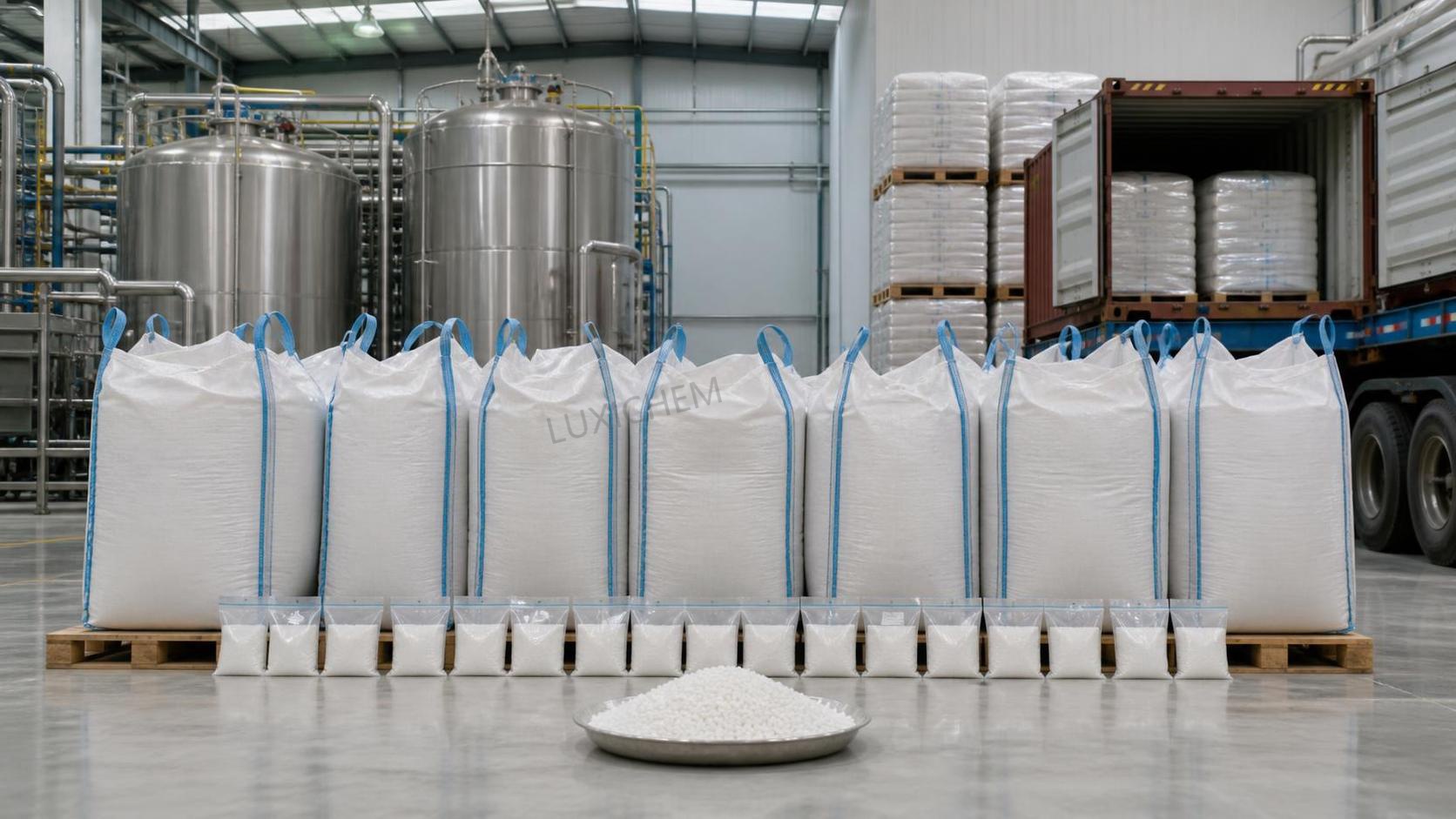
When procurement teams compare pvc resin manufacturers, the obvious temptation is to start and end with price. On paper, that seems efficient. In practice, it can be expensive. A lower offer may hide unstable quality, inconsistent K-value, delayed shipment schedules, weak export documentation, or communication gaps that only become visible after production planning is already locked in.
For buyers in the chemical sector, PVC resin is rarely just another line item. It affects processing behavior, end-product performance, customer complaints, and inventory risk. A supplier that looks acceptable during quotation may become difficult during technical clarification, contract execution, or after-sales support. That is why shortlisting should be built around risk control as much as cost control.
The following eight criteria give purchasing professionals a practical way to evaluate suppliers before moving into final commercial negotiation.
1. Product grade fit should come before headline price
Not all PVC resin is interchangeable, even when suppliers use similar language in brochures. Buyers should first confirm whether the manufacturer can supply the specific grade required for the intended application, whether that is pipes, fittings, profiles, films, cables, sheets, or synthetic leather. Suspension resin, emulsion resin, and specialty grades behave differently in downstream processing, and even within one category, the specification details matter.
A useful shortlist question is simple: Can this supplier match your actual processing and formulation needs without repeated adjustment? If your production line is sensitive to particle size distribution, bulk density, porosity, or thermal stability, then a low-cost source with frequent variation may create more cost in scrap, downtime, and reformulation than it saves in purchasing.
Serious buyers usually ask for a current specification sheet, typical values, and a discussion on application suitability before they ask for a final quote. That sequence matters.
2. Quality consistency is more important than one good sample
Many procurement decisions go wrong because a supplier is judged by a single lab sample or one successful trial lot. The real issue is not whether the material can perform once, but whether it can perform the same way month after month. Among pvc resin manufacturers, consistency often separates dependable industrial supply partners from opportunistic traders or unstable producers.
Ask how the supplier controls batch variation. Review their certificate of analysis format. Check whether test items are reported clearly and consistently. If possible, request samples from different production batches rather than a single “best lot.” This is especially important if your downstream operation runs at scale and cannot afford constant parameter correction.
Quality stability also extends beyond the resin itself. In many formulations, buyers source processing aids and additives from separate channels. A supplier with broader chemical sourcing understanding can sometimes add practical value in those discussions. For example, when evaluating formulation compatibility or additive procurement planning, related products such as Calcium Stearate CAS#1592-23-0 may enter the conversation naturally as part of a broader raw material strategy rather than as an isolated purchase.
3. Compliance and documentation should be checked early, not after negotiation
One of the most common purchasing mistakes is discussing compliance too late. By the time the supplier is selected internally, missing documents can delay approval, customs clearance, or customer qualification. Depending on your market and use case, documentation may include SDS, TDS, COA, packing details, country-of-origin information, REACH-related statements, or other compliance declarations requested by your local regulatory or customer system.
Buyers should not assume that all pvc resin manufacturers are equally prepared for international documentation. Some suppliers can provide documents quickly, in consistent formats, and with clear version control. Others respond slowly or provide incomplete files that create avoidable back-and-forth.
For procurement teams serving regulated or export-oriented production, document discipline is part of supplier reliability. It is not administrative trivia. It is operational readiness.
4. Production capacity and supply continuity deserve closer scrutiny
A supplier may quote competitively for one container, but can they maintain supply when your volume grows or when the market tightens? This question becomes critical during peak demand periods, feedstock volatility, maintenance shutdowns, or export congestion.
Shortlisting should include a basic assessment of production capability and supply continuity. Buyers do not necessarily need confidential plant details, but they should understand whether the manufacturer has stable production, how lead times are managed, what their normal shipment rhythm looks like, and whether allocation risk exists during supply pressure.
There is a difference between a supplier that can “sell” and a supplier that can “deliver repeatedly.” Procurement teams that have experienced missed vessel bookings or changing ETAs know how quickly a resin shortage can disrupt a production plan. A useful conversation here involves not only monthly capacity, but also contingency handling: What happens if there is a sudden demand increase? What happens if a shipment is delayed? How does the supplier communicate exceptions?
5. Export experience often determines how smooth the order really is
For international buyers, a technically acceptable supplier can still become a difficult partner if export execution is weak. Freight coordination, packaging suitability, labeling, palletization, booking discipline, port familiarity, and document accuracy all affect landed cost and delivery reliability.
This is where experienced chemical exporters usually stand out. Companies engaged in broader chemical raw materials and international trade tend to understand that buyers are not only purchasing product; they are purchasing certainty. Luxi Chemical (Shandong) Co., Ltd., for example, operates as a comprehensive chemical enterprise covering chemical raw materials, chemical products, and import/export trade, serving customers across more than 60 countries and regions. For many procurement professionals, that kind of international business background matters because it suggests familiarity with cross-border coordination, multi-product sourcing, and the practical realities of global supply.
If you are comparing suppliers from different regions, ask direct questions about export destinations served, packaging options, preferred Incoterms, and response handling when customs or shipping issues arise. Export fluency can save more money than a small difference in ex-works price.
6. Communication quality is a procurement metric, not a soft factor
Buyers often notice it early: some suppliers answer what was asked, and some answer what they wish had been asked. The difference becomes more costly over time. During supplier evaluation, pay attention to how clearly the team responds to specification questions, whether they acknowledge limitations honestly, and how quickly they provide technical or commercial clarification.
Good communication does not mean polished sales language. It means clear answers on lead time, MOQ, packaging, tolerance, batch documents, payment terms, and claims procedure. It means identifying risks before the buyer discovers them alone.
In shortlisting pvc resin manufacturers, responsiveness is not merely a service preference. It is often a predictor of future execution. A supplier that is vague before the purchase order rarely becomes precise afterward.
7. Total landed cost should replace simple unit-price comparison
Procurement teams under cost pressure can fall into a familiar trap: comparing prices per metric ton without evaluating the full purchase equation. The better approach is to calculate total landed cost and probable operating cost. That includes freight, duties where applicable, packaging efficiency, payment terms, stockholding implications, quality-related rejection risk, and the cost of process adjustment.
Consider two suppliers. One offers a lower headline price but has unstable lead times and wider quality variation. The other is slightly higher in unit price but delivers consistently, documents cleanly, and reduces emergency purchasing. The second supplier may be the cheaper option over a quarter or a full year.
This is especially relevant when procurement is tied to production continuity. A delayed or inconsistent resin shipment can trigger line stoppage, urgent local replacement buying, and customer service problems downstream. Those costs rarely appear in the original quotation comparison, yet they are real.
When discussing formulations and conversion efficiency, some buyers also benefit from reviewing adjacent input categories with the same supplier or sourcing partner. In a one-stop procurement model, even supporting materials such as Calcium Stearate CAS#1592-23-0 can be planned more efficiently alongside core chemical purchases, reducing sourcing fragmentation and communication time.
8. A supplier’s long-term attitude matters more than a perfect first offer
Some manufacturers are highly motivated during quotation and sample stages, then become transactional once the first order is secured. Others approach business as a longer-term partnership: they follow up on performance, support planning, discuss alternatives when markets shift, and work toward mutual continuity instead of one-time margin.
For procurement professionals, this difference is not abstract. It affects how claims are handled, how shortages are communicated, how urgently problems are solved, and whether a supplier is willing to support future growth. A dependable partner usually shows consistency in small things: timely replies, realistic promises, transparent updates, and a willingness to coordinate rather than deflect.
This is one reason many buyers prefer suppliers with a diversified product portfolio and a stable trade philosophy. When a company supports multiple chemical categories and focuses on long-term cooperation, it may be better positioned to provide flexible sourcing support, especially for buyers trying to reduce supplier count without increasing risk.
How to use these criteria in a real shortlist process
In practical terms, buyers do not need a complicated scoring system to improve supplier selection. A simple comparison sheet often works well. List your candidate suppliers, then assess each against the eight factors above: grade fit, consistency, compliance readiness, supply continuity, export capability, communication quality, total landed cost, and partnership attitude.
What usually becomes clear is that only a few suppliers remain strong across all categories. Some are cheap but weak in execution. Some are technically competent but slow on documents. Some are experienced exporters but poor at customization. The goal is not to find a flawless supplier. The goal is to identify the one with the lowest manageable risk for your business model.
That is a more useful procurement mindset than chasing the lowest offer every cycle.
Final thought for buyers comparing pvc resin manufacturers
The best sourcing decisions in chemicals are rarely impulsive. They come from asking better questions before urgency forces compromise. If you are building a supplier shortlist, use price as one checkpoint, not the whole strategy. The right manufacturer should support stable quality, predictable delivery, clear documentation, and smoother long-term purchasing.
For companies sourcing across multiple chemical categories, it can also be worthwhile to work with partners that understand broader procurement coordination, not just a single product transaction. That wider perspective often helps reduce hidden costs, shorten communication loops, and improve supply confidence over time.
When buyers evaluate pvc resin manufacturers through that lens, shortlisting becomes less about finding a quote and more about protecting the continuity and economics of the business behind it.
Related Picks
 Butylated Hydroxytoluene Price Drivers: Supply, Purity, and Purchasing Risk FactorsOct 21, 2026Butylated Hydroxytoluene price trends depend on supply stability, purity, logistics, and purchasing risk. Learn how to compare quotes wisely and reduce sourcing costs.
 Sodium Tripolyphosphate Price Trends: Raw Material and Energy ExposureOct 20, 2026Explore sodium tripolyphosphate price trends, from phosphate and soda ash costs to energy exposure. Learn how to compare quotes, manage sourcing risks, and make smarter purchasing decisions.
 Acetonitrile Shipment to Vietnam Successfully Dispatched; RCEP Benefits Boost Fine Chemical Trade with ASEANSep 16, 2026A shipment of industrial-grade acetonitrile from our company has recently been loaded and dispatched following the completion of standardized hazardous material packaging and container securing procedures.
 Nigerian Client’s Order of 4 Containers of Vinyl Acetate Successfully Loaded and Shipped to West AfricaSep 16, 2026We recently completed the loading of a vinyl acetate order for a Nigerian client; four containers of the product have been successfully packed and are ready for shipment to Nigeria.




Question Consultation
Send Us Your Inquiry Today

Luxi Chemical is a professional chemical product supplier with ample stock of all chemical categories and excellent quality, welcome your purchase inquiry.

