


What Is PVC Resin Used For in Pipes, Profiles, Cables, and Films?
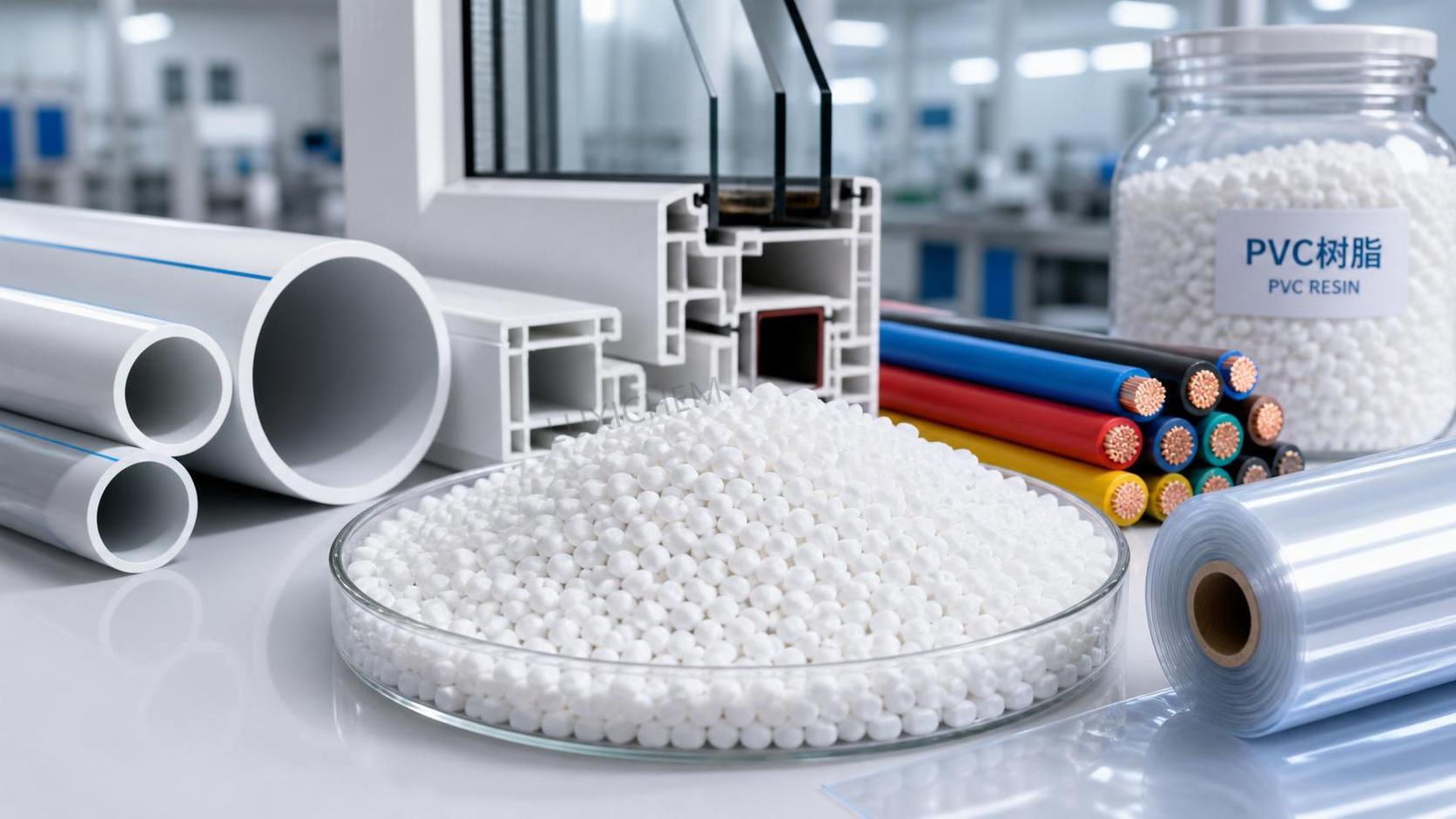
Why PVC Resin Still Dominates So Many Industrial Applications
PVC resin sits in an unusual position in the chemical market: it is familiar, widely traded, and technically mature, yet buyers still spend a lot of time comparing grades before making a decision. That usually happens because “PVC” is not one material in a practical sense. The resin used for pressure pipe is not chosen the same way as the resin used for window profiles, cable compounds, or flexible film. The end use changes everything—processing behavior, additive package, long-term performance, and even how much variation a converter can tolerate from one batch to the next.
For anyone researching pvc resin, the real question is not just what it is, but why it keeps showing up in such different products. The short answer is balance. PVC offers a useful mix of cost control, processability, chemical resistance, electrical insulation, and formulation flexibility. Few polymers cover that much ground without forcing manufacturers into much higher raw material costs.
In day-to-day chemical sourcing, this is one reason broad-line suppliers remain relevant. Companies serving multiple industrial segments, including firms such as Luxi Chemical (Shandong) Co., Ltd., often see that buyers are not merely asking for a commodity name. They are checking consistency, application fit, logistics reliability, and whether a supplier understands how one raw material behaves differently across downstream uses.
What PVC Resin Actually Contributes to a Finished Product
PVC resin is the polymer backbone. On its own, it is only the starting point. In manufacturing, it is usually blended with stabilizers, lubricants, fillers, plasticizers, pigments, impact modifiers, or processing aids depending on the product category. That is why two products both labeled “PVC” can feel and perform completely differently.
A rigid pipe and a soft cable sheath are a good example. Both may begin with PVC resin, but one is designed around stiffness and dimensional stability, while the other is designed around flexibility and electrical safety. The resin grade matters because particle size, porosity, molecular characteristics, and fusion behavior influence how easily the compound can be processed and how stable the final part will be.
This is also where inexperienced buyers sometimes oversimplify. They may assume lower price per ton automatically means better economics. In practice, a cheaper resin can become expensive if it causes poor gelation, unstable extrusion, more scrap, or formulation adjustments that offset any nominal savings.
Use in Pipes: Strength, Corrosion Resistance, and Predictable Processing
Pipe is one of the best-known applications for pvc resin, especially in water supply, drainage, conduit, and agricultural systems. The appeal is straightforward. Properly formulated rigid PVC offers good resistance to corrosion, many chemicals, and moisture. Unlike metal pipe, it does not rust. Unlike some alternative plastics, it often remains competitive on cost in large-volume infrastructure uses.
But pipe production is not just about chemical resistance. Process stability matters a lot. Extrusion lines need resin that fuses consistently and supports smooth melt flow without causing too much die build-up or dimensional drift. In pipe plants, operators pay close attention to wall thickness control, surface finish, impact behavior, and how the pipe holds up under storage and transport. A resin that looks acceptable on paper may still create problems if the extrusion window is too narrow.
Pressure pipe applications add another layer of caution. Long-term hydrostatic performance depends on the full compound design and compliance with applicable local or international standards. It is not something that should be judged from resin name alone. Usually, processors need to confirm the formulation package, processing conditions, and test requirements before approving a grade for this use.
Use in Profiles: Why Window and Door Systems Need More Than Rigidity
PVC profiles include window frames, door frames, siding, trunking, and other extruded shapes. On the surface, this looks similar to pipe because both are often rigid extrusion products. In reality, profiles are less forgiving.
A profile has complex geometry. Corners, chambers, thin walls, and decorative surfaces all make processing more sensitive. Resin choice affects fusion speed, surface gloss, and dimensional consistency after cooling. If the melt behavior is not right, processors may see waviness, poor edge definition, or inconsistent cutting performance. For visible building products, surface defects are not a minor issue; they directly affect market acceptance.
Weatherability is another major factor. Many profile systems are exposed to sunlight, temperature change, and moisture for years. The resin works together with stabilizers, pigments, and modifiers to help maintain shape and appearance. Buyers sometimes focus heavily on color or price, but experienced compounders usually ask a more practical question: how stable is the profile after months and years outdoors, not just after it leaves the line?
Use in Cables: Electrical Insulation With Formulation Flexibility
Cable compounds use PVC resin because it can be tailored for insulation and sheathing across a broad performance range. This is one of PVC’s most useful traits in the chemical and polymer business: the base resin can be modified to produce flexible compounds with acceptable mechanical properties, flame behavior, and processing performance for many cable types.
In cable production, flexibility is usually achieved through plasticization, and the compound must still process cleanly during extrusion. The final material needs to wrap conductors evenly, resist cracking during handling, and meet whatever electrical and safety requirements apply in the target market. Those requirements vary, so broad claims are risky. Some cable uses are relatively standard, while others involve stricter flame retardancy, smoke, or migration limits that need project-specific review.
This is also one area where formulation interactions matter more than new buyers expect. Resin grade, plasticizer choice, stabilizer system, and filler level all affect stripping behavior, softness, aging, and line speed. A converter changing any one of these inputs may need to rebalance the rest.
Use in Films: From Stiff Sheets to Flexible Packaging and Protection Layers
PVC films can be rigid, semi-rigid, or flexible depending on formulation and process. They are used in packaging, protective layers, stationery, medical-adjacent applications in some markets, decorative films, and a range of industrial coverings. What makes PVC attractive here is clarity potential, printability, thermoformability in certain grades, and the ability to tune softness or stiffness.
Film converters usually care about very practical details: can the sheet stay uniform across width, does it process without fisheyes or gels, how does it respond to heat sealing or forming, and will it remain stable in storage? For flexible film, compatibility with additives becomes especially important. Slight formulation issues may show up later as blocking, odor, migration, or brittleness.
That is why application context matters. A film used as a simple protective layer does not face the same scrutiny as one used in a regulated packaging chain. The resin itself is only part of the answer; the whole compound and the target market determine what is acceptable.
Why Manufacturers Keep Choosing PVC Over Alternatives
If pvc resin has been around for so long, why hasn’t it been replaced everywhere by newer materials? In many cases, because alternatives solve one problem while creating another. Polyethylene, polypropylene, ABS, and engineering plastics all have strong positions in specific applications, but they do not always match PVC’s combination of formulation flexibility, processing familiarity, and cost efficiency.
Converters also value established supply chains. Mature materials usually have more equipment know-how, more additive options, and less uncertainty in scaling production. For international traders and chemical suppliers handling multiple product lines—from polymer-related materials to items such as Sodium Nitrite CAS#7632-00-0 in other industrial segments—that supply-chain perspective matters. Buyers often prefer partners who understand not just product names, but how consistency and logistics affect downstream manufacturing.
What to Check Before Selecting a PVC Resin Grade
For basic research, it helps to think in terms of fit rather than “best grade.” There is rarely one universal answer. A few questions usually narrow the field quickly:
- Is the end product rigid or flexible?
- Is the main process extrusion, calendaring, coating, or molding?
- Does the product need high impact strength, good surface finish, or transparency?
- Will it be used outdoors, in contact with chemicals, or near electrical systems?
- Are there local standards, migration limits, or fire requirements that affect formulation?
One more thing is often overlooked: consistency between shipments. Many processors can adapt to a certain resin behavior if it stays stable. What disrupts production is not always an obviously poor grade, but batch-to-batch variation that forces repeated machine adjustments.
A Few Common Misunderstandings
It is easy to assume PVC is a simple commodity and that all technical differences are handled later by additives. That is not how most plants see it. Resin characteristics influence mixing, fusion, energy consumption, output, and defect rates long before the final product is tested.
Another misunderstanding is to compare applications too loosely. A resin working well in general-purpose film should not automatically be pushed into pressure pipe or high-demand cable compounds without review. The chemistry may be related, but the performance expectations are not.
And while global sourcing is common, qualification should still be disciplined. Documentation, sample evaluation, and process trials are usually worth the time, especially when the product will be sold into markets with defined compliance requirements.
PVC resin remains popular because it adapts. In pipes it offers durability and corrosion resistance. In profiles it supports shape retention and workable surface quality. In cables it gives formulators room to tune flexibility and insulation performance. In films it can move between stiffness and softness with relative ease. The material is versatile, but not generic in the practical sense. If you are evaluating it seriously, the smarter approach is to start from the application, then work backward to the resin and compound design—not the other way around.
Related Picks
 Butylated Hydroxytoluene Price Drivers: Supply, Purity, and Purchasing Risk FactorsOct 21, 2026Butylated Hydroxytoluene price trends depend on supply stability, purity, logistics, and purchasing risk. Learn how to compare quotes wisely and reduce sourcing costs.
 Sodium Tripolyphosphate Price Trends: Raw Material and Energy ExposureOct 20, 2026Explore sodium tripolyphosphate price trends, from phosphate and soda ash costs to energy exposure. Learn how to compare quotes, manage sourcing risks, and make smarter purchasing decisions.
 Acetonitrile Shipment to Vietnam Successfully Dispatched; RCEP Benefits Boost Fine Chemical Trade with ASEANSep 16, 2026A shipment of industrial-grade acetonitrile from our company has recently been loaded and dispatched following the completion of standardized hazardous material packaging and container securing procedures.
 Nigerian Client’s Order of 4 Containers of Vinyl Acetate Successfully Loaded and Shipped to West AfricaSep 16, 2026We recently completed the loading of a vinyl acetate order for a Nigerian client; four containers of the product have been successfully packed and are ready for shipment to Nigeria.




Question Consultation
Send Us Your Inquiry Today

Luxi Chemical is a professional chemical product supplier with ample stock of all chemical categories and excellent quality, welcome your purchase inquiry.

