


Sourcing Polyglutamic Acid: Compare Active Content, Form, and Batch Data
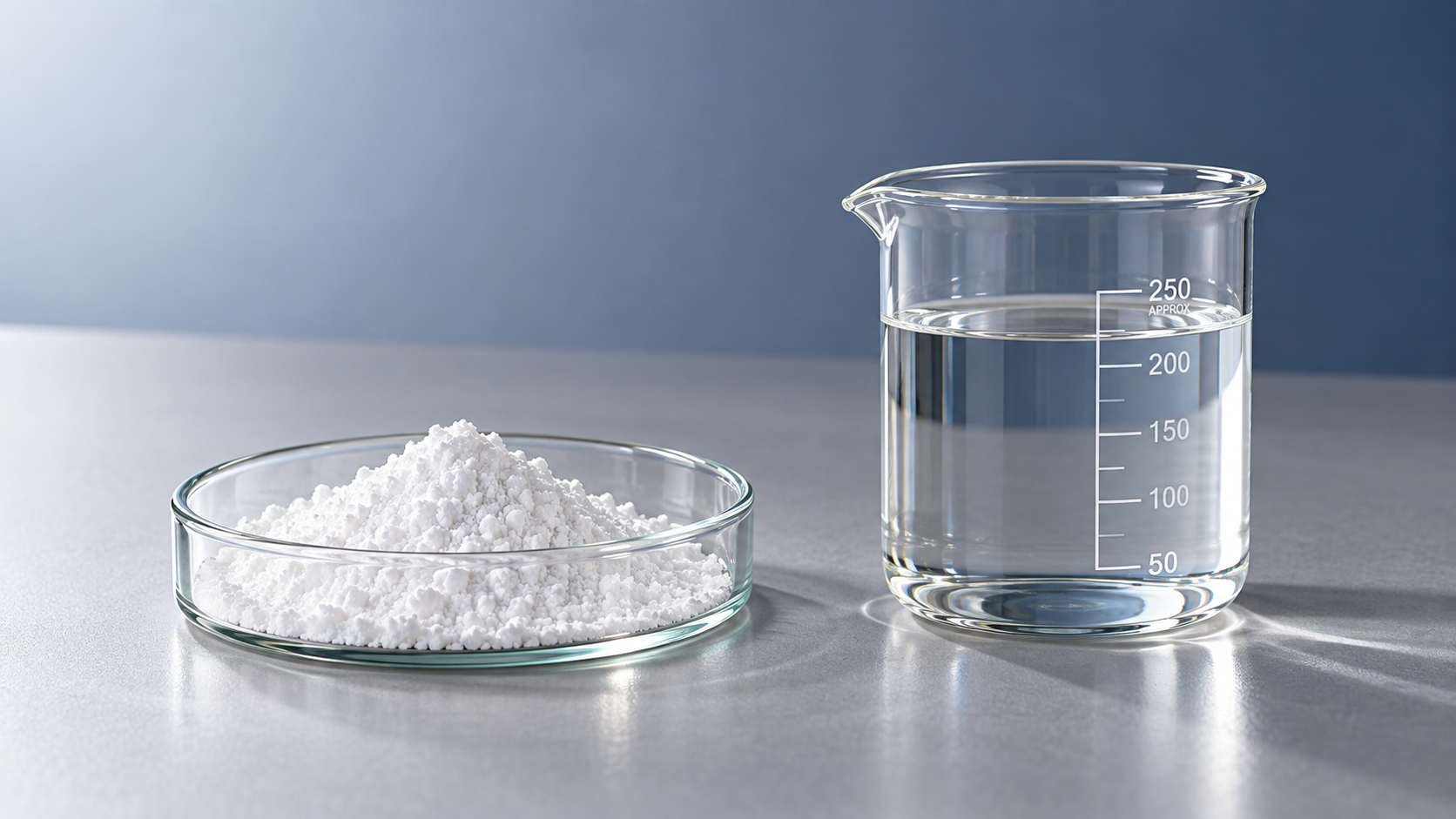
Polyglutamic Acid offers become comparable only when they describe the same material, on the same assay basis, with specifications suited to the intended application. A lower price per kilogram can disappear once moisture, carrier water, processing time, or an unsuitable molecular weight is taken into account.
Before comparing quotations, establish what each supplier means by “active content,” whether the product is supplied as an acid or salt, and which results are available for the batch being offered. These details determine both the usable quantity purchased and the likelihood that the material will perform consistently in your formulation.
Define the material before comparing the price
The name Polyglutamic Acid alone does not fully describe a commercial grade. Products can differ in polymer structure, ionic form, molecular weight distribution, concentration, and additional ingredients. Those differences can affect dissolution, viscosity, compatibility, and the amount needed in a finished product.
Confirm whether the offer is for gamma-polyglutamic acid, commonly written as γ-PGA, and whether it is supplied in the acid form or as a salt such as sodium polyglutamate. A shared abbreviation or similar product name is insufficient evidence that two materials are interchangeable.
The intended application should then determine the specification. For a cosmetic formulation, appearance, odor, microbial quality, preservation, and compatibility with the formula may be important. For agricultural use, suitability for the planned dilution, fertilizer compatibility, and application equipment may carry more weight. Food-related applications require a separate assessment of intended use and applicable requirements; a grade described as “high purity” does not automatically establish suitability.
A useful request for quotation identifies the application, required form, active-content basis, relevant molecular weight range, and critical quality limits. This gives suppliers a defined requirement to quote against and reduces the chance of receiving attractive prices for materially different products.
Understand what “active content” actually measures
Total solids, polymer content, and purity are different measurements. A liquid may contain dissolved salts, preservatives, or other nonvolatile ingredients alongside the polymer. Measuring the residue after drying can establish total solids, but it does not necessarily establish how much of that residue is Polyglutamic Acid.
The same issue applies to powders. A dry-looking product may still contain moisture, and its dry matter may include non-polymer components. An impressive purity statement is useful only when the supplier explains what is measured and how the result is calculated.
Ask for both the assay method and its reporting basis. A result measured on a dry basis cannot be compared directly with a result reported on an as-supplied basis. Likewise, a result expressed as acid equivalent needs an agreed conversion before comparison with one reported as a sodium salt.
For a powder whose assay is explicitly reported on a dry basis, the as-supplied active fraction can be calculated by multiplying the dry-basis assay fraction by the dry-matter fraction. This calculation is valid only when the definitions and methods support that relationship. It should not be applied to an unexplained “purity” figure.
Do not deduct moisture again if the supplier already reports active content on an as-supplied basis. That would understate the amount of active purchased and distort the cost comparison.
Compare cost per unit of usable active
Once the assay basis is aligned, a useful starting calculation is:
Delivered cost per kilogram of active = delivered cost per kilogram of product ÷ active mass fraction as supplied.
Use the active fraction as a decimal and include the costs required to bring the material to your receiving location. Depending on the purchasing arrangement, these may include freight, duties, handling, and other directly attributable charges. Keep currency, delivery terms, and shipment size consistent across offers.
This calculation can explain why a concentrated powder costs more per kilogram of product while costing less per kilogram of active. It can also show when a liquid remains competitive because it reduces preparation work, equipment use, or losses during powder handling.
Active-normalized cost is still only an initial screen. Equal polymer quantities may produce different viscosity or compatibility because molecular weight and formulation conditions differ. The final comparison should include the dose required to achieve the intended result in your own application.
For production budgeting, compare cost per acceptable finished batch. Include preparation labor, mixing time, material left in containers, cleaning requirements, and any storage or preservation burden. Add these costs where they are relevant and measurable rather than assuming that one physical form always carries a handling penalty.
Powder or liquid: choose around the production process
Powder can be attractive when freight efficiency, storage space, or control over the formulation water matters. It may also provide flexibility when several finished products require different concentrations. Those benefits depend on the site’s ability to weigh, disperse, and dissolve the material reliably.
Some powders form surface-wetted lumps when added too quickly, leaving dry material inside. Mixing sequence, addition rate, water quality, and available agitation can therefore affect preparation time. A successful small beaker trial does not establish that the same procedure will work in a production vessel.
Liquids can simplify dosing when suitable pumps and storage facilities are available. However, concentration alone does not describe handling behavior. A viscous solution may empty slowly, retain material in packaging, or require more demanding transfer equipment. Where dosing is by volume, density is needed to translate the addition into product mass and active content.
For an aqueous grade, request details of the preservation system, storage conditions, and handling after opening. For powder, examine moisture protection, liner suitability, and the practical consequences of repeatedly opening a large pack. Pack size can influence usable cost when consumption is slow.
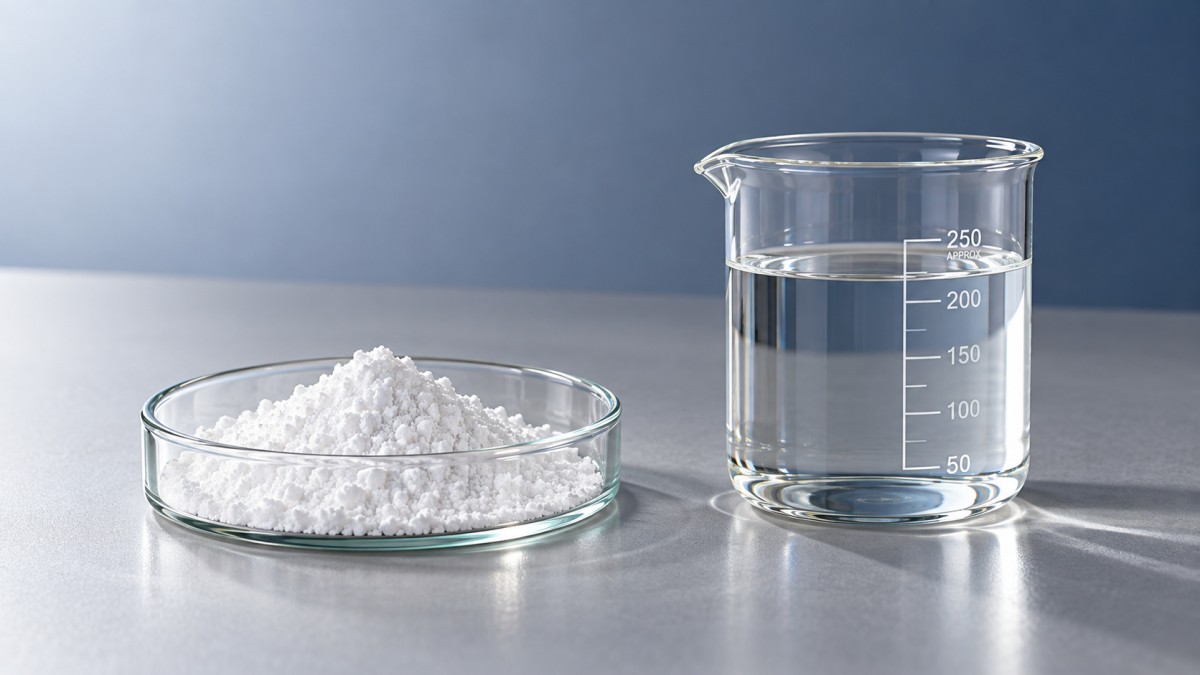
A practical form comparison should follow the material through receiving, storage, preparation, dosing, and container emptying. The preferred option is the one that delivers repeatable production with an acceptable total cost.
Molecular weight needs a method, not just a number
Molecular weight can influence solution behavior, including viscosity, but it should not be treated as a universal quality ranking. A higher value may be useful where greater thickening is desired, while another formulation may need easier pumping or less viscosity contribution.
Ask which molecular weight average is reported, which analytical method is used, and whether the value is a specification limit, a typical result, or a batch measurement. Polymer samples contain a distribution of chain lengths, so one headline number does not fully describe them. Results obtained by different methods or calibration approaches may also differ.
Viscosity can provide a useful additional control when it relates to the application, provided the test conditions are defined. Concentration, temperature, pH, and instrument settings can change the result. A viscosity figure without those conditions offers little basis for supplier comparison.
Evaluate candidate materials at equal active content under the intended formulation conditions. Check dissolution, appearance, viscosity, and relevant stability behavior using the water, salts, and other ingredients that production will actually use. If performance differs, identify whether the difference comes from the polymer grade, the supplied formulation, or the preparation procedure.
Read the batch certificate as evidence of consistency
A technical data sheet describes a grade. A certificate of analysis should identify a specific batch and show how it meets the agreed specification. Request a representative certificate during qualification and the relevant batch certificate before shipment release.
The certificate should connect the product identity, grade, batch number, and manufacturing or release information. Results need units, acceptance limits, and identifiable test methods. “Pass” may be sufficient for some identity checks, but numerical results are more useful for tracking properties such as moisture, assay, pH, and viscosity.
Not every characteristic needs testing on every batch. The supplier should explain which attributes are measured for release, which are tested periodically, and which are supported through process controls or other documentation. This distinction makes it possible to judge whether the available evidence matches the application’s risks.
Request results from several recent batches where available. Look at variation within the specification, especially for attributes that influence dosing or processing. A wide specification can allow every batch to pass while still creating noticeable production adjustments.
Traceability also matters when purchasing through a distributor. Establish who manufactures the grade, who issues the certificate, and how the delivered batch links to the original manufacturing record. Broad chemical supply capability is useful, but documentation for an industrial solvent such as Methanol CAS#67-56-1 does not establish qualification for a polymer intended for a different application.
Make sample approval apply to future deliveries
A sample should represent the commercial grade being quoted. Record its batch number, specification revision, preparation procedure, and evaluation results so that approval has a clear reference. Otherwise, a successful trial can become difficult to reproduce or enforce.
Before placing a routine order, agree on the attributes that require notification if they change. Depending on the grade, these may include manufacturing site, ionic form, molecular weight range, assay method, additional ingredients, or packaging. A change that appears minor on a product sheet may affect processing or finished-product quality.
The commercial agreement should also address remaining shelf life at delivery, packaging integrity, complaint handling, and the process for resolving disputed results. If incoming testing uses a different method from the supplier’s, establish how differences will be investigated before a disagreement interrupts production.
Luxi Chemical (Shandong) Co., Ltd. supplies chemical raw materials across multiple sectors and provides import/export services. When discussing a Polyglutamic Acid inquiry, make the requested grade, batch documentation, packaging, destination, and delivery requirements explicit so that the offer addresses a defined purchasing need.
The next useful step is a focused quotation request: specify the material identity, ask for active content on an agreed basis, request the relevant batch data, and obtain a representative sample. Compare delivered active cost first, then use application results and production handling to decide which offer provides the stronger purchasing value.
Related Picks
 Butylated Hydroxytoluene Price Drivers: Supply, Purity, and Purchasing Risk FactorsOct 21, 2026Butylated Hydroxytoluene price trends depend on supply stability, purity, logistics, and purchasing risk. Learn how to compare quotes wisely and reduce sourcing costs.
 Sodium Tripolyphosphate Price Trends: Raw Material and Energy ExposureOct 20, 2026Explore sodium tripolyphosphate price trends, from phosphate and soda ash costs to energy exposure. Learn how to compare quotes, manage sourcing risks, and make smarter purchasing decisions.
 Acetonitrile Shipment to Vietnam Successfully Dispatched; RCEP Benefits Boost Fine Chemical Trade with ASEANSep 16, 2026A shipment of industrial-grade acetonitrile from our company has recently been loaded and dispatched following the completion of standardized hazardous material packaging and container securing procedures.
 Nigerian Client’s Order of 4 Containers of Vinyl Acetate Successfully Loaded and Shipped to West AfricaSep 16, 2026We recently completed the loading of a vinyl acetate order for a Nigerian client; four containers of the product have been successfully packed and are ready for shipment to Nigeria.




Question Consultation
Send Us Your Inquiry Today

Luxi Chemical is a professional chemical product supplier with ample stock of all chemical categories and excellent quality, welcome your purchase inquiry.

