


When to Choose Sodium Bicarbonate Industrial Grade for Flue Gas Treatment
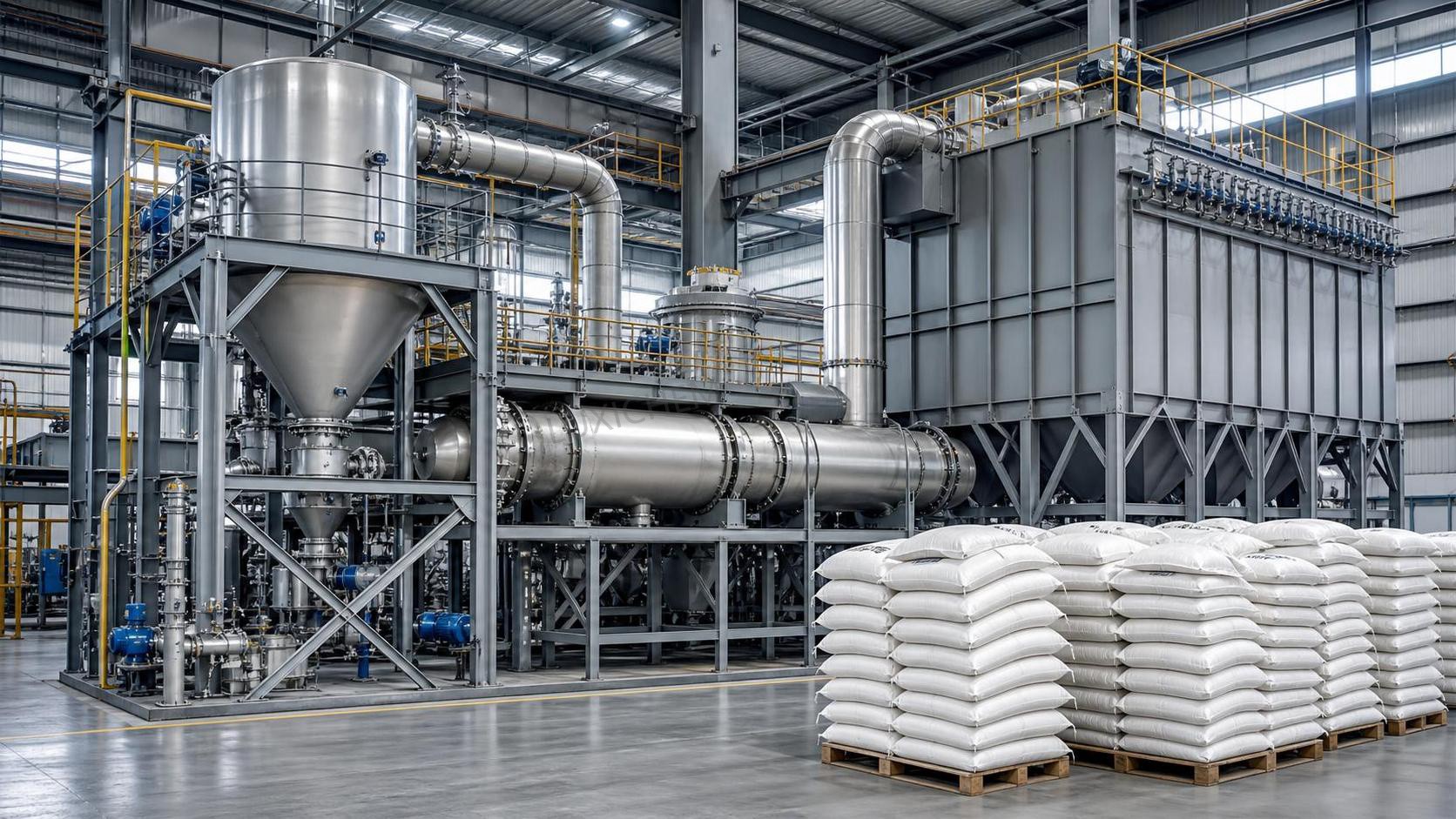
It often starts the same way: a flue gas treatment project moves from concept to equipment selection, and the easy decisions are already behind you. The remaining questions are the ones that affect operating stability every day after startup. One of those questions is whether sodium bicarbonate industrial grade is the right reagent for the system. On paper, it looks straightforward. In practice, the answer depends on gas composition, temperature window, residue handling, equipment layout, and how much process flexibility the project actually needs.
Many people run into trouble not because the material fails, but because it is chosen for the wrong operating context. A plant may need dependable acid gas removal, but also face frequent load changes, tight retrofit space, or limited tolerance for corrosion risk in downstream equipment. In that situation, reagent choice is no longer a procurement detail. It becomes a project execution issue, an operating cost issue, and sometimes a compliance risk if the treatment window is too narrow.
When the usual assumptions stop being useful
A common mistake is to treat all dry or semi-dry flue gas treatment decisions as a simple comparison between reagent prices. That is rarely enough. The lower line-item cost of one absorbent can disappear if the system needs more complicated handling, more water management, stricter storage conditions, or more maintenance around deposits and reaction efficiency. If you are reviewing options only through purchase cost, sodium bicarbonate industrial grade may seem either too obvious or too expensive, depending on what benchmark you start from. Neither view is very helpful.
A better approach is to ask what kind of problem the project is trying to prevent. Is the main issue acid gas removal under variable operating conditions? Is the system being retrofitted into a line with limited residence time? Is the project trying to avoid wet handling while still maintaining solid removal performance for acidic components in flue gas? Once those questions are clear, the role of sodium bicarbonate becomes easier to judge.
Situations where this reagent tends to make sense
Sodium bicarbonate industrial grade is often considered when a project needs a dry injection route for acid gas control and cannot rely on a wide, forgiving reactor footprint. It can be suitable where the treatment target includes acidic components such as hydrogen chloride, sulfur dioxide, or sulfur trioxide, especially in systems where reaction efficiency and downstream filter performance are closely linked.
It becomes a practical choice in several recurring situations:
- When the flue gas treatment line must fit into an existing plant layout rather than a new greenfield design.
- When operators want to avoid the added complexity of slurry preparation and wastewater-related concerns.
- When the process sees frequent load variation and the reagent feed needs to respond quickly.
- When downstream bag filters are already part of the design and can support the reaction-residence mechanism of dry sorbent use.
- When corrosion control and cleaner acid gas reduction upstream of sensitive equipment are important.
These are not guarantees of suitability, but they are strong indicators that the material deserves serious consideration rather than a quick elimination.
Another practical point is procurement consistency. In chemical supply work, project teams often prefer materials that fit into a broader raw material sourcing framework rather than creating one more isolated purchasing stream. That is one reason some buyers work with suppliers that also handle unrelated industrial materials, whether for emission control reagents or for other chemical procurement items such as p-Cresol CAS#106-44-5, depending on plant purchasing structure and approval flow.
The signs that another option may be better
There are also cases where sodium bicarbonate industrial grade is not the best fit, even if it performs well chemically. If the project already has a mature wet scrubbing system, enough space, and operating conditions built around liquid treatment, replacing that logic with a dry reagent route may add unnecessary complexity. The same caution applies when residue management is the dominant concern and disposal characteristics weigh more heavily than injection flexibility.
It may also be less attractive if the process team has not accounted for milling or particle size preparation where required. In many applications, effective reaction performance depends not just on the material name, but on the usable particle characteristics at the injection point. If the design overlooks that step, expectations and actual performance can drift apart quickly.
Questions worth asking before making the call
If you are in the middle of specification review, it helps to move beyond generic product descriptions and test the selection against real project constraints.
1. What is the flue gas profile across normal and upset conditions?
Average values are not enough. Review temperature range, acid gas fluctuation, moisture, dust loading, and peak excursions. A reagent that works well under stable conditions may struggle if the process frequently swings outside the intended treatment window. Sodium bicarbonate industrial grade is often favored where operational flexibility matters, but that should still be checked against the actual gas profile rather than assumed.
2. Is the system dry injection only, or part of a larger control train?
Some projects use dry sorbent injection as the primary acid gas control step. Others use it as a polishing stage ahead of particulate control or other downstream units. The role matters because reagent dosing logic, residence time expectations, and filter loading all change depending on whether the material is carrying the main burden or supporting another stage.
3. How much room is there for mechanical additions?
This is one of the most practical questions and one of the most overlooked during early discussions. A reagent may look attractive until the team realizes the retrofit needs a grinder, new injection lances, storage modifications, and filter review. None of these are unusual, but they need to fit the schedule, the shutdown window, and the maintenance capability already on site.
4. What matters more: theoretical efficiency or operational tolerance?
Some teams focus on ideal reaction performance under controlled assumptions. Others need a treatment line that operators can keep stable with ordinary plant variation. If the second point matters more, sodium bicarbonate industrial grade often deserves attention because it can align well with practical operation, especially where simplicity of dry handling is valuable. But that advantage only holds when feed control, dispersion, and collection are properly designed.
Where projects often go wrong
Several missteps show up again and again during planning. One is assuming that all grades behave similarly regardless of storage, particle condition, and feeding equipment. Another is neglecting the relationship between reagent selection and baghouse performance. Dry flue gas treatment is not just about what enters the duct; it is also about what happens after contact, including collection, residue build-up, pressure drop behavior, and maintenance frequency.
A different kind of mistake happens on the documentation side. Some specifications are written too broadly, using the reagent name without describing the operating context. That can create confusion during procurement because the purchasing team may get an acceptable chemical identity but not the most suitable handling or quality consistency for the intended system. For projects with strict commissioning schedules, that ambiguity can be costly in time even before it becomes costly in operation.
A more grounded way to decide
Instead of asking whether sodium bicarbonate industrial grade is generally good or bad for flue gas treatment, ask whether it matches the project’s failure risks.
If the biggest risk is poor acid gas control during variable operation, a dry reagent with responsive dosing may be attractive.
If the biggest risk is installation difficulty in a retrofit, the compactness and dry-process logic may support the schedule better than a more equipment-heavy alternative.
If the biggest risk is downstream corrosion caused by untreated acidic components, earlier and more reliable neutralization may carry more value than a lower apparent reagent price.
If the biggest risk is residue handling burden, then the decision has to include collection, transport, and disposal realities from the start.
That style of decision-making usually leads to a better outcome than comparing brochures or unit prices in isolation.
What to review with the engineering and purchasing teams
Before final approval, align the technical and commercial sides around the same questions. Engineering should confirm the intended injection conditions, temperature range, contact path, and particulate collection setup. Operations should review feed stability, storage practicality, and maintenance impact. Purchasing should not only compare quoted material but also check whether the supplier can maintain consistent supply and documentation for industrial chemical use.
In many organizations, reagent procurement is not isolated from other chemical sourcing needs. That is why some teams prefer consolidated purchasing channels where multiple product lines can be managed through one supplier relationship, whether for flue gas treatment materials or unrelated process chemicals such as p-Cresol CAS#106-44-5. The point is not to mix applications, but to reduce friction in vendor qualification and order coordination when internal processes are already complex.
Practical judgment for selection timing
So when should you choose sodium bicarbonate industrial grade for flue gas treatment? Usually when the project needs dry acid gas control with a good balance of reaction reliability, operational responsiveness, and retrofit practicality; when the gas conditions support its use; and when the team has honestly accounted for injection, particle condition, and residue collection rather than treating the reagent as a drop-in shortcut.
It is less about choosing a “better” chemical in the abstract and more about choosing the reagent that fits the equipment logic and operating reality. For project planning, that distinction matters. A well-matched material can simplify startup and daily control. A poorly matched one can turn routine emission treatment into a recurring troubleshooting exercise. If you are still deciding, the most useful next step is usually not another generic comparison table, but a disciplined review of your gas profile, line configuration, and the practical limits of the site that will run the system every day.
Related Picks
 Butylated Hydroxytoluene Price Drivers: Supply, Purity, and Purchasing Risk FactorsOct 21, 2026Butylated Hydroxytoluene price trends depend on supply stability, purity, logistics, and purchasing risk. Learn how to compare quotes wisely and reduce sourcing costs.
 Sodium Tripolyphosphate Price Trends: Raw Material and Energy ExposureOct 20, 2026Explore sodium tripolyphosphate price trends, from phosphate and soda ash costs to energy exposure. Learn how to compare quotes, manage sourcing risks, and make smarter purchasing decisions.
 Acetonitrile Shipment to Vietnam Successfully Dispatched; RCEP Benefits Boost Fine Chemical Trade with ASEANSep 16, 2026A shipment of industrial-grade acetonitrile from our company has recently been loaded and dispatched following the completion of standardized hazardous material packaging and container securing procedures.
 Nigerian Client’s Order of 4 Containers of Vinyl Acetate Successfully Loaded and Shipped to West AfricaSep 16, 2026We recently completed the loading of a vinyl acetate order for a Nigerian client; four containers of the product have been successfully packed and are ready for shipment to Nigeria.




Question Consultation
Send Us Your Inquiry Today

Luxi Chemical is a professional chemical product supplier with ample stock of all chemical categories and excellent quality, welcome your purchase inquiry.

