


White PP vs Filled PP: Which Material Fits Injection Molding and Packaging Better?
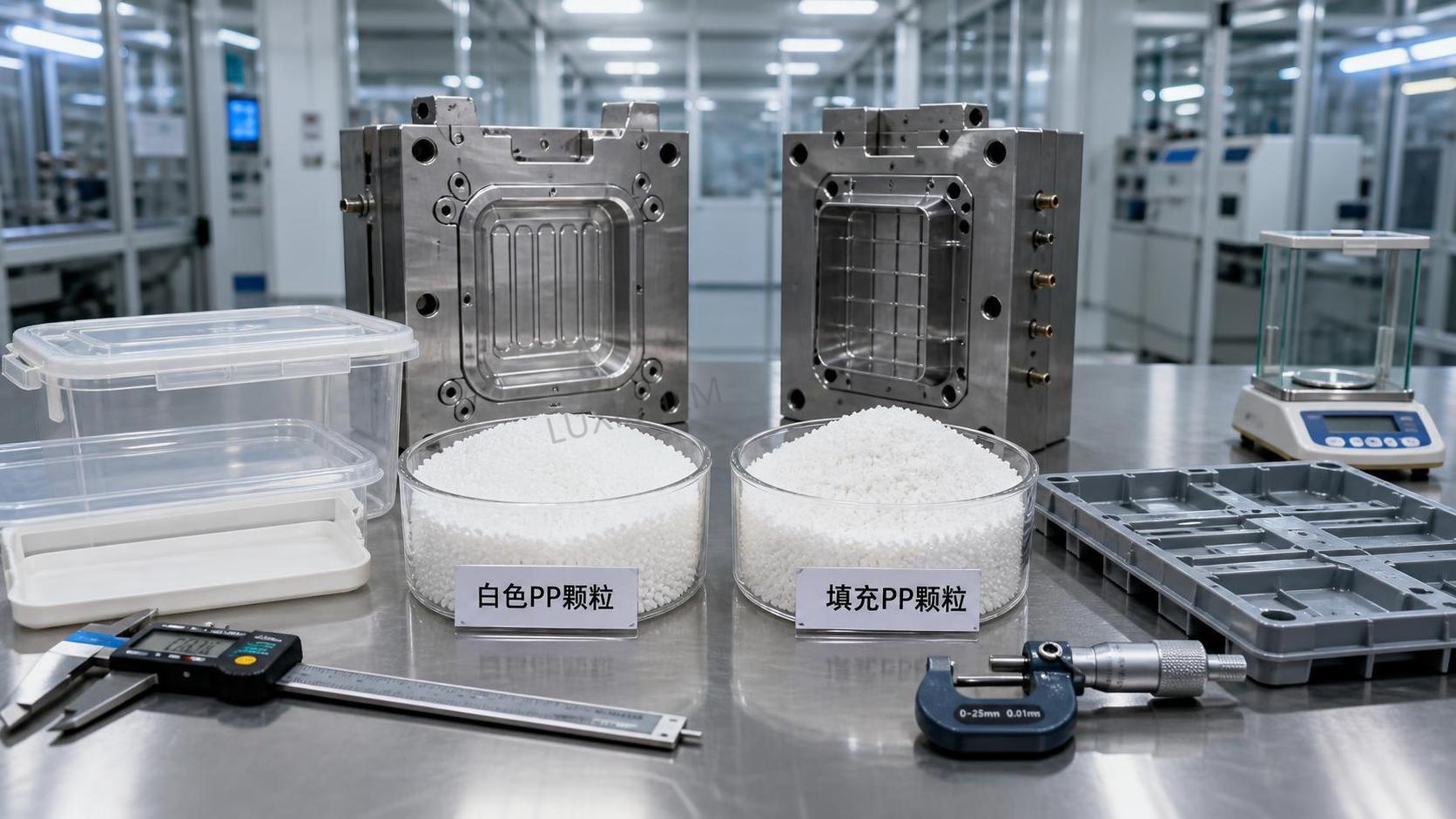
Technical evaluators comparing white PP with filled polypropylene are usually trying to answer a practical sourcing question: which grade gives the best balance of moldability, appearance, mechanical performance, compliance, and cost for a specific injection molding or packaging application.
They care less about generic polymer definitions and more about decision factors that affect production stability. That includes cycle time, shrinkage, stiffness, impact resistance, color consistency, food-contact suitability, part weight, and long-term supply reliability.
The most useful content is application-based guidance. Readers need to know where white PP performs better, where filled PP creates measurable advantages, what tradeoffs appear in tooling and downstream use, and how to avoid selecting a grade based only on price per kilogram.
The article should therefore focus on processing behavior, packaging performance, structural requirements, aesthetics, compliance, and total cost in use. Broad introductory explanations about polypropylene chemistry should stay brief because they do not help technical buyers make a faster decision.
White PP vs Filled PP: Which Material Fits Injection Molding and Packaging Better?
When comparing white PP with filled polypropylene for injection molding and packaging, technical evaluators need more than basic property charts. The right choice affects processability, stiffness, appearance, compliance, and total cost. This article examines how white PP performs against filled PP in real application scenarios, helping buyers and engineers identify the material that best matches production efficiency, packaging requirements, and long-term supply stability.
Start with the Short Answer: the Better Material Depends on the Part’s Job
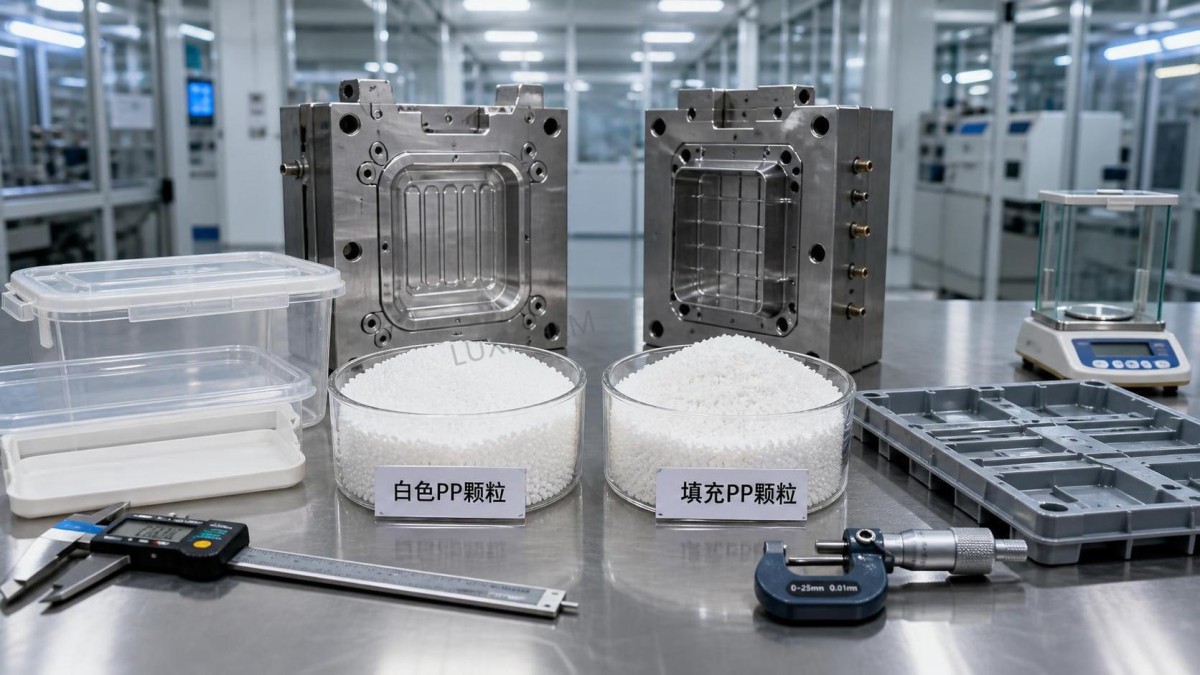
For most appearance-sensitive packaging and general consumer molded parts, white PP is often the better choice. It offers cleaner visual presentation, lower density, easier pigmentation control, and typically better suitability for thin-wall production.
Filled PP becomes more attractive when the part needs extra stiffness, reduced shrinkage, stronger dimensional stability, or improved heat resistance. In those cases, the filler can deliver technical benefits that standard white PP may not achieve economically.
That means the comparison should not begin with tensile data alone. It should begin with the part function, molding method, wall thickness, compliance requirement, and the level of cosmetic quality expected by the end market.
What Technical Evaluators Usually Mean by White PP and Filled PP
White PP usually refers to polypropylene resin formulated to produce a white appearance, either naturally opaque or compounded with pigments such as titanium dioxide. In packaging, it is often selected for visual cleanliness, print compatibility, and brand presentation.
Filled PP refers to polypropylene modified with mineral fillers such as talc, calcium carbonate, or glass fiber depending on the target property. In injection molding and rigid industrial packaging, these fillers change stiffness, shrinkage behavior, hardness, and cost structure.
Not all filled grades are equivalent. A talc-filled PP may improve rigidity and heat resistance, while a calcium carbonate-filled grade may be chosen more for economics or dimensional adjustment. Technical comparisons must therefore evaluate the specific filled system, not the category alone.
How White PP Performs in Injection Molding Applications
White PP is widely used in injection molding because it typically flows well, supports efficient cycle times, and produces lightweight parts. For thin-wall containers, lids, dispensers, caps, and household packaging components, that combination remains commercially attractive.
Its lower density compared with many filled grades can reduce part weight without changing cavity count. For packaging buyers managing freight and resin consumption at scale, this advantage can be significant over annual production volumes.
White PP also supports a cleaner and more uniform visual surface in many applications. If the molded part is visible to the end user, especially in food, personal care, or household goods, appearance consistency can matter as much as mechanical strength.
Another benefit is flexibility in design. Unfilled or lightly modified white PP often retains better impact performance and hinge behavior than highly filled alternatives. This makes it useful for closures, living hinges, and parts requiring repeated opening or snap-fit function.
However, white PP is not perfect. It can show higher shrinkage, lower stiffness, and more dimensional movement than filled PP. For large flat components or tolerance-sensitive housings, these limits may create issues unless the mold and processing window are well controlled.
Where Filled PP Has a Clear Advantage
Filled PP is usually selected because it solves a structural or dimensional problem. Adding fillers can significantly improve stiffness, reduce warpage, and limit shrinkage variation, which helps when a part must hold shape reliably after molding.
This is particularly important in trays, crates, technical housings, appliance parts, and stackable packaging elements where rigidity affects load-bearing performance. In these cases, a filled grade may reduce deformation during storage, transport, or elevated-temperature use.
Filled PP can also improve heat deflection behavior. If the molded article sees warm filling conditions, warehouse heat, or secondary processing that challenges standard PP, the filled formulation may offer a better safety margin.
For some programs, filled PP also supports cost engineering. Mineral fillers can lower resin cost contribution in certain formulations, though this must be balanced against density increase, tooling wear, and possible reductions in toughness or surface quality.
These gains come with tradeoffs. Higher filler loading can reduce impact strength, make parts more brittle in cold conditions, and create a rougher or less premium surface. It may also affect gate design, mold wear, and processing consistency.
Which Material Works Better for Packaging?
For many primary packaging formats, white PP has the stronger position. It is better aligned with aesthetic demands, low part weight, and consumer-facing appearance. It also supports easier decoration, cleaner color control, and a more marketable visual finish.
In food packaging and personal care packaging, visual hygiene matters. White PP often communicates cleanliness and consistency more effectively than filled PP, especially when the package is visible on retail shelves or in direct consumer handling.
Filled PP is more competitive in rigid secondary or transport packaging, where stiffness and dimensional retention matter more than premium appearance. Industrial pails, stackable components, protective inserts, and structural packaging parts are common examples.
If the package must resist bending, maintain geometry under load, or survive repeated handling cycles, a filled grade may outperform white PP. But when the packaging must look refined, lightweight, and easy to process in high volumes, white PP frequently remains the better fit.
How Processing Differences Affect Production Efficiency
From a molding perspective, production efficiency is rarely determined by one property. Technical teams should compare flow behavior, cooling response, shrinkage, demolding stability, and scrap sensitivity before selecting either white PP or filled PP.
White PP often performs well in fast-cycle injection environments, especially for thin-wall parts. Its flow profile can support shorter fill times and lighter components, which helps increase output when machine capacity is a limiting factor.
Filled PP may improve dimensional predictability, but the higher density and modified rheology can alter fill balance and gate performance. Some filled grades require tighter process control to avoid surface defects, inconsistent packing, or weld-line weakness.
Tooling impact also matters. Certain fillers increase abrasion inside processing equipment and molds. Over long runs, that may raise maintenance frequency or component replacement cost, especially in high-cavitation programs.
For buyers evaluating annual supply economics, the right metric is not resin price alone. The better comparison is cost per acceptable molded part after accounting for cycle time, reject rate, weight, maintenance, and downstream performance.
Appearance, Surface Quality, and Brand Requirements
Appearance is often the decisive factor in choosing white PP. A white surface can support cleanliness, opacity, and better visual alignment with food, healthcare, and home-care branding. It also simplifies consistent batch presentation across global markets.
Filled PP can still be colored or made visually acceptable, but it may show differences in gloss, surface smoothness, or pigment response depending on filler type and loading. That becomes important when premium shelf appearance is part of product value.
In technical evaluation, this should be tested with actual mold samples rather than assumed from datasheets. Surface quality depends on the combined effect of resin, pigment package, mold finish, and process settings.
For companies supplying across multiple sectors, consistency matters beyond one resin family. Buyers often prefer vendors able to support broader formulation and sourcing needs, whether for polymers, additives, or adjacent industrial materials such as Sodium Sulfite CAS#7757-83-7 in other procurement streams.
Compliance and End-Use Safety Should Not Be an Afterthought
For food-contact or sensitive packaging applications, technical evaluators must verify regulatory status early. White PP may be easier to position in these applications when the formulation is simpler and the additive package is clearly documented.
Filled PP is not automatically less suitable, but each filler system must be checked for migration, compliance, and end-use restrictions in the destination market. This becomes more important for exporters serving multiple jurisdictions with different documentation expectations.
Supplier consistency is critical here. A resin that performs well technically but lacks stable documentation, lot traceability, or compliance support can create more commercial risk than a slightly more expensive but better-supported grade.
Total Cost: Why the Cheapest Resin Is Not Always the Lowest-Cost Choice
Technical assessment should include total cost in use. White PP may carry a higher raw-material cost than some filled alternatives, but it can offset that through lower part weight, better appearance yield, easier processing, and broader end-use flexibility.
Filled PP may look attractive from a compound cost perspective, especially when stiffness targets are strict. Yet the density increase can raise part mass, and the potential for brittleness, lower gloss, or tooling wear may reduce overall savings.
A sound comparison model should include six factors: part weight, molding cycle, scrap rate, maintenance impact, compliance risk, and customer acceptance. Without these inputs, material selection tends to overvalue nominal price and undervalue operating cost.
This is especially relevant for buyers working with integrated suppliers that support multiple product categories and global shipments. Stable sourcing, technical communication, and procurement efficiency often influence the final economics as much as the polymer choice itself.
A Practical Selection Framework for Technical Buyers
If the application is thin-wall, consumer-facing, lightweight, and appearance-sensitive, start with white PP. It is usually the stronger baseline for packaging lids, caps, food containers, and molded consumer packaging components.
If the application is structural, load-bearing, flat, tolerance-sensitive, or heat-exposed, start by testing a filled PP grade. This is often the more efficient route for crates, trays, housings, and rigid transport packaging with demanding dimensional requirements.
Then validate with molded trials rather than datasheets alone. Compare shrinkage, warpage, impact retention, surface quality, and line productivity using the actual tool or a representative pilot mold.
Finally, confirm the supply side. Evaluators should check whether the supplier can maintain consistent product quality, documentation, and export support over time. That principle applies across chemical sourcing categories, including materials such as Sodium Sulfite CAS#7757-83-7 where reliability and specification control also matter.
Conclusion
There is no universal winner in the white PP versus filled PP decision. White PP generally fits packaging and visually important injection molded parts better, especially when low weight, cleaner appearance, and fast processing are priorities.
Filled PP is often the better material when the application demands higher stiffness, lower shrinkage, and stronger dimensional stability. Its value is highest in structural or industrial uses where performance under load matters more than premium surface aesthetics.
For technical evaluators, the right decision comes from matching material behavior to part function, process conditions, compliance requirements, and long-term sourcing needs. When those factors are evaluated together, the better material choice becomes much clearer and far more defensible.
Related Picks
 Butylated Hydroxytoluene Price Drivers: Supply, Purity, and Purchasing Risk FactorsOct 21, 2026Butylated Hydroxytoluene price trends depend on supply stability, purity, logistics, and purchasing risk. Learn how to compare quotes wisely and reduce sourcing costs.
 Sodium Tripolyphosphate Price Trends: Raw Material and Energy ExposureOct 20, 2026Explore sodium tripolyphosphate price trends, from phosphate and soda ash costs to energy exposure. Learn how to compare quotes, manage sourcing risks, and make smarter purchasing decisions.
 Acetonitrile Shipment to Vietnam Successfully Dispatched; RCEP Benefits Boost Fine Chemical Trade with ASEANSep 16, 2026A shipment of industrial-grade acetonitrile from our company has recently been loaded and dispatched following the completion of standardized hazardous material packaging and container securing procedures.
 Nigerian Client’s Order of 4 Containers of Vinyl Acetate Successfully Loaded and Shipped to West AfricaSep 16, 2026We recently completed the loading of a vinyl acetate order for a Nigerian client; four containers of the product have been successfully packed and are ready for shipment to Nigeria.




Question Consultation
Send Us Your Inquiry Today

Luxi Chemical is a professional chemical product supplier with ample stock of all chemical categories and excellent quality, welcome your purchase inquiry.

