


Bulk Glycerol Cost Factors: Purity, Packaging, Freight, and Supply Risk
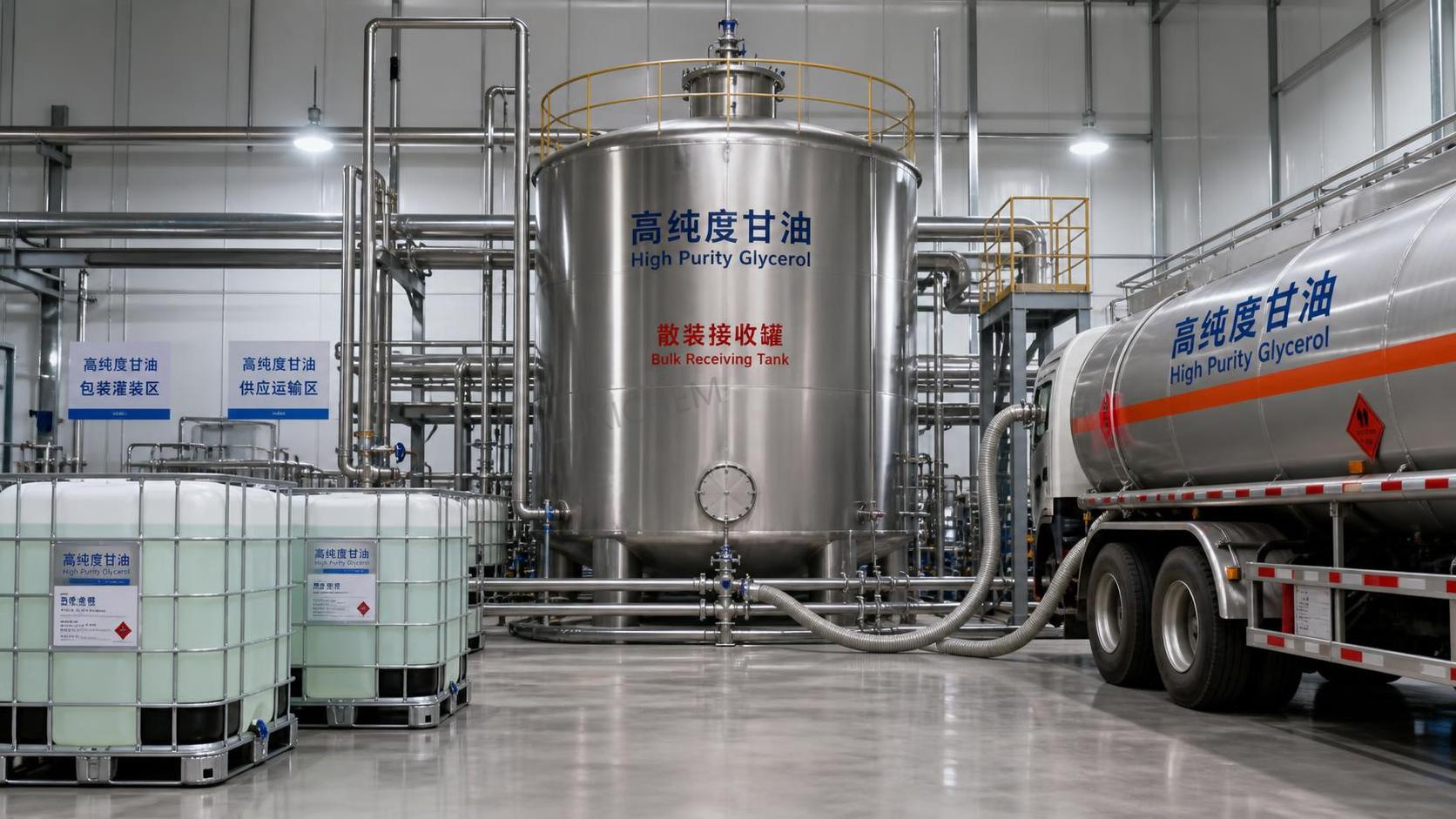
The lowest quoted price is rarely the lowest cost of a glycerol bulk purchase. A drum, IBC, flexitank, or tanker shipment can look economical on a supplier quotation and still become expensive after quality adjustments, freight charges, unloading losses, documentation work, and an unexpected production interruption.
The practical question is not simply, “What is the price per metric ton?” It is: what usable quantity of the required grade will arrive at the plant, when will it arrive, and what will it cost to use without creating a quality or supply problem? This distinction matters because glycerol is used across food processing, personal care, agriculture, resins, chemical synthesis, tobacco, and other industrial applications. A grade that works well in one process may create compliance, handling, color, odor, or consistency issues in another.
When comparing offers, put every supplier on the same basis: identical purity specification, identical packaging, identical Incoterm, identical delivery point, and the same payment and lead-time assumptions. Without that normalization, a cheaper offer may not be comparable at all.
Purity changes both the purchase price and the usable value
Glycerol is commonly supplied at different concentration and quality levels. The main purchasing mistake is to compare the price of a lower-concentration material directly with a higher-purity grade. Water is not always a problem, but it must be treated as part of the specification rather than as invisible volume.
For a process that can tolerate dilution, a lower-concentration glycerol may be commercially reasonable, especially when water is already added elsewhere in the formulation. However, the apparent saving disappears when the plant must remove excess water, adjust batch calculations, use more storage capacity, or accept slower processing. In applications where glycerol contributes to viscosity, humectancy, freezing-point behavior, or a controlled reaction balance, concentration variation can affect the finished product directly.
Purity is also broader than glycerol content. Depending on the application, a purchase specification may need limits or controls for color, odor, acidity or alkalinity, ash, chloride, sulfate, methanol, organic impurities, heavy metals, and microbiological condition. The right set of checks depends on where the glycerol goes next.
Food, pharmaceutical, and personal-care applications generally require tighter documentation and more consistent quality than many technical applications. For chemical processing, a buyer may instead focus on water content, color, reaction compatibility, and impurities that poison catalysts or interfere with downstream separation. Agricultural and industrial uses can be more flexible, but “technical grade” is not a complete specification. It still needs defined acceptance criteria.
A useful way to compare two glycerol offers is to calculate the price per unit of actual glycerol, then add the operating cost associated with water and impurities. That does not mean the highest concentration is automatically the best choice. It means the decision should reflect the process requirement, not a headline price.
Ask for a specification that can be received and tested
A broad label such as “refined glycerin” leaves too much room for interpretation. The purchase document should state the intended grade, minimum glycerol content, relevant impurity limits, appearance expectations, test methods where necessary, lot traceability, shelf-life requirements, and the certificates required with each shipment. A certificate of analysis is useful only when it corresponds to the delivered batch and reports the parameters that matter to the application.
It is also sensible to distinguish between a target value and an acceptance limit. A supplier may routinely make material around one level while contractually guaranteeing a lower threshold. That gap can matter when a formulation or reaction operates close to its limit. Samples and trial lots are valuable when changing source, grade, or production route, especially if the existing process has little tolerance for variation.
Packaging is a logistics decision, not a minor line item
Packaging affects freight efficiency, handling labor, storage space, contamination exposure, residual material loss, and the speed at which material becomes available for production. The best format is driven by annual volume, consumption pattern, site equipment, and the reliability of the inbound route.
For glycerol bulk deliveries, the receiving system deserves the same attention as the outbound shipment. Glycerol is viscous, particularly in cooler conditions. A receiving line that is too narrow, insufficiently heated, poorly insulated, or difficult to drain can turn an efficient bulk shipment into a long unloading operation with avoidable residue. Confirm hose connections, pump capability, tank venting, filtration requirements, temperature limits, and whether the site can receive the full delivery volume without disrupting production.
Container and tank cleanliness are equally important. Glycerol can absorb moisture and can pick up odors or contaminants from unsuitable equipment. Where product integrity is sensitive, agree in advance on dedicated or approved equipment, cleaning documentation where appropriate, seals, and sampling at loading and receipt. These controls cost less than investigating a contaminated batch after it enters storage.
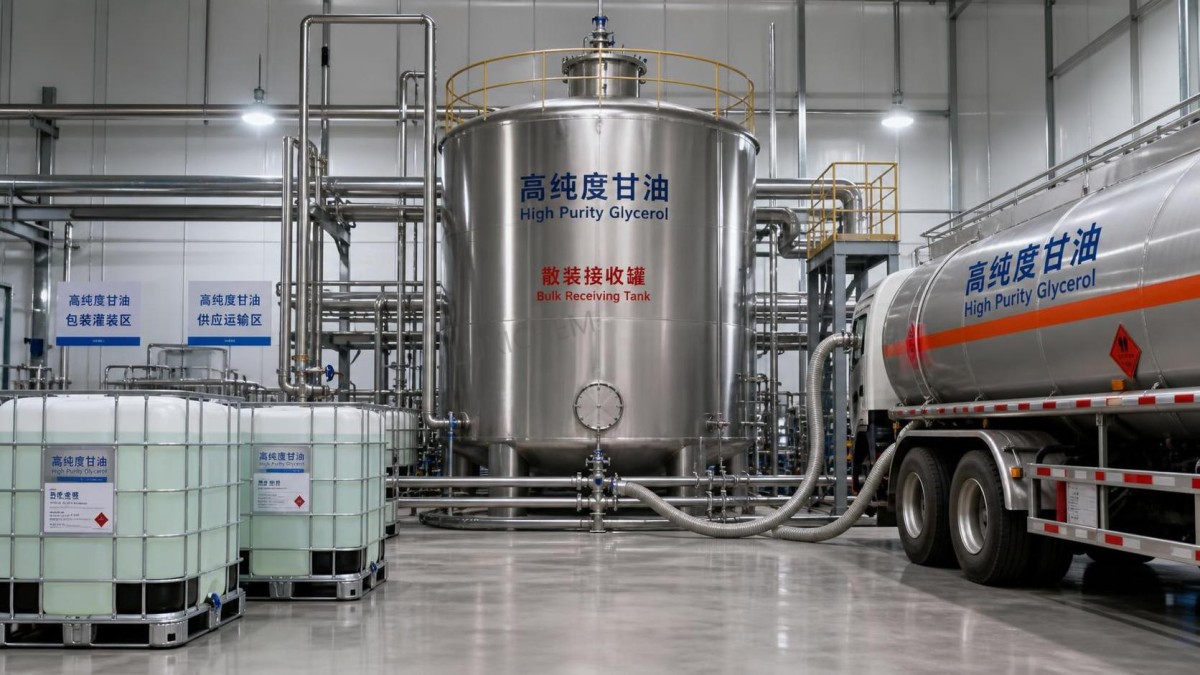
Packaging also affects inventory policy. Drums and IBCs can provide operational flexibility because production can draw material in smaller increments. Bulk tanks are more efficient for steady consumption, but they create greater exposure if a shipment is delayed or a received lot is out of specification. The right answer is often a mix: bulk supply for base demand, with a limited packaged contingency quantity where the process cannot stop.
Freight must be evaluated as landed cost, not an estimate added at the end
Freight can outweigh a small difference in ex-works glycerol pricing, particularly when the source and destination are separated by port transfers, inland transport, seasonal congestion, or specialized tank positioning. A quote should identify what it includes: product price, export packing, inland delivery to port, terminal charges, ocean or road freight, insurance, customs-related handling, destination charges, and final delivery. Incoterms define responsibilities, but they do not eliminate the need to list cost assumptions clearly.
Freight comparisons become misleading when suppliers quote different shipment sizes or routes. A lower unit freight rate may require a larger shipment than the site can consume before its internal quality window or storage limit becomes a concern. Conversely, ordering too little too frequently can create a high cost per delivered ton through repeated local transport and handling charges.
Transit time has a cost beyond freight. Longer routes increase working capital tied up in material, reduce flexibility when demand changes, and make replenishment planning less forgiving. For imported glycerol, include a realistic allowance for booking time, port processing, customs clearance, inland transfer, and receiving capacity. A nominal sailing schedule is not the same as material available in the plant tank.
Temperature exposure deserves mention in freight planning. Glycerol remains liquid under ordinary conditions, but its viscosity rises in cold conditions. If a route crosses cold climates or the destination receives material during winter, evaluate whether the packaging, vehicle, tank, and unloading arrangement can maintain practical flow. Waiting until arrival to solve a viscosity problem usually adds demurrage, labor, and delay.
Supply risk often costs more than a higher contract price
Glycerol supply is connected to several production routes and regional markets, so availability and quality consistency can change with feedstock conditions, refinery output, local demand, logistics capacity, and trade flows. A sourcing decision based only on one spot offer can leave a plant exposed when the next shipment is unavailable, late, or materially different.
Supply risk should be assessed in operational terms. Can the supplier provide consistent lots at the agreed specification? Is there a clear manufacturing or sourcing path? Can documentation travel with the shipment without delay? Is the lead time stable enough for the site’s reorder point? Can the supplier arrange the packaging format required by the receiving facility? These questions are more useful than broad claims about capacity.
Dual sourcing is not always necessary, and it can add qualification work. It is more valuable when glycerol is production-critical, has a long replenishment route, or cannot be substituted without reformulation. A qualified secondary source does not need to receive equal volume. Its role may be to preserve continuity if the primary route fails. For lower-risk consumption, a well-managed safety stock and a supplier with reliable communication may be more economical than splitting volumes across several vendors.
Do not overlook commercial risk. A low offer tied to short validity, uncertain payment terms, or vague delivery commitments can produce a lower purchase order value but a higher real exposure. Contract language should address specification, quantity tolerance, delivery window, batch documentation, inspection process, non-conforming material handling, and responsibility for delays that are within a party’s control.
Compare offers through a single decision sheet
A simple landed-cost worksheet prevents the most common errors. Use one row for each qualified offer and include:
- Grade, minimum glycerol concentration, and application-specific impurity requirements.
- Net product price and the calculation basis for usable glycerol content.
- Packaging type, net weight, packaging charge, expected residue, and disposal or return cost.
- All freight legs through delivery to the receiving site.
- Expected lead time, shipment frequency, and the inventory required to protect production.
- Receiving requirements, including heating, pumps, hoses, storage space, and labor.
- Documentation, lot traceability, and any qualification work needed before use.
- Supply continuity factors, including the availability of an approved alternative source.
This approach also helps separate a real cost issue from a specification issue. If one offer is cheaper because it uses a different grade, it should be evaluated as an alternative material decision, not treated as a direct supplier comparison. Process, quality, and regulatory stakeholders should agree on the acceptable specification before commercial negotiations begin.
When glycerol is one item in a broader formulation supply plan
In food and pharmaceutical supply chains, glycerol is often purchased alongside excipients, processing aids, and other formulation materials. Consolidating compatible purchases can reduce administrative effort and simplify delivery coordination, but it should never blur product-specific quality requirements. Each material still needs its own specification, storage plan, and release process.
For example, a tablet, supplement, confectionery, or food formulation may also require an excipient such as Magnesium Stearate CAS#557-04-0. That material serves very different functions from glycerol and is supplied as a fine, hydrophobic powder rather than a viscous liquid. The practical purchasing lesson is that one-stop sourcing can be helpful only when the supplier can maintain the correct quality documents, packaging conditions, and handling requirements for each item. Combining orders should reduce transaction friction, not force incompatible logistics choices.
Luxi Chemical (Shandong) Co., Ltd. supplies chemical raw materials and related products across food additives, organic intermediates, and fertilizers for international customers. For multi-material purchasing, the useful conversation is not just whether several products can be quoted together. It is whether specifications, packaging plans, shipment timing, and documents can be aligned without making glycerol supply less reliable.
Start with the process requirement, then negotiate the price
Before requesting a glycerol bulk quotation, define the grade your process can actually use, the volume that your storage and consumption pattern can support, and the delivery format your site can unload efficiently. Then request quotes on a consistent delivered basis. This sequence prevents the common outcome where the purchasing team selects the lowest number on paper and operations later absorbs the cost through dilution adjustments, slow unloading, additional storage, rejected material, or emergency replacement orders.
The strongest purchase decision is usually not the one with the lowest unit price. It is the offer that delivers compliant glycerol at the required concentration, in a usable package, through a route that fits the production schedule, with enough supply resilience to keep the plant running.
Related Picks
 Butylated Hydroxytoluene Price Drivers: Supply, Purity, and Purchasing Risk FactorsOct 21, 2026Butylated Hydroxytoluene price trends depend on supply stability, purity, logistics, and purchasing risk. Learn how to compare quotes wisely and reduce sourcing costs.
 Sodium Tripolyphosphate Price Trends: Raw Material and Energy ExposureOct 20, 2026Explore sodium tripolyphosphate price trends, from phosphate and soda ash costs to energy exposure. Learn how to compare quotes, manage sourcing risks, and make smarter purchasing decisions.
 Acetonitrile Shipment to Vietnam Successfully Dispatched; RCEP Benefits Boost Fine Chemical Trade with ASEANSep 16, 2026A shipment of industrial-grade acetonitrile from our company has recently been loaded and dispatched following the completion of standardized hazardous material packaging and container securing procedures.
 Nigerian Client’s Order of 4 Containers of Vinyl Acetate Successfully Loaded and Shipped to West AfricaSep 16, 2026We recently completed the loading of a vinyl acetate order for a Nigerian client; four containers of the product have been successfully packed and are ready for shipment to Nigeria.




Question Consultation
Send Us Your Inquiry Today

Luxi Chemical is a professional chemical product supplier with ample stock of all chemical categories and excellent quality, welcome your purchase inquiry.

