


Organic Citric Acid Market Outlook 2025: Demand Growth from Clean-Label Beverages and Regulatory Shifts in Asia-Pacific
Why “Organic Citric Acid” Is No Longer Just a Label—It’s a Supply Chain Imperative in 2025
If you’re sourcing acidulants for beverages, functional foods, or nutraceuticals—and especially if your products target Asia-Pacific markets—you’re likely feeling pressure that isn’t just about cost or volume. It’s about traceability, compliance alignment, and the quiet but decisive shift from “synthetic-acceptable” to “naturally derived, verifiably organic.” That shift is accelerating not because of marketing trends, but because regulatory frameworks are tightening, consumer scrutiny is institutionalized, and formulation teams are re-evaluating what “clean-label” actually demands in practice.
The core driver? Citric acid organic isn’t being adopted as a premium novelty—it’s becoming the baseline for regulatory defensibility in key growth markets. And that changes how enterprise decision-makers evaluate suppliers: less on price per kilogram, more on certification integrity, batch-to-batch consistency, and documented origin of raw materials (e.g., non-GMO citrus fermentation vs. synthetic routes).
Asia-Pacific Isn’t Catching Up—It’s Setting the Pace
Contrary to common perception, the strictest enforcement of organic food additive requirements isn’t coming first from the EU or US. In Japan, South Korea, and increasingly across ASEAN nations, regulators are moving beyond listing “citric acid” generically in ingredient declarations. They now require clear differentiation between synthetic citric acid (E330, typically from molasses fermentation or petrochemical acetone-cyanohydrin routes) and organic-compliant citric acid—which must meet both JAS, KFDA, or NASAA organic standards and be produced via certified organic citrus or sugar substrates using non-GMO microbial strains.
This isn’t theoretical. Major Japanese beverage brands have already revised their supplier qualification protocols to mandate full organic certification documentation—not just a “suitable for organic use” statement—for any citric acid used in certified organic SKUs. In Vietnam and Thailand, new draft guidelines propose mandatory disclosure of production method (fermentation substrate, strain origin, purification process) on technical data sheets submitted for food additive registration.
What this means for procurement teams: A certificate of analysis (CoA) alone no longer suffices. You need a certificate of organic compliance tied to each production lot, backed by auditable records of feedstock sourcing, microbial strain validation, and solvent-free purification. Without that, your product may pass initial review—but fail at customs, retail audit, or post-market surveillance.
Clean-Label Beverages Are the Real Engine—Not Just “Health Drinks”
It’s easy to assume demand for organic citric acid is strongest in cold-pressed juices or probiotic tonics. But the fastest-growing adoption is happening in categories where acidity management is functional—not flavor-driven. Think ready-to-drink (RTD) tea, plant-based dairy alternatives, and functional sparkling waters.
Why? Because these products rely heavily on pH control to stabilize proteins (e.g., pea or oat protein), prevent microbial spoilage without preservatives, and maintain clarity in low-sugar formulations. Synthetic citric acid works—but it triggers label backlash when paired with claims like “no artificial ingredients” or “made with real fruit.” Organic citric acid resolves that tension: it delivers identical functionality while aligning with clean-label architecture.
Crucially, organic citric acid isn’t always interchangeable with conventional grades in high-shear, high-temperature processing. Its purity profile (lower ash, minimal residual metals) and consistent titratable acidity reduce risk of off-notes or precipitation in sensitive systems—especially in calcium-fortified beverages or acidic protein emulsions. That’s why leading RTD manufacturers aren’t just switching suppliers—they’re co-developing with them on thermal stability testing and shelf-life mapping for each new SKU.
Where “Organic” Meets Practical Formulation Reality
Here’s what experienced R&D managers quietly prioritize—beyond certification:
- pH buffering precision: Organic citric acid batches can vary slightly in neutralization value due to minor co-acids (e.g., malic, tartaric) carried over from citrus feedstock. Suppliers who pre-characterize and group lots by titratable acidity (not just % assay) help avoid reformulation surprises.
- Moisture resistance in dry blends: In powdered beverages or functional mixes, hygroscopicity causes caking and flow issues. While citric acid is inherently hygroscopic, some organic grades undergo mild surface passivation or co-processing with anti-caking agents—without compromising organic status.
- Flavor neutrality in low-acid matrices: In coconut water or almond milk-based drinks, even small differences in residual bitterness or metallic aftertaste matter. Organic citric acid from single-origin citrus often shows cleaner sensory profiles than blended or highly purified synthetic versions.
That last point leads directly to a practical alternative worth considering in specific applications: Adipic acid CAS#124-04-9. Unlike citric acid, adipic acid offers stable pH buffering in the 2.5–3.0 range with notably lower acidity impact and strong non-hygroscopic performance—making it valuable in dry powdered foods, baking powder systems, and gelatin-based desserts where moisture control and smooth tartness are critical. Its synthetic origin doesn’t disqualify it from many clean-label formulations, particularly where regulatory focus remains on absence of artificial preservatives or colors rather than organic certification of every acidulant.
What Enterprise Buyers Actually Need to Verify—Before Signing
Don’t assume “organic-certified supplier” equals seamless integration. Ask these four questions—before placing your first order:
- Is organic certification applied to the manufacturing site, the raw material supply chain, and the final packaged product? Some certifications cover only the facility; others require full chain-of-custody audits back to citrus orchards or organic sugar mills.
- How is residual solvent testing performed—and is it included in every CoA? Ethyl acetate or isopropanol residues can carry over from extraction. ISO/IEC 17025-accredited labs should test for them, not just heavy metals or microbes.
- What’s the minimum order quantity (MOQ) for certified organic lots—and is blending across batches permitted? Blending may dilute organic integrity if not explicitly approved by the certifying body.
- Can they support dual certification (e.g., USDA NOP + JAS) on the same lot? This avoids splitting inventory across regional warehouses and simplifies documentation for multi-market launches.
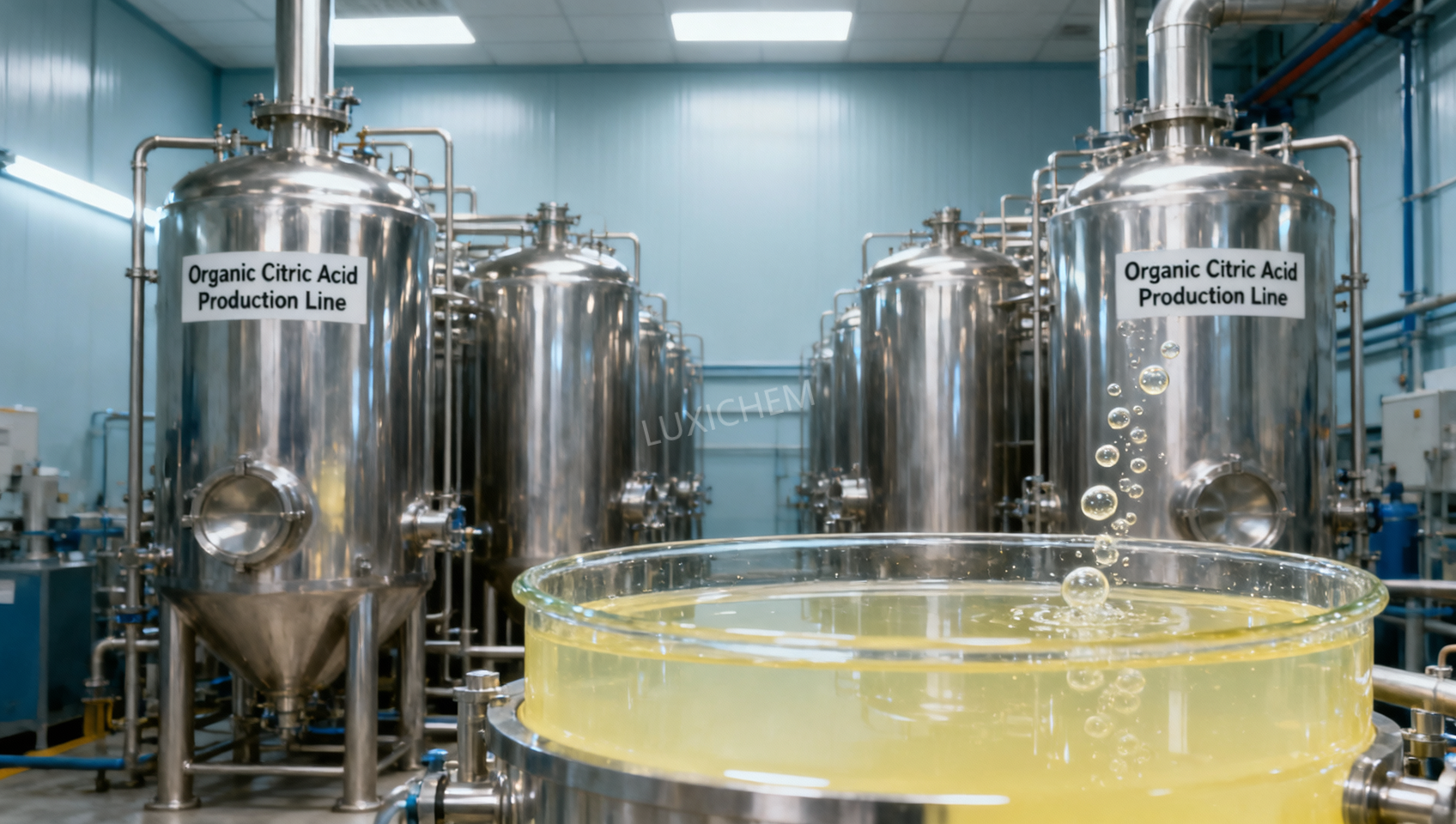
Luxi Chemical (Shandong) Co., Ltd. structures its organic citric acid program around those operational realities—not just compliance checkboxes. Their ISO 22000- and HACCP-certified production includes dedicated organic-dedicated lines, third-party traceability audits of citrus feedstock sources, and lot-specific organic compliance documentation aligned with JAS, NOP, and EU Organic Regulation (EC) No 834/2007. For enterprise buyers scaling across APAC, that means fewer exceptions, faster approvals, and less time spent reconciling discrepancies between lab reports and customs submissions.
The Bottom Line for 2025
“Organic citric acid” is no longer a niche specification—it’s a strategic input that affects speed-to-market, regulatory clearance, and brand credibility in high-growth beverage and functional food segments. The surge isn’t driven by cost parity or availability alone. It’s driven by the convergence of three hard constraints: tightening APAC regulations, retailer-led clean-label mandates, and formulation teams needing predictable, auditable acidity control without compromise.
If your current supply chain treats organic citric acid as a “special order” item—separate logistics, separate QA, separate documentation—you’re already operating behind the curve. The companies gaining share in 2025 are those treating it as core infrastructure: standardized specs, integrated quality systems, and supplier partnerships built on shared technical rigor—not just certification paperwork.
Related Picks
 Butylated Hydroxytoluene Price Drivers: Supply, Purity, and Purchasing Risk FactorsOct 21, 2026Butylated Hydroxytoluene price trends depend on supply stability, purity, logistics, and purchasing risk. Learn how to compare quotes wisely and reduce sourcing costs.
 Sodium Tripolyphosphate Price Trends: Raw Material and Energy ExposureOct 20, 2026Explore sodium tripolyphosphate price trends, from phosphate and soda ash costs to energy exposure. Learn how to compare quotes, manage sourcing risks, and make smarter purchasing decisions.
 Acetonitrile Shipment to Vietnam Successfully Dispatched; RCEP Benefits Boost Fine Chemical Trade with ASEANSep 16, 2026A shipment of industrial-grade acetonitrile from our company has recently been loaded and dispatched following the completion of standardized hazardous material packaging and container securing procedures.
 Nigerian Client’s Order of 4 Containers of Vinyl Acetate Successfully Loaded and Shipped to West AfricaSep 16, 2026We recently completed the loading of a vinyl acetate order for a Nigerian client; four containers of the product have been successfully packed and are ready for shipment to Nigeria.




Question Consultation
Send Us Your Inquiry Today

Luxi Chemical is a professional chemical product supplier with ample stock of all chemical categories and excellent quality, welcome your purchase inquiry.

