


Which factors drive ferrovanadium purchasing costs?
Which Factors Drive Ferrovanadium Purchasing Costs?
A Ferrovanadium quotation can look straightforward: a price per kilogram, a stated vanadium content, an Incoterm, and a delivery window. In practice, that figure is only the visible part of the purchasing decision. The real cost of securing ferrovanadium depends on raw-material availability, grade consistency, impurity limits, order structure, logistics, payment terms, trade documentation, and the supplier’s ability to deliver the agreed material when the market becomes volatile.
For business evaluators, the central question is not simply whether one offer is lower than another. It is whether the offers represent the same commercial and technical basis. A lower quoted price can be offset by reduced vanadium content, wider composition tolerance, an inconvenient lot size, delayed shipment, or avoidable import costs. Cost control begins by separating the alloy price from the total landed and operational cost.
Vanadium Supply Is the Starting Point
Ferrovanadium is a master alloy used primarily in steelmaking to introduce vanadium in a controlled way. Its cost is therefore closely tied to the availability and pricing of vanadium-bearing feedstocks. Supply conditions can change when mining output, vanadium recovery from steelmaking residues, processing capacity, energy costs, or regional trade flows change. Because the supply base is more concentrated than that of many common ferroalloys, disruptions in one part of the chain can affect quoted availability elsewhere.
Market references are useful for tracking direction, but they do not settle a purchase decision. A published vanadium price may reflect a particular product form, geography, transaction timing, or delivery basis. A ferrovanadium offer also includes conversion, handling, financing, packaging, and supplier risk. Buyers should ask how long a quotation remains valid, whether the price is fixed or indexed, and what happens if the material cannot be shipped within the agreed period.
For recurring demand, a purchasing approach that combines a defined contract volume with scheduled releases can sometimes reduce exposure to short-term price swings. It does not remove market risk, but it makes the risk visible. The right structure depends on consumption stability, inventory capacity, production scheduling, and the buyer’s tolerance for price movement.
Grade, Recovery, and Chemistry Change the Comparable Price
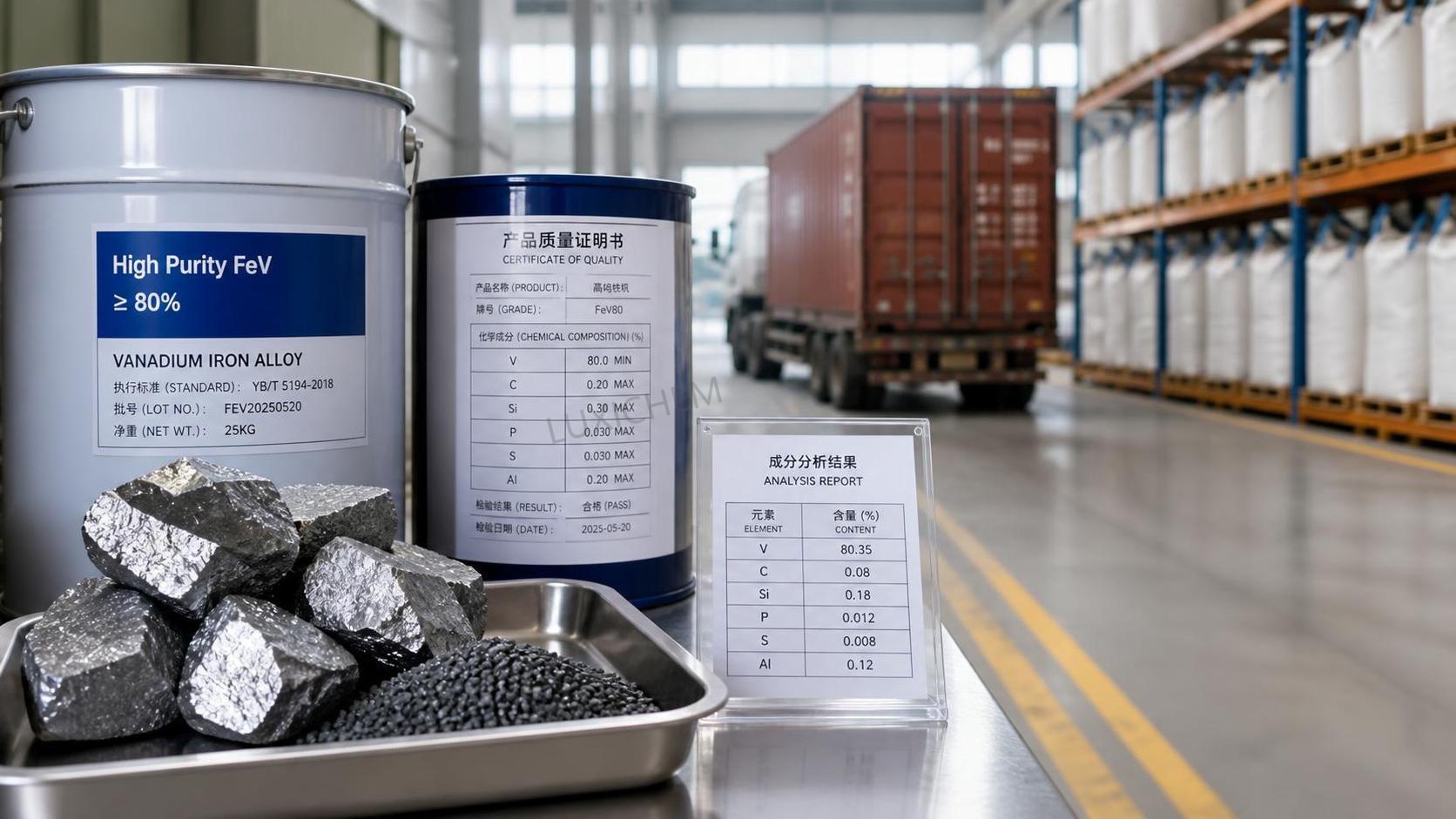
Not all ferrovanadium is commercially equivalent. The alloy is commonly discussed by nominal vanadium content, but procurement teams need the complete specification rather than a headline grade. The actual vanadium range, carbon level, silicon, aluminium, phosphorus, sulphur, and other residual elements can affect both alloy cost and suitability for the melt. A steel producer working under tight chemistry requirements may find that a cheaper material has less practical value if its impurity profile narrows process flexibility.
The most useful comparison is often cost per unit of recoverable vanadium rather than cost per unit of alloy. This requires a realistic understanding of the required addition practice and expected recovery in the customer’s process. Recovery is not determined by the alloy alone; furnace route, addition point, temperature, slag conditions, timing, and plant operating discipline all matter. Procurement should avoid assigning a universal recovery percentage unless the production team has validated it for the specific process.
Particle size and physical form deserve attention as well. Lumps, crushed material, fines content, and packaging condition can influence handling loss, batching accuracy, and dissolution behavior. A quote that omits sizing limits may be incomplete for a plant using automated feeding equipment or requiring predictable melt-shop practice.
Order Volume Matters, but So Does Order Pattern
Larger orders may improve unit economics by spreading packing, inspection, administrative, and transport costs across more material. Yet a volume discount should not be considered automatically beneficial. Ferrovanadium ties up working capital, and its value can move while inventory sits in storage. Excess stock also increases the cost of insurance, internal handling, and inventory controls.
A more useful calculation compares three scenarios: spot purchasing, periodic purchase orders, and an annual or framework arrangement with scheduled deliveries. The best option is usually the one that protects production without building unnecessary inventory. A buyer with irregular projects may value flexibility. A producer with steady consumption may value allocation certainty and clearer budgeting. Neither approach is inherently cheaper in every market condition.
Minimum order quantities can also distort comparisons. A supplier may quote an attractive unit price but require a lot size well above the buyer’s normal usage. The apparent saving then needs to be weighed against capital cost and the commercial risk of holding inventory through a changing market.
Logistics and Trade Terms Often Explain the Price Gap
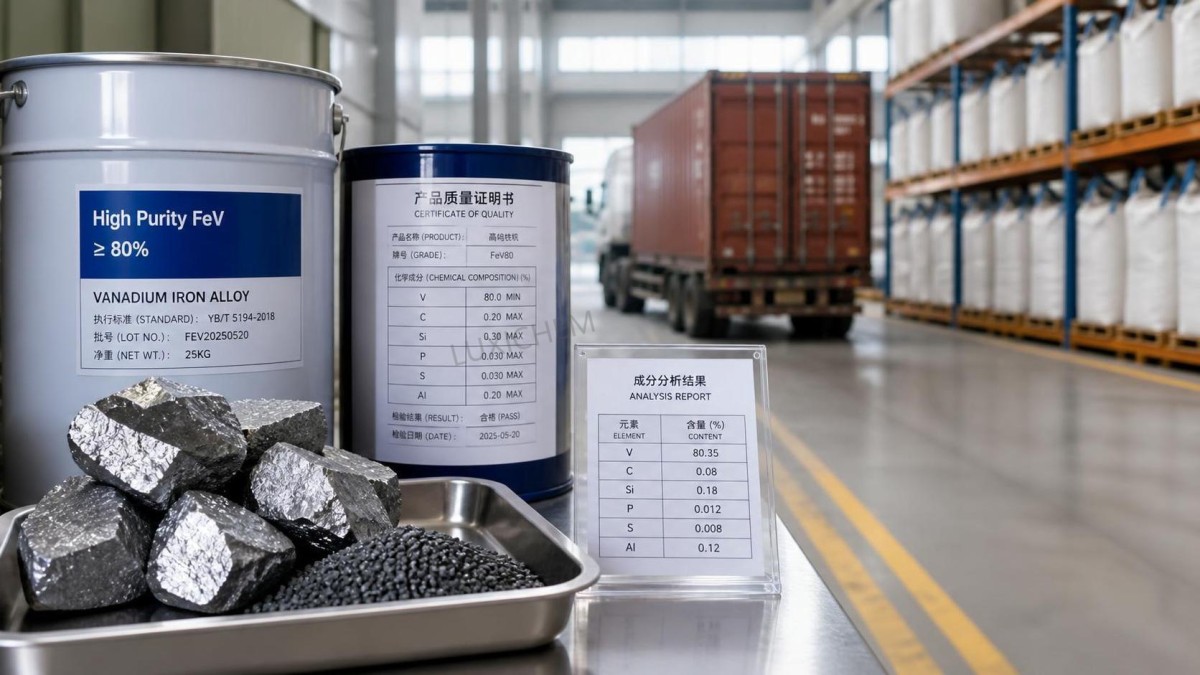
Ferrovanadium is a dense, high-value industrial material, so logistics decisions can have a meaningful effect on landed cost even when freight is not the largest line item. Inland transport to port, container availability, port handling, marine freight, cargo insurance, destination clearance, and final delivery all need to be assigned clearly. Comparing an ex-works offer with a delivered-duty-paid offer without rebuilding both to the same basis will produce a misleading result.
Import and export requirements deserve similar attention. The applicable tariff classification, customs documents, certificate requirements, origin declarations, and destination-country controls should be checked against the specific transaction. These obligations vary by market and can change. It is prudent to confirm responsibility for document accuracy, inspection costs, storage charges caused by clearance delays, and any duty or tax exposure before issuing a purchase order.
Currency is another quiet cost driver. An offer priced in a foreign currency can become more expensive before arrival if the buyer’s functional currency weakens. Some companies address this through internal hedging policies; others prefer shorter quote validity or negotiated price-adjustment mechanisms. The appropriate choice depends on financial policy rather than metallurgy, but it belongs in the purchasing evaluation.
Quality Assurance Has a Cost—So Does a Dispute
The cost of quality is not limited to laboratory testing. It includes the commercial consequences of a disagreement over assay, packaging damage, weight shortage, or delayed replacement material. A robust offer should identify the specification, lot traceability, sampling procedure, analytical method, certificate of analysis, claim period, and remedy if the supplied material does not conform.
Independent inspection is sometimes appropriate, especially for new suppliers, higher-value lots, or specifications with narrow impurity limits. It adds cost, but the decision should be measured against the potential exposure. What matters is not whether inspection is always required; it is whether both parties understand the acceptance process before shipment.
Supplier reliability also has an economic value that does not appear clearly on a price sheet. A supplier that communicates early about production or shipping constraints gives the buyer time to adjust. A supplier that provides incomplete documents or inconsistent lot information can shift work and risk into the customer’s operations. For critical alloy purchases, evaluating responsiveness, documentation discipline, supply-chain visibility, and dispute handling is as relevant as comparing the quoted number.
Look Beyond a Single Product Category
Many procurement functions are assessed on both continuity and administrative efficiency. Where a company buys materials across several chemical categories, consolidating suitable purchases through a capable trade partner may reduce vendor-management workload, document handling, and shipment coordination. This does not mean every item should be sourced from one supplier; technical fit and supply risk still come first. It means the total cost of procurement should include the effort required to qualify, order, inspect, and reconcile multiple suppliers.
Luxi Chemical (Shandong) Co., Ltd. operates across chemical raw materials, chemical products, and international trade, with product coverage that includes food additives, organic intermediates, and fertilizers. For buyers managing different supply streams, this broader sourcing perspective can be relevant when assessing shipment coordination and documentation requirements. For example, food, nutrition, and pharmaceutical procurement may also involve products such as Ascorbic Acid CAS#50-81-7, a synthetic vitamin C supplied as a white to slightly yellow powder and typically stored between +5°C and +30°C. Its handling requirements and compliance review are distinct from ferroalloy purchasing, but the discipline is similar: compare specifications, storage conditions, documents, and delivery responsibilities on the same basis.
A Practical Way to Compare Ferrovanadium Offers
Before selecting a source, normalize each offer into a single internal comparison sheet. Start with the same delivery point and currency. Then record the guaranteed vanadium range, residual-element limits, sizing, packaging, shipment window, quote validity, payment terms, and claims process. Add all foreseeable logistics, customs, financing, inspection, and internal handling costs. If the intended furnace practice is known, include the operations team’s view on acceptable recovery and process compatibility.
The final decision should identify which risks are already priced into the offer and which remain with the buyer. A very low price may be justified by a simple logistics route and a broad specification. It may also reflect unpriced uncertainty. The purpose of evaluation is not to reject low-cost offers; it is to understand precisely what is being bought and what further controls are needed.
Ferrovanadium purchasing costs are best managed as a combined metallurgy, supply-chain, and commercial issue. Confirm the chemical specification first, convert quotes to a common landed-cost basis, test the supplier’s delivery and documentation capability, and match order timing to actual consumption. That approach produces a more defensible procurement decision than relying on the market quote alone.
Related Picks
 Butylated Hydroxytoluene Price Drivers: Supply, Purity, and Purchasing Risk FactorsOct 21, 2026Butylated Hydroxytoluene price trends depend on supply stability, purity, logistics, and purchasing risk. Learn how to compare quotes wisely and reduce sourcing costs.
 Sodium Tripolyphosphate Price Trends: Raw Material and Energy ExposureOct 20, 2026Explore sodium tripolyphosphate price trends, from phosphate and soda ash costs to energy exposure. Learn how to compare quotes, manage sourcing risks, and make smarter purchasing decisions.
 Acetonitrile Shipment to Vietnam Successfully Dispatched; RCEP Benefits Boost Fine Chemical Trade with ASEANSep 16, 2026A shipment of industrial-grade acetonitrile from our company has recently been loaded and dispatched following the completion of standardized hazardous material packaging and container securing procedures.
 Nigerian Client’s Order of 4 Containers of Vinyl Acetate Successfully Loaded and Shipped to West AfricaSep 16, 2026We recently completed the loading of a vinyl acetate order for a Nigerian client; four containers of the product have been successfully packed and are ready for shipment to Nigeria.




Question Consultation
Send Us Your Inquiry Today

Luxi Chemical is a professional chemical product supplier with ample stock of all chemical categories and excellent quality, welcome your purchase inquiry.

